UK food suppliers hit as fridge cyberattacks spread across Europe
On 3 November the UK's National Cyber Security Centre said it was working with British food suppliers hit by the refrigeration attacks that have damaged stock in supermarkets across Europe. The European Commission convened an EU task force that morning to examine the incidents.
 Dr. Amara PatelEconomy, business and world
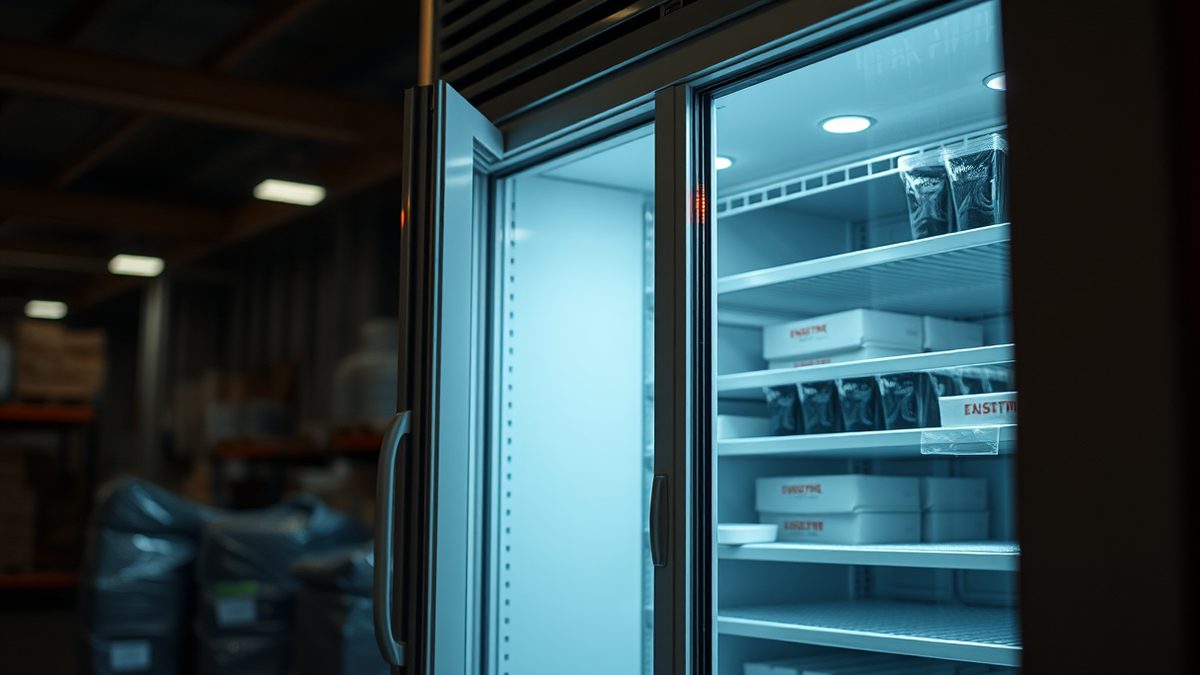
Retailers now face a physical risk from hacked cooling controls, not just a data breach. Stock can be destroyed remotely, and nobody has said what the total losses are.
The incidents push a mundane piece of equipment, the internet-connected fridge controller, into the same regulatory conversation as payment systems and factory networks. Regulators are testing whether existing cyber rules and equipment approvals cover devices that were never designed to face the public internet. For shoppers, the visible effect is discarded food and thinner shelves. For suppliers, it is a cold chain that can be disrupted from a laptop. Neither the NCSC nor the European Commission has named a suspect.
UK suppliers pulled into a European fridge attack
British meat suppliers were caught in the fallout. The British Association of Independent Meat Suppliers said some of its more than 300 members had been affected after becoming "collateral" in the hack. No meat was lost, and the affected units were empty at the time, the association said.
The temperatures involved went far beyond anything a chiller should reach. One meat supply company saw its cold units rise to up to 100C while another two reported their units had started to defrost, according to the Guardian. A fruit and vegetable wholesaler in London stopped the attack from spreading by pulling the internet connection to its cold storage units out at the wall.
No UK grocery chain had been directly affected so far, the Guardian reported on 3 November.
What happened in stores
Ahold Delhaize said dozens of its Delhaize stores in Belgium and Luxembourg had a refrigeration incident on Monday, and that some food had to be discarded. The Dutch group told CNBC the situation had since returned to normal and the stores were fully operational.
Other Belgian chains reported narrower damage. Colruyt Group said five of its Spar stores were targeted. Carrefour said 15 of its Belgian stores were attacked. Intermarché said 15 of its 153 Belgian stores were hit, roughly a tenth of its estate there.
IKEA said a cyber incident affected fridges and freezers at its Mons store in Belgium between Sunday and Monday.
The wave was not confined to Belgium. ICA, Sweden's biggest grocery retailer, confirmed an incident at a limited number of stores that sat on networks outside its central systems. Kesko in Finland, Supervalu in Ireland and One Selver in Estonia also reported disruptions to refrigeration. Tom's Hardware reported on 2 November that hackers had raised temperatures to 50C in Belgium and Sweden and destroyed food stocks.
Intermarché said its security measures contained most of the attack, though a few stores suffered stock losses. It added that the bulk of the attack hit other players, notably Carrefour and Delhaize.
Why cold chains are exposed
The pattern is not new. In October, hundreds of French supermarkets were targeted in an attack that caused fires, overheated fridges and spoiled food. Les Mousquetaires, which owns Intermarché, told CNBC at the time that it expected damages of several million euros.
The refrigeration systems in the French attack used legacy technology connected to the internet with default passwords, the Guardian reported.
Paul Chichester, the NCSC's director of operations, said the attacks were not AI-enabled and had used vulnerabilities that had been "out there for a long period of time".
The NCSC's chief executive, Richard Horne, described the fridge attacks as the "foothills" of an enlarged cyberthreat facing companies and the public. Horne said AI systems were highlighting flaws in IT networks that owners were not aware of or had neglected to patch. Ollie Whitehouse, the NCSC's chief technology officer, said manufacturers needed to be encouraged to make their technology safer. Consumers, he said, needed to accept paying more for safer equipment. Alex Pearce, managing director of Langridge Organic, said the fix at his firm was simple. "It clearly must have been easy to get in [to the system] because the simple solution was to unplug ourselves from the internet," he said.
Regulators step in
The European Commission is in direct contact with national authorities. A spokesperson told CNBC that it had convened a meeting on the morning of 3 November of the EU interinstitutional Task Force, together with ENISA, Europol and the relevant Commission services.
The NCSC said it was working with organisations to identify loopholes and close them before hackers exploited them.
IKEA said it was continuing its investigation to determine exactly what happened.
Sources
28- 01Food suppliers in UK hit by cyber-attacks after freezers targeted in EuropeEN
- 02Supermarket fridges hit with cyberattacks across Europe: here's what's happeningEN
- 03Supermarket freezers across Europe struck in second crippling cyberattackEN
- 04Why Europe's Food Inflation Numbers May Be Missing the Real Story of Household Vulnerability - DevdiscourseEN
- 05 Dimorphos in sight: Europe's Hera probe gets its 1st look at battered space rock (photo) EN
- 06Tesla cuts FSD’s speed margin from 50% to 10% over the limit in EuropeEN
- 07Hanwha Q-Cells shifts focus to research and development in EuropeEN
- 08Mercedes-Benz Is Giving Up On Its EV Charging Network In EuropeEN
- 09Apple warns of ‘unprecedented’ rise in memory chip pricesEN
- 10Portuguese AI startup Granter bags €1.6M to expand across EuropeEN
- 11The ETS Investment Engine: Scaling Europe’s Strategic E-fuel Market for Shipping & AviationEN
- 12Mistral CEO: Europe faces ‘complete trap’ without frontier AIEN
- 13Sanofi may seek higher European drug prices, not withhold launches, under Trump dealEN
- 14Veriff co-founder’s Roleo raises €2.9M to expand AI career agent across EuropeEN
- 15How Europe’s battery passport could have a big impact on US e-bikesEN
- 16European tech weekly recap: Over €1.3B invested across 60+ dealsEN
- 1730,000-year-old DNA reveals Ice Age Europeans were far more connected than we thoughtEN
- 18Bull and Schwarz Digits Sign MOU to Develop European AI InfrastructureEN
- 19New Wave of Refrigeration Cyberattacks Hits Supermarkets Across Europe, Forcing Stores to Pull FoodEN
- 20Inside Automotive DMS & OMS: Technology, Challenges & Power Solutions EN
- 21Record Demand Catches (Some) OEMs with Their Pants Down — Europe September 2026EN
- 22Forget AI, Europe has a plan to win the next tech revolutionEN
- 23Hyundai IONIQ 3 Named European Car of the Year 2027 FinalistEN
- 24T&E’s Response to the European Commission’s Review of the EU ETS and MSREN
- 25How Beta Technologies Is Clearing the Runway for Electric FlightEN
- 26Do Transaction Prices Reflect Visual Preference? A Diagnostic Study with Multimodal Language ModelsEN
- 27Global Market: European automakers get earnings boost as Chinese competition weighs on recovery - The Economic TimesEN
- 28Europe vs. Elon: 5 ways the EU is trying to squeeze out Musk’s StarlinkEN
All figures and quotations in this text come from the sources listed below.
Content prepared by the editorial team with AI assistance.
Dr. Amara Patel
Comments
0- No comments yet — be the first.