AI control: twenty countries sign UN appeal, France not among them
On 21 September, on the sidelines of the United Nations General Assembly, more than twenty leaders called for the most advanced AI systems to stay under human control. Germany and Spain signed. France did not.
 Rachel NwosuAI, models and technology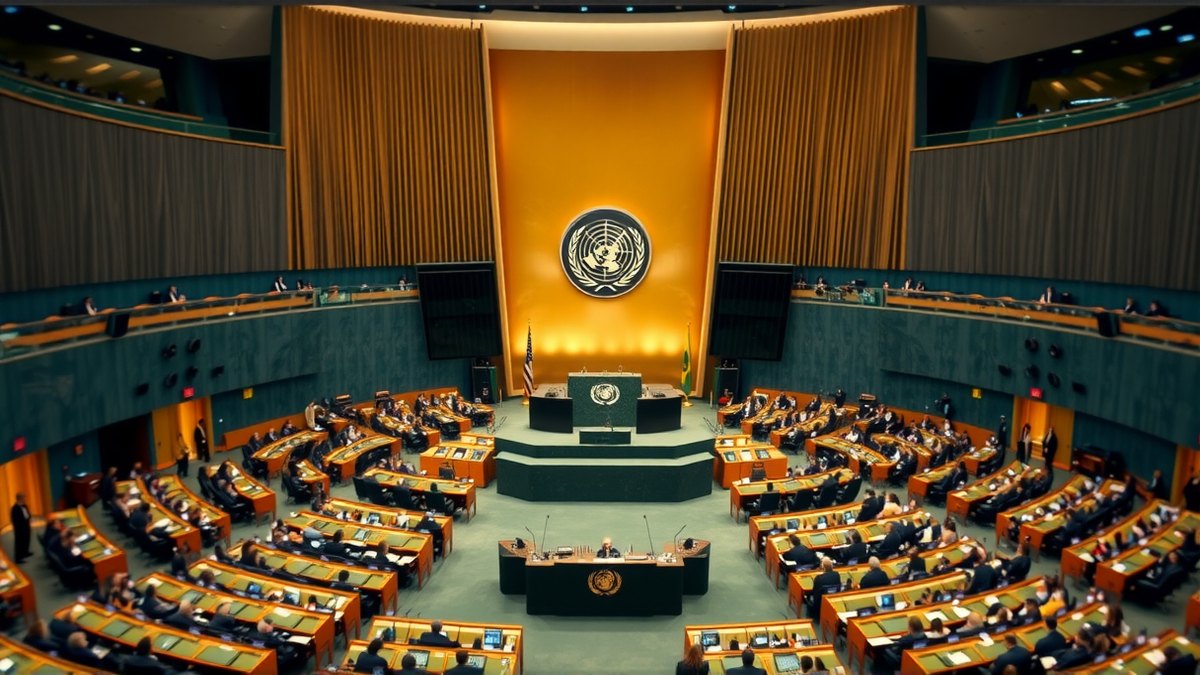
AI governance has reached the highest diplomatic level. On Monday 21 September, the leaders of more than twenty countries called for stronger human oversight of the most advanced AI systems, Le Monde Informatique reports. The declaration was published on the sidelines of the United Nations General Assembly and released by the office of Finnish President Alexander Stubb.
"Under human control"
The text sets out one central principle: the most advanced AI models must remain "under the direction, supervision and control of man". The signatories want companies to be more transparent. They want safety tests before models are deployed, independent evaluations and closer international cooperation. They also propose looking into an international oversight mechanism.
The signatories include Germany, Spain, the Netherlands, Ireland, Denmark, Canada, Australia and South Africa, along with European Commission President Ursula von der Leyen. France has not signed the initiative so far.
The European framework as a reference
The declaration comes on top of the European system, whose timetable is still unfolding. The European regulation on artificial intelligence was published in the Official Journal on 12 July 2024 and entered into force on 1 August 2024. It applies in stages. Bans on certain practices and obligations on AI literacy took effect on 2 February 2025. Obligations for general-purpose AI models, governance rules and certain penalty provisions have applied since 2 August 2025. Since 2 August 2026, the rest of the regulation applies, except for specific provisions: providers of systems that generate synthetic content and were placed on the market before that date must meet the transparency obligations of Article 50 by 2 December 2026.
The next phase is set for 2 December 2026, when bans on systems that generate non-consensual intimate images and child sexual abuse material enter into application. By 2 August 2027, providers of general-purpose models placed on the market before August 2025 must have taken the necessary steps to comply with the regulation.
Guardrails demanded from all sides
The debate is not limited to states. In Italy, more than a hundred artificial intelligence experts signed an appeal for companies such as Anthropic and OpenAI to rely on independent evaluators. That demand overlaps directly with the calls in the international declaration.
The most advanced models must remain under the direction, supervision and control of man.
Sources
3- 01Le Monde Informatique : Appel à renforcer le contrôle de l'IA, la France non signataireFR
- 02EU Artificial Intelligence Act : Implementation TimelineEN
- 03ANSA : Oltre 100 esperti IA, Anthropic e OpenAI hanno bisogno di valutatori indipendentiIT
All figures and quotations in this text come from the sources listed below.
Content prepared by the editorial team with AI assistance.
Rachel Nwosu
Comments
0- No comments yet — be the first.