What a Fitbit Can and Cannot Tell Researchers About Sleep
A University of Texas at Austin study published in Nature Scientific Reports used a standard Fitbit to track 82 young adults over several months. It found that physical activity lengthened REM latency, the time it takes to enter REM sleep.
 Sofia MarchettiScience and health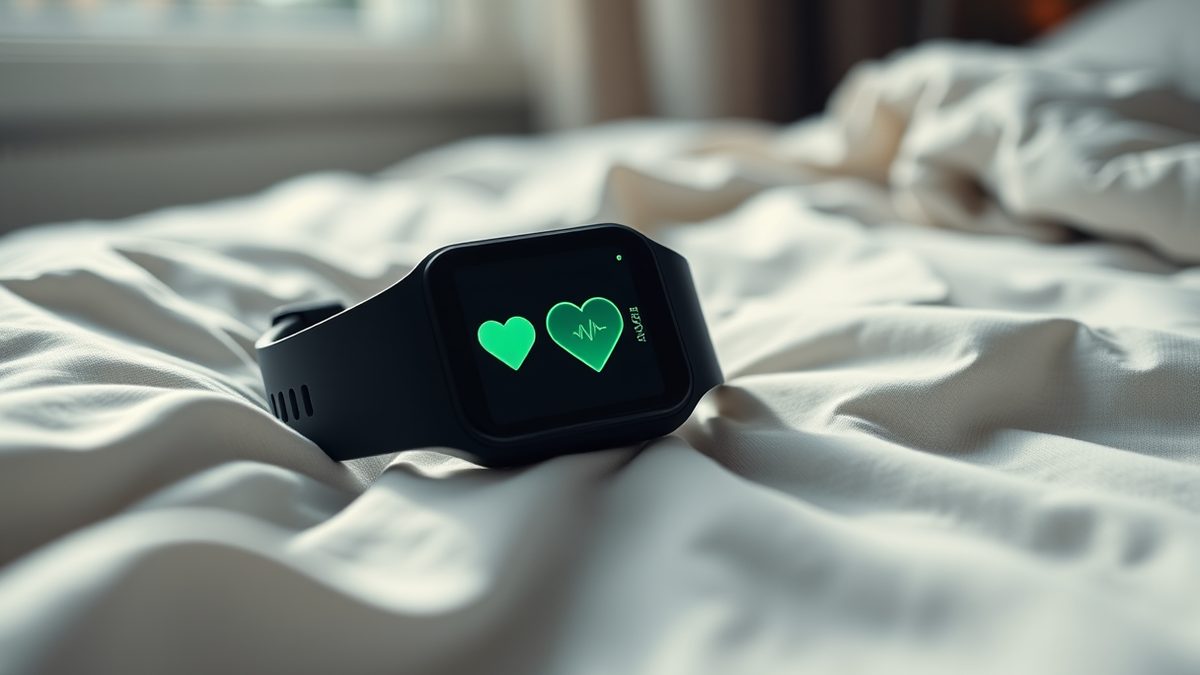
The study ran outside the lab: at home, at work and during daily activities, according to UT News. A wrist-worn tracker recorded movement and heart rate, and a separate smartphone app collected self-reported well-being data. That design is the point.
Most sleep research still depends on a single night wired up in a clinic. That is expensive, unfamiliar and impossible to repeat over weeks. The Texas team argues wearables change what questions can be asked, and how reliably.
What the researchers found
The central result is about sleep architecture, the structure of each 90- to 120-minute sleep cycle. That cycle contains three stages of non-REM sleep (light, deep and deepest NREM) plus REM sleep, which makes up roughly the final 25% of each cycle, according to the UT News write-up.
Physical activity, both low-intensity and moderate-to-vigorous, was linked to deeper, more restorative sleep. Better sleep was in turn associated with more energy and less stress the following morning. Activity also lengthened REM latency. The researchers suggest this may mean exercise helps consolidate deeper sleep stages before the brain transitions into REM. The team also says it replicated in the field several findings previously produced only in sleep labs.
That matters less for the headline than for the method: if a consumer device reproduces lab results across months of ordinary life, the lab stops being the only credible instrument.
Why REM latency is the interesting number
REM latency is not the same as sleep quality, and the study does not claim it is. Longer REM latency means more time spent in deeper non-REM stages before dreaming begins. Whether that is good, neutral or a marker of something else is not settled by this dataset alone. What the paper does offer is a way to measure sleep architecture continuously rather than in one-night snapshots. The authors frame this as the first attempt to address how differences in sleep architecture relate to perceived well-being.
Benjamin Baird, a research assistant professor of psychology and one of the authors, said lab studies have limits. "It's an unfamiliar, clinical-type setting, which can be stressful. And you can't really look over time, either," he said, according to UT News. "So, there are always questions about generalizability from that kind of design."
David M. Schnyer, co-author and chair of the Department of Psychology, went further on the hardware question. "We've shown using a standard Fitbit that anyone could wear, not even an expensive scientific device, that it is actually sensitive to these sorts of sleep architecture measures, and in a way that's showing predictive results," he said.
The bigger shift: sleep as population data
The Texas study is small, 82 young adults, and the wearable is consumer-grade. A much larger version of the same idea is already running through commercial sleep apps, and ABC News reported on 24 September 2024 how far that has gone. Sleep Cycle, a Swedish app, detected an above-average number of brief awakenings around the time of a New South Wales earthquake, based on data from its users.
The company's head of science, Michael Gradisar, told ABC News that sleep is often the first thing to go wrong in a person's health. "Sleep is the canary in the mine," he said.
"We saw approximately one week before confirmed cases of Omicron an increase in night-time coughing as a population. It's almost like it's an early warning system."
That quote is Gradisar's, from the same ABC News piece, describing Sleep Cycle data from New York during the Omicron wave. The claim is a correlation drawn from app users, not a clinical diagnosis, and the company was studying whether the signal held.
Regulators have moved faster than the research literature. Samsung's smartwatch sleep apnoea detection received US regulatory approval in early 2024 after an eight-month review, ABC News reported, the first consumer smartwatch to clear that hurdle. Apple's smartwatch received the same approval later that month. Danny Eckert, director of the Adelaide Institute for Sleep Health at Flinders University, told ABC News that in-home monitoring could beat the current gold standard. A 2022 study he co-authored found up to half of single-night diagnostic studies for sleep apnoea misclassify severity.
"The single-night tests are hugely noisy and inaccurate," he said. "We've never been able to monitor accurately what's going on with sleep apnoea in the home. Now we can do it every single night for weeks, months and years."
What this does not prove
- Eighty-two young adults is not a population sample. The Texas findings describe that group over that period.
- Consumer wearables infer sleep stages from movement and heart rate, not from brain activity. They are not electroencephalography.
- Correlations between activity, sleep stages and mood do not establish which causes which.
- Sleep Cycle figures come from people who chose to use the app, which is not the same as a random sample.
The practical takeaway is narrower than the headlines suggest. A cheap tracker can produce a signal sensitive enough to detect sleep-stage differences over months, according to the Texas team. That makes large, long, real-world sleep studies feasible. It does not make the tracker a diagnostic device, and it does not yet tell anyone what to do about a lengthened REM latency.
Schnyer's own framing is about access rather than certainty. "The world is your oyster now," he said. "You can use this device to study all manner of different sleep architecture data related to lifestyle, related to mood and mood disorders, in the field, not in a lab, that people might have thought was not possible previously."
Sources
2- 01Move More, Sleep Better, UT Study FindsEN
- 02Sleep-tracking devices are wiring the world for the study of sleep. What will we find?EN
All figures and quotations in this text come from the sources listed below.
Content prepared by the editorial team with AI assistance.
Sofia Marchetti
Comments
0- No comments yet — be the first.