Wearables Turn Everyday Life Into a Sleep Lab
A University of Texas at Austin study published in Nature Scientific Reports fitted 82 young adults with wrist-worn trackers and followed them for months. Physical activity lengthened REM latency, and better sleep went with more energy and less stress the next morning.
 Sofia MarchettiScience and health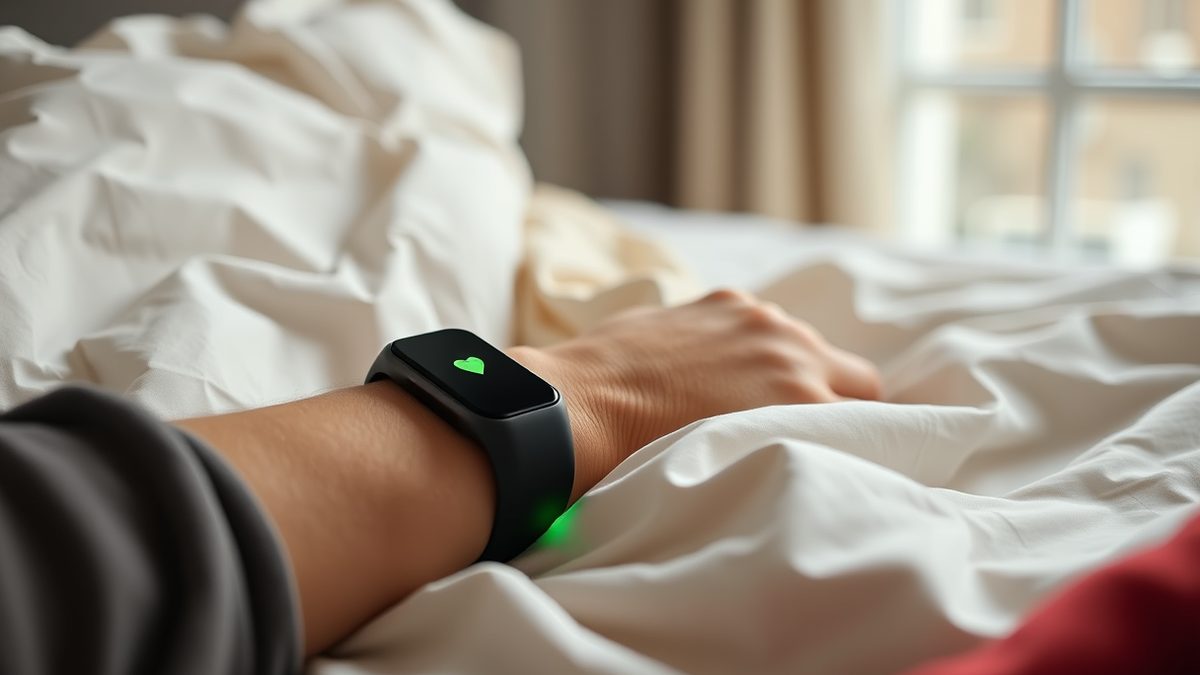
The study appeared in Nature Scientific Reports. UT Austin announced it on 1 April 2024. In the university's own write-up, it is the most reliable validation to date of the link between physical activity, sleep quality and psychological health. The headline finding is narrow. Physical activity lengthened REM latency, the time it takes to enter the REM stage. The researchers read that as a sign that exercise helps consolidate deeper sleep stages before the brain shifts into REM.
That matters because most sleep science has been done the hard way. Participants spend a night wired up in a lab, and conclusions get drawn from a single night's data.
"You can learn a lot from lab studies, but obviously there are limitations to studying the sleep patterns of individual participants in just one night," said Benjamin Baird, a research assistant professor of psychology and one of the study's authors. "It's an unfamiliar, clinical-type setting, which can be stressful. And you can't really look over time, either. So, there are always questions about generalizability from that kind of design."
The UT team tried to fix both problems at once. Instead of a lab, they recruited 82 young adults and tracked them at home, at work and during daily activities over several months. A wrist-worn activity tracker recorded movement and heart rate. From those two signals the researchers derived periods of deep (NREM) sleep, REM sleep and physical activity. A separate smartphone app collected self-reported well-being data. The study grew out of a pilot run under Whole Communities, a programme at UT Austin that engages communities and participants in how health data are collected.
The results replicated much of what sleep labs had already found. Both low-intensity activity and moderate-to-vigorous activity were linked to deeper, more restorative sleep. Better sleep was in turn associated with more energy and less stress the following morning. Sleep architecture is the structure of each 90 to 120 minute cycle, with its three stages of non-REM sleep and a REM phase that fills roughly the final quarter of the cycle. That is where the researchers say they broke new ground, connecting those differences to how people said they felt.
Why a Fitbit mattered more than a lab rig
The methodological point is arguably bigger than the sleep finding. David M. Schnyer, a co-author and chair of the Department of Psychology, argued that a consumer device was sensitive enough to be useful.
"We've shown using a standard Fitbit that anyone could wear, not even an expensive scientific device, that it is actually sensitive to these sorts of sleep architecture measures, and in a way that's showing predictive results," Schnyer said. "The world is your oyster now. You can use this device to study all manner of different sleep architecture data related to lifestyle, related to mood and mood disorders, in the field, not in a lab, that people might have thought was not possible previously."
That claim has been building for years. ABC News reported on 24 September 2024 that sleep-tracking has boomed worldwide, giving researchers access to millions of hours of data. The article quoted Michael Gradisar, Sleep Cycle's head of science, calling sleep "the canary in the mine" because it is one of the first things to go wrong in a person's health. It also described how David Walsh built the first Apple Watch sleep-tracking app, released in early 2016 as AutoSleep, which he says now has more than 5 million users. Samsung's watch received US regulatory approval for sleep apnoea detection in early 2024, with Apple following later that year.
The UT study is smaller and more controlled than those population-scale efforts, and it leans on self-reported well-being rather than clinical outcomes. It also does not claim wearables replace sleep clinics. What it does claim is narrower and harder to argue with: that a cheap wrist tracker, worn for months, can capture sleep architecture well enough to show how daily activity and next-morning mood move together outside a laboratory.
Sources
2- 01Move More, Sleep Better, UT Study FindsEN
- 02Sleep-tracking devices are wiring the world for the study of sleep. What will we find?EN
All figures and quotations in this text come from the sources listed below.
Content prepared by the editorial team with AI assistance.
Sofia Marchetti
Comments
0- No comments yet — be the first.