xAI's eight converted jet engines show the cost of skipping the grid queue
xAI has installed eight converted jet-engine turbines in Mississippi to help power its Colossus 2 data centre in Memphis, the New York Times reported, as AI operators turn to onsite generation to bypass multi-year grid queues.
 Rachel NwosuAI, models and technology
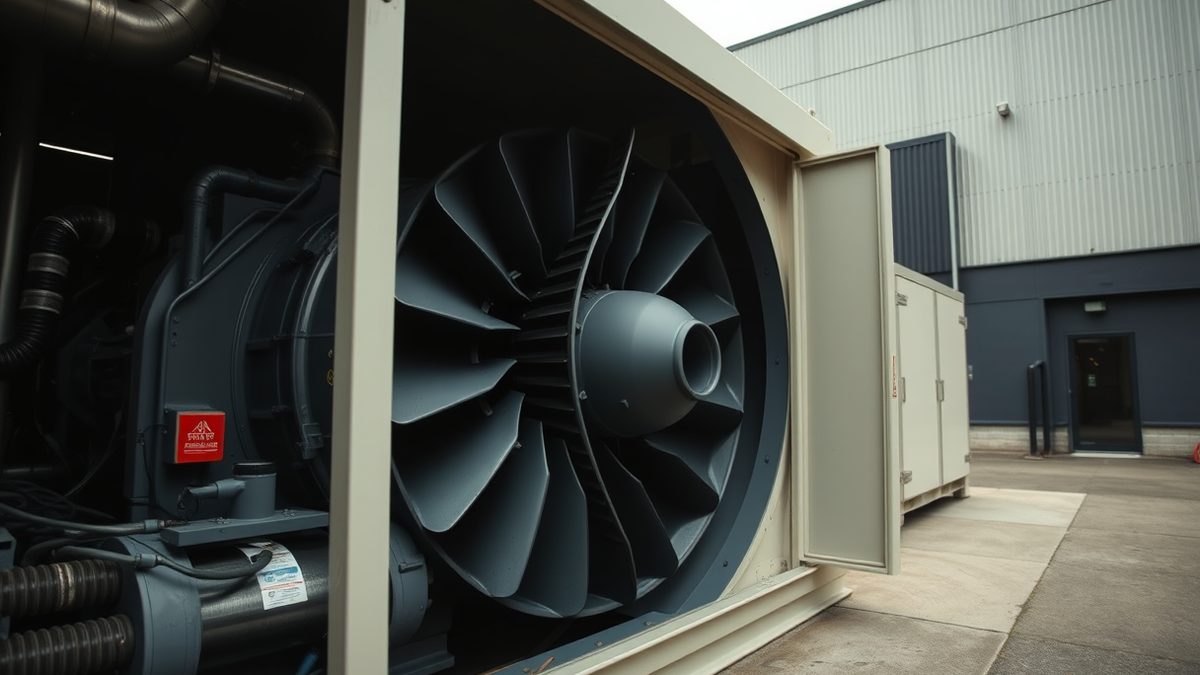
Eight jet turbines in Mississippi
TechCrunch reported the detail on 3 November. Each unit can produce up to 50 MW, Tom's Hardware reported the same day, normally enough for around 15,000 homes.
The trade is speed for emissions. Mississippi's permits for the site allow a 25% higher limit for volatile organic compounds, Tom's Hardware reported. For host communities, the open question is what that allowance means in practice.
The units come from ProEnergy, a Missouri company that rebuilds GE engines commonly found on Boeing jets. The Southern Environmental Law Center has challenged the decision. The group argues xAI did not guarantee the units meet standards for pollutants including formaldehyde, and undercounted projected emissions. It previously sued xAI over its use of gas generators without the required permits in an area with more than 100,000 inhabitants.
Why operators are going onsite
The queue is the reason. Hooking up 100 MW to the grid in Northern Virginia takes about seven years, according to the International Energy Agency, cited by TechCrunch.
The engines are pulled from retired aircraft and rebuilt to burn natural gas, and TechCrunch noted they are not a permanent power plant. "It's all about getting power as fast as possible," Rystad Energy analyst Audun Martinsen told the Times. With jet-powered units, "they can have a data center running in 24 months," he said. Most power capacity is expected to come online by 2031, an executive at Mitsubishi Power told Bloomberg last week, TechCrunch reported. The delays are already costing operators business. Microsoft pulled out as anchor customer for Nscale's data centre in Loughton, England, after the local utility said it could not deliver enough power until the early to mid-2030s.
Trump has weighed in. In an Oct. 21 Truth Social post, he said new large-scale data centres should generate their own electricity and return any excess to the local community or grid. He also suggested developers pay host communities a dividend, arguing that data centres which were unpopular became popular once a financial deal was struck.
"New and large, in some cases gigantic, Data Centers are mandated by me to make their own electricity, and give or sell any excess back to the local community, or grid."
The buildout is slipping anyway. As of April, half of data centre buildouts had been cancelled or delayed, partly for lack of power, Tom's Hardware reported. Musk said in August that xAI would increase its data centre capacity sevenfold before the end of 2027.
The trade-offs and the aerospace supply chain
The hardware is a compromise. Converted jet engines are less efficient and pollute more than turbines designed for conventional gas plants, according to the Times. They also take more units to make the same amount of power.
Supply is tight regardless. Some turbine models are effectively sold out through 2031, Data Center Knowledge reported. Patrick Hughes, senior vice president at the National Electrical Manufacturers Association, said a standalone AI data centre can provide sufficient onsite power. But it is not feasible for one AI data centre, let alone the whole fleet, to supply 100% of its own power and run reliably around the clock, he said.
Crusoe ordered 13 ProEnergy converted units in April. In September it walked away from a $1.25 billion deal to buy 29 natural gas turbines from Boom Supersonic. OpenAI had already used gas turbines at its first Stargate site in Abilene, Texas, in 2025, and Crusoe is building that campus.
What happens next
Many projects already have grid connections or power purchase agreements. A formal policy shift would force developers to revisit those plans, Data Center Knowledge reported.
The details vary by site, Hughes said. Permitting timelines, fuel and equipment supply chains, interconnection rules and community considerations differ widely by location. For many facilities, he said, the most likely outcome is a hybrid approach that combines onsite generation and storage with a grid connection. Some experts expect converted jet engines to be a short-term play, with efficiency and environmental concerns growing in importance in a year or two, TechCrunch reported.
The demand behind the scramble is not shrinking. A July 2026 report predicted data centres would use 20% of all U.S. power by 2035, an 83% increase over the same forecast made seven months earlier.
Sources
28- 01Data centers are turning to old jet engines as the wait for power growsEN
- 02xAI installs eight converted jet engines to power Mississippi data centerEN
- 03Trump Onsite Power Push Meets AI Data Center RealityEN
- 04Liquid cooling demands new data centre measurement standards - ET DatacentersEN
- 05AI Data Centre Cooling Gets New Thermal Buffer from HoneywellEN
- 06Honeywell tests aerospace cooling module for AI data centres - DataCenterNews Asia PacificEN
- 07AI Data Centre Cooling Gets Aerospace-Grade Thermal BufferEN
- 08Aluminum–Air Generators for Data Centres Face a Metal Logistics TestEN
- 09UK’s ARIA will test Lumai’s light-based AI servers in a data centreEN
- 10UK’s most polluting power plant could power country’s largest AI datacentreEN
- 11Vertiv opens Singapore hub for hands-on AI data centre infrastructure demonstrations - Tech EditionEN
- 12Drax wants to feed Britain's AI habit with £20B datacenter at biomass power stationEN
- 13Vertiv opens Singapore centre for AI infrastructure - DataCenterNews Asia PacificEN
- 14Liquid Cooling Is Changing What Data Centers Need to MeasureEN
- 15Google's Suncatcher data centre satellite sends a haiku to EarthEN
- 16Supersonic airliner in doubt as company shifts to powering AI data centersEN
- 17Brookfield plans for a $27 billion AI data center at UK power stationEN
- 18Nvidia tells data center operators to limit business to Chinese customersEN
- 19California Resources and Bloom Energy eye 1GW of fuel cells across California to power data centers and other offtakersEN
- 20TerraVolt acquires site in Idaho to develop 240MW gas powered behind-the-meter data center campusEN
- 21'Our Risk, Their Reward': Zohran Mamdani on AI and Data CentersEN
- 22As energy needs of data centres draw scrutiny, their hardware deserves the same attentionEN
- 23AWWA report guides water utilities on data centre demands - ET DatacentersEN
- 24Proposed data centre will release 23 Hiroshima atomic bomb worth of energy a dayEN
- 25If The US Department Of Defense Gets Solar Power, Why Can’t We?EN
- 26Ukraine’s drone strikes spur hasty Russian plans for underground data centersEN
- 27 OpenAI introduces program to reduce AI data center energy demand during peak hours EN
- 28Why batteries, not gas plants, should be data centers' first choiceEN
All figures and quotations in this text come from the sources listed below.
Content prepared by the editorial team with AI assistance.
Rachel Nwosu
Comments
0- No comments yet — be the first.