China's 2030 battery plan and a 10,000-cycle iron-lead battery: EV storage gets a policy push
China published a five-year plan for its battery industry on 28 September that backs sodium-ion and flow batteries alongside lithium, while Spain's CIC energiGUNE reported finishing 10,000 charge-discharge cycles on an iron-lead flow battery on 1 October.
 Peter LindqvistSport, cars and travel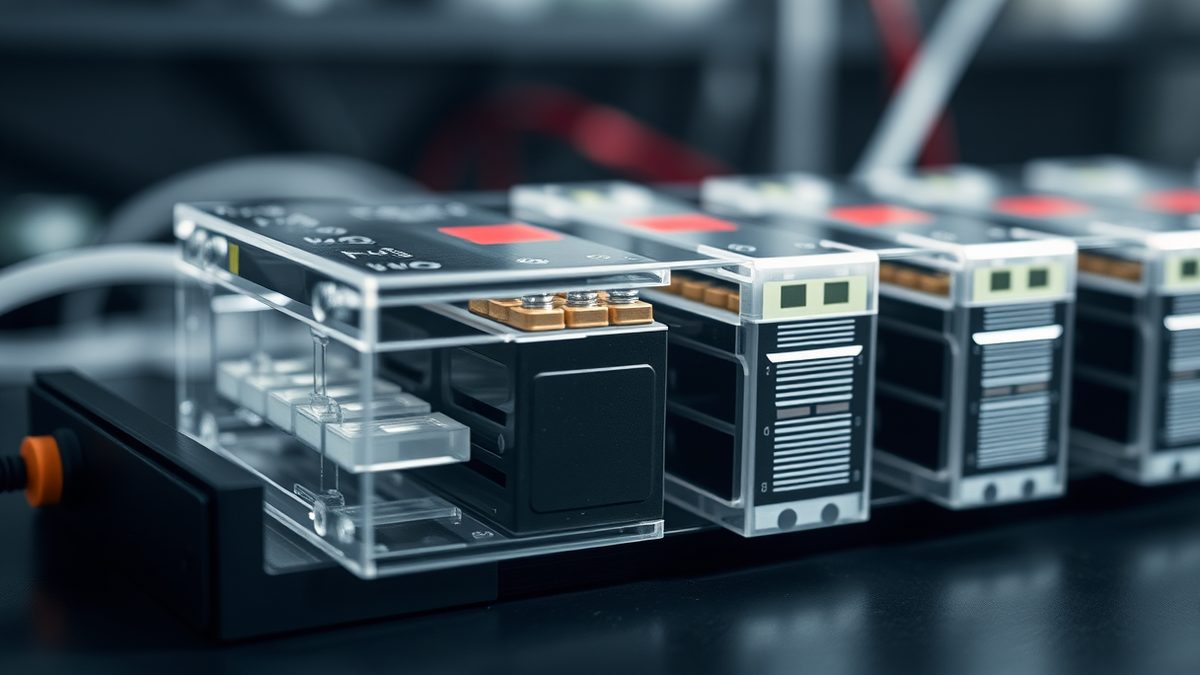
On 1 October, pv magazine reported that CIC energiGUNE, a Spanish research centre, has completed 10,000 charge-discharge cycles on an iron-lead redox flow battery. The design uses iron and lead as active materials and a single electrolyte loop instead of the two loops used in conventional flow batteries, the magazine said.
That single-loop architecture is meant to cut system costs and reduce dependence on critical raw materials. The battery uses a fluorine-free membrane intended to lower internal resistance and limit unwanted transport of chemical species between the two sides. Testing ran at temperatures of 25 C to 30 C. CIC energiGUNE says the next step is kilowatt-scale modules, built through simulation, system design and experimental validation. Flow batteries store energy in electrolytes held in external tanks, and adding electrolyte volume adds energy capacity, while power output depends on the size and number of cells and stacks. That separation makes them a candidate for multi-hour storage, the application CIC energiGUNE is targeting: storing excess renewable generation for later use by the electricity system, plus grid-scale storage, microgrids and industrial energy management.
Beijing's five-year plan shifts from capacity to quality
Three days before that, on 28 September, China publicly released a national five-year plan for the new-type battery industry. pv magazine reported that the document is dated 14 September and was jointly issued by seven government bodies, including the Ministry of Industry and Information Technology, the National Development and Reform Commission and the National Energy Administration. By 2030 it targets preliminary large-scale application of all-solid-state batteries, a cycle life of 15,000 cycles for long-life lithium batteries, and defect rates at leading manufacturers reaching the parts-per-billion level. The plan keeps lithium-ion as the core technology but calls explicitly for a supply system in which sodium-ion and flow batteries develop alongside lithium. It also lists research into new alkali-metal-ion batteries, multivalent-ion systems, metal-air and metal-sulfur batteries, and nuclear batteries, and puts standards work for sodium-ion alongside solid-state and other emerging technologies. Notably, it sets no sodium-ion deployment target and does not say sodium-ion should replace lithium iron phosphate.
pv magazine's separate 1 October analysis of sodium-ion strikes a more cautious note than the policy language. It argues that lithium iron phosphate earned its position on a decade of field deployment, and that its cost curve is now flattening. Sodium-ion has cheaper inputs and no single-country supply chain for the core material, but the analysis says there is no field-validated degradation curve at scale, hard carbon anodes run initial coulombic efficiency in the 75-85% range, and the first peer-reviewed aging studies on commercial sodium-ion cells only appeared in early 2026. Warranty structures and cycle-life guarantees, it says, lack independent third-party verification at the scale lenders and offtakers require.
Meanwhile, electric trucks and plug-in home batteries
On the vehicle side, CleanTechnica reported on 30 September that FedEx has ordered 2,000 electric trucks from the California startup Harbinger, and that Tesla held an opening ceremony on 26 September for volume production at its Semi factory in Sparks, Nevada, with output reportedly anticipated at 50,000 trucks per year. The same outlet reported that the Alliance for ZET SCALE placed an order for 2,500 Tesla trucks, practically doubling the number of Class 8 electric trucks already on the road.
Stationary storage is also moving into homes. pv magazine reported on 1 October that Marstek Energy is targeting European markets with its 3 kW, 5 kWh Venus E 4.0 plug-in battery, scalable to 9 kW and 15 kWh, with a claimed cycle life exceeding 10,000 cycles at 25 C and an IP65 rating. Daisy Jiang, key account manager at Marstek Energy, said the company is working on deeper integration with Octopus Energy and other energy management providers. Jiang also said UK regulations do not yet fully accommodate plug-in battery products, though the government has launched a tender for a technical risk and safety assessment.
MIT Technology Review reported on 1 October on a different distributed approach, from companies putting small batteries in induction stovetops, food carts and air-conditioning units. Sam Calisch, cofounder and CEO of Copper, said at a New York Climate Week event on 24 September that if every stove in America shipped with a battery it would add up to tens of gigawatts of power. David Hammer, cofounder of PopWheels, said the company has about 50 battery-swap cabinets across New York City and about 2,500 batteries in circulation.
Sources
6- 01Spanish researchers validate 10,000 cycles for iron-lead flow batteryEN
- 02China sets 2030 battery targets, backs sodium-ion and solid-stateEN
- 03Sodium-ion batteries: the next frontier or the next risk?EN
- 04A closer look at Marstek's 5 kWh plug-in batteryEN
- 05US Startup Adds Another 2,000 Electric Trucks To FedEx Delivery FleetEN
- 06How smaller, distributed batteries could help the gridEN
All figures and quotations in this text come from the sources listed below.
Content prepared by the editorial team with AI assistance.
Peter Lindqvist
Comments
0- No comments yet — be the first.