China's export controls widen from goods to know-how as India vows to build its own TBMs
India will develop and manufacture its own tunnel-boring machines if China restricts supplies, the country's commerce minister said on 3 November. China's new licensing requirements for TBM exports take effect on 18 November 2026.
 Dr. Amara PatelEconomy, business and world
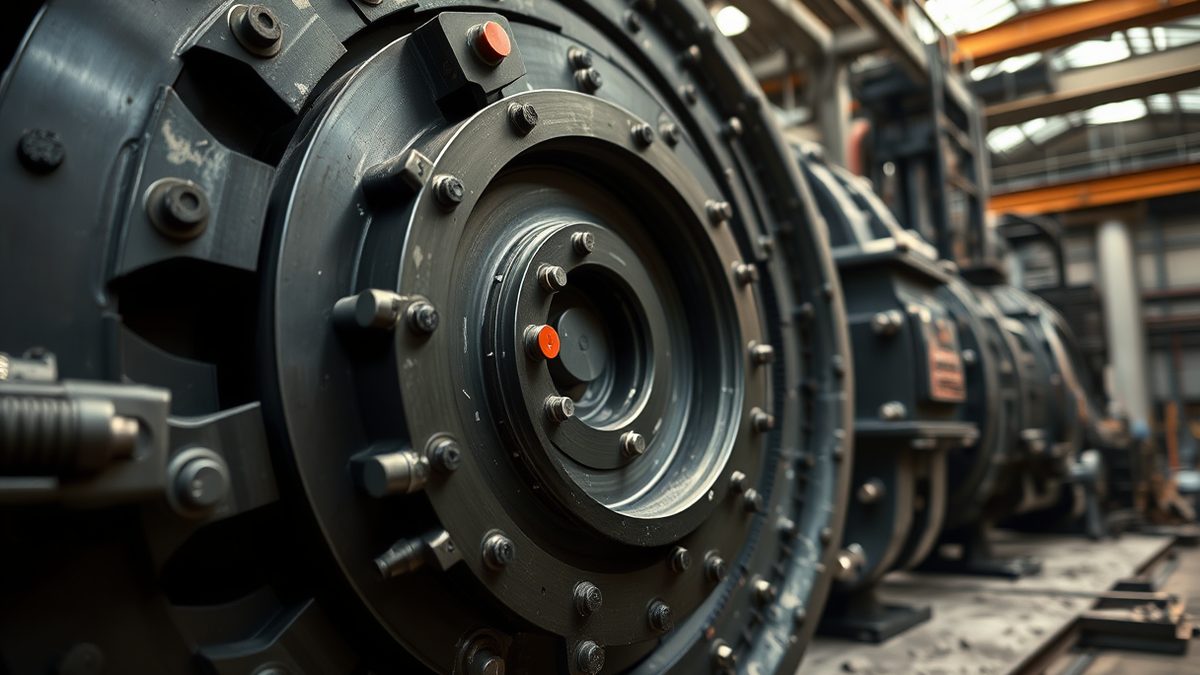
India draws a line as the TBM deadline approaches
Piyush Goyal did not hedge. At Kirori Mal College in Delhi on 3 November, India's commerce minister said the country would not compromise its strategic interests to secure critical technology.
"If they don't give us tunnel-boring machines, we will develop it in India," Goyal said. "India is not someone who will give in." The immediate risk is delay. India's metro expansion and high-speed rail projects could face additional challenges if supplies of the machines are held up. Whether Indian manufacturers can produce competitive TBMs quickly is unproven. Neither government has said how licences will be judged, which leaves buyers pricing a schedule they cannot check. For contractors, that is a procurement problem before it is a diplomatic one.
China's new export licensing requirements for TBMs and other specialised construction equipment take effect on 18 November 2026. They cover machines used in metro, rail and road projects.
From products to process knowledge
Beijing moved on 19 October. That day, the Ministry of Commerce and the General Administration of Customs put certain tunnel-boring machines and components under export control. Dredgers and specialised excavators designed for use above 3,000 metres were listed too. The altitude threshold gives it away. Civilian demand at that height is slight, except for roads and tunnels through the Himalayas. Three days earlier, on 16 October, MOFCOM and the Ministry of Science and Technology proposed adding 40 technologies to the catalogue of technologies prohibited or restricted from export. The two moves read as one policy.
The 40 technologies break down as 23 AI, 12 photovoltaic and 5 biomedicine. Fourteen would face an outright export ban. Twenty-six would require a licence.
The AI entries are performance-based. The draft covers models trained with at least 10^26 FLOPs of compute, or containing 2 trillion parameters. Public comments run until 15 November, and final rules are expected by the end of the year. Not everything waits for the consultation: registration requirements for certain technology transfers have already taken effect. The draft would bar foreign companies from obtaining model weights, training data or expertise needed to run Chinese AI systems independently. That is the ownership question, not the access question.
Access yes, ownership no
Foreign customers could still use Chinese AI through websites, apps and cloud platforms. Those access routes are exempt from export controls.
ORF described the aim as keeping the capability at home while exporting the output. The Manus affair exposed the loophole being closed. Meta was able to acquire the Chinese-founded AI agent app, and Chinese authorities subsequently blocked the deal. That distinction matters for any company running a Chinese model abroad. Beijing is also drafting rules that would let it sanction foreign companies and individuals for infringing Chinese trade secrets, with trade and investment restrictions and entry bans. MOFCOM will accept public comments on that draft until 24 November.
Why trading partners are nervous
China accounts for more than 80% of global solar-panel component production. In April, Chinese officials considered restricting exports of advanced solar manufacturing equipment to the US.
Reports said Tesla sought about $2.9bn of equipment from Chinese suppliers. Countries pursuing a China+1 strategy need more than components: they depend on importing process knowledge, equipment and engineers. Their factories need the recipes as much as the machines. Those controls sit against a slowing domestic economy. China lowered its 2026 growth target to 4.5-5%, the lowest since 1991, according to Bloomberg. Its trade surplus reached $938bn in January-September, putting it on course to surpass last year's annual record of $1.2tn. Exports are the main engine: third-quarter GDP rose 4.5% year on year, according to the National Bureau of Statistics.
What happens next
Until those texts are final, the practical question for buyers is narrower. Does a licence arrive in time for the project that needs it?
Three dates sit in the calendar. TBM export licensing takes effect on 18 November 2026. The consultation on the 40-technology catalogue closes on 15 November, with final rules expected by the end of the year. The trade-secret sanctions draft is open for comment until 24 November. For a metro contractor, only the first is a deadline that bites. The other two shape what comes after: whether process knowledge follows the machines out of China. Buyers will read the final texts for the licensing test, not for the rhetoric.
Sources
28- 01India Will Build Its Own Tunnel-Boring Machines if China Blocks Supply: Piyush GoyalEN
- 02China's New Export Controls: Selling the Output, Keeping the CapabilityEN
- 03China proposes AI export curbs to keep core technology at homeEN
- 04Growing Confident in Its Technology, China Tightens Controls on Overseas Technology Transfers and the Movement of Key PersonnelEN
- 05China's Risky Plan to Restrict Hi-Tech ExportsEN
- 06Trading partners form united front against Chinese export onslaught, while export-dependent China prepares to hold out using supply-chain leverageEN
- 07Machine Tools Excluded From First Wave of China Export Controls, but Syntec Still Posts Two Straight Limit-Down DaysEN
- 08Analysis: China’s clean-tech exports in 2026 to avoid as much CO2 as Brazil emits in a yearEN
- 09China's record-breaking exports of clean tech are making a big dent in emissions, report saysEN
- 10China’s Mengxi grid tops 20 GW of storage as renewables approach 60% of capacityEN
- 11China Truck Sales Now Majority Electric. What’s Next?EN
- 12Technologie: Chinas Chiphersteller suchen Abnehmer in der deutschen Autoindustrie EN
- 13China in record-breaking exports of clean energy - Morning Star | The People’s DailyEN
- 14Nvidia pushes cloud customers to cut back on China businessEN
- 15 AI chip smugglers exploit trade control loophole to bring banned HBM from South Korea into China EN
- 16Tesla China October wholesale sales total 67,829, lowest since FebruaryEN
- 17China Details Its Plan to Land Astronauts on the Moon Before 2030EN
- 18Lexus is taking a page from China for its next electric SUV launching in 2027EN
- 19Electric trucks hit 50% of China’s heavy truck sales, diesel demand fallsEN
- 20Chinese automakers reportedly head to Beijing for talks on EU hybrid export quotasEN
- 21Chery October sales rise 5.3% as NEVs hit record and exports top 200,000 againEN
- 22AI Balloon in China Deflates by Half a Trillion DollarsEN
- 23I imported a $2,000 electric truck from China. Five years later, here’s the truthEN
- 24Does Reliance on China Undermine Iran’s Grand Strategy?EN
- 25China’s ‘Lipstick King’ hawks tokens as AI gets mass-market Singles’ Day pushEN
- 26Launch Preview: Falcon 9 to launch USSF missions, China to launch internet satellitesEN
- 27Inside Automotive DMS & OMS: Technology, Challenges & Power Solutions EN
- 28China’s EDA champion buys start-up to address weak link, support Huawei’s Tau Scaling LawEN
All figures and quotations in this text come from the sources listed below.
Content prepared by the editorial team with AI assistance.
Dr. Amara Patel
Comments
0- No comments yet — be the first.