China's tech export playbook: cars, batteries, AI models and Huawei's trial
China's technology exports are reshaping global markets, from a record 5,000-EV shipment to Australia to open-weight AI models that have divided the Trump White House, while Huawei faces a US racketeering trial in Brooklyn.
 Dr. Amara PatelEconomy, business and world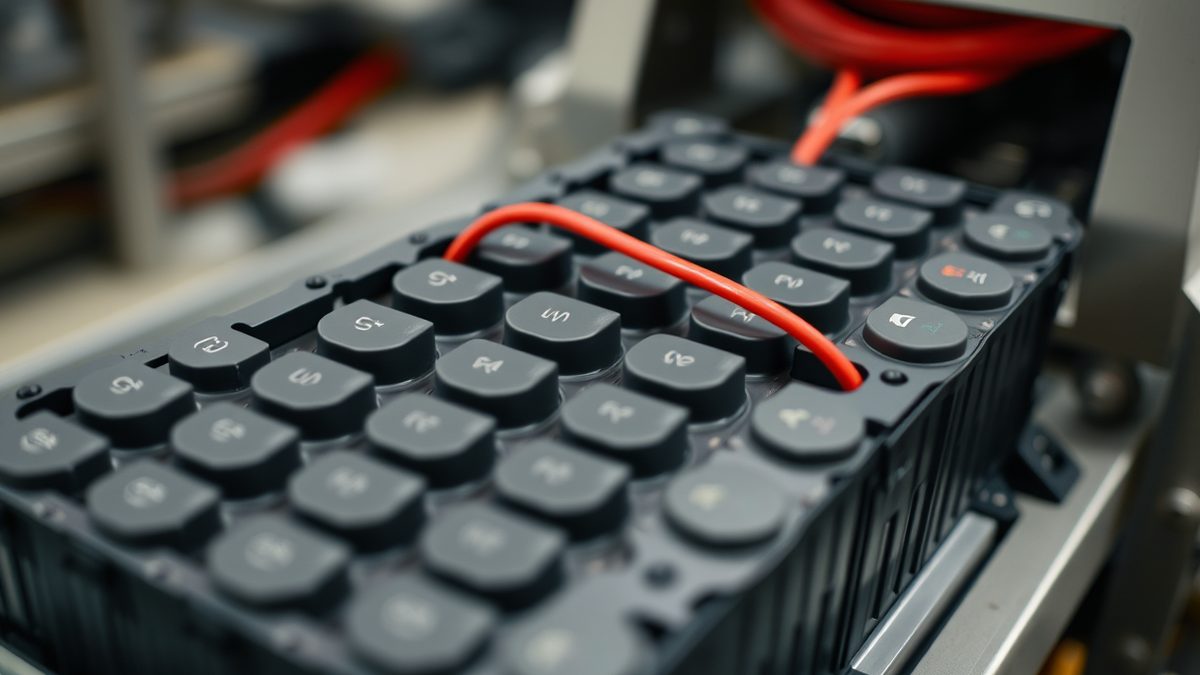
In June, a purpose-built LNG-powered bulk carrier pulled into the Port of Melbourne carrying 5,000 newly built electric vehicles. RNZ republished an analysis by Ian Verrender, chief business correspondent at ABC News. It was the largest single EV shipment to Australia on record.
The ship was the BYD Zhengzhou. Its cargo shows how quickly China has moved from exporting low-cost goods to exporting entire technology platforms.
Australia is a useful gauge. It has had no domestic auto industry since its demise a decade ago, and it has few trade barriers, RNZ reported. In the first half of this year, sales for every major Japanese manufacturer bar Honda sank: Mazda shed 17 percent, Toyota was down 21 percent, Subaru and Mitsubishi dropped 25 percent each, and Nissan was off 32 percent. Chinese suppliers went the other way. BYD sales jumped 124 percent, Chery leapt 77 percent, and Geely soared 495 percent. All were off a smaller base, which exaggerates percentage gains, but the direction is clear. Last month, almost a quarter of all cars sold in Australia were fully electric, up from 7 percent a year earlier.
Batteries and the cost of cutting China out
The car numbers sit on top of a supply chain that China dominates. RNZ notes that China accounts for 90 percent of the world's battery production and controls minerals such as lithium, cobalt, manganese and graphite. It also churns out almost all the world's anode and cathode production.
The US is now trying to untangle itself from that supply chain, and the costs are already visible. According to MIT Technology Review, the Trump administration declared a national emergency in late August that essentially bans Chinese batteries from grid-scale energy storage. Import taxes on batteries rose to 25 percent in January, up from 7.5 percent. New legislation requires that starting in 2026, 55 percent of the cost of materials for new energy storage projects come from outside China and other restricted countries, or the projects lose tax credits.
"An outright ban was a bit of a surprise, and it does create a bit of concern for domestic players in the US," Shan Tomouk, energy storage lead at Benchmark Mineral Intelligence, told MIT Technology Review. BloombergNEF analysis cited in the same piece expects the order to slow deployment of grid-connected storage in the near term, with some projects possibly canceled. The US may have enough domestic battery capacity by about 2030, though some factories may not run at full capability, meaning supply may not meet demand until later in the 2030s.
"Unless things change, we will not survive."
That quote is from Toyota vice-chairman Koji Sato, speaking to an annual supplier meeting in March, as reported by RNZ. It captures how the export pressure runs both ways: Chinese manufacturers are taking share abroad, while legacy carmakers are being forced to restructure.
Open-weight models split Washington
China's export push is not only hardware. MIT Technology Review reported in July that Moonshot's Kimi, a free open source model, appears to rival the intelligence of models from OpenAI and Anthropic. The release divided advisers around President Donald Trump. David Sacks, the president's AI and crypto "czar" until March, branded Anthropic's models "lobotomized" and "woke," while Emil Michael, a top Pentagon official, called OpenAI's new head of strategic futures a "supreme village idiot."
As MIT Technology Review put it, every time a new smart, free model from China like Kimi gets released, US companies see less reason to pay for access to Anthropic or OpenAI models. Sacks argued that Chinese AI models have become popular because they come with fewer restrictions, putting aside the built-in state censorship.
The Guardian reported on 1 August that the White House is similarly divided, historically hawkish on China's tech industry but wary of blocking low-cost AI models American businesses rely on. Treasury secretary Scott Bessent suggested the US could sanction Chinese AI firms over alleged intellectual property theft, while commerce secretary Howard Lutnick received letters from startup founders asking him not to cut off access to open models. Microsoft, Nvidia, Palantir and Meta published a letter urging lawmakers to refrain from restricting open models, and Nvidia CEO Jensen Huang went to Capitol Hill to lobby in support of them.
There are practical risks in the models themselves. The Conversation reported in August that major Chinese AI models such as Qwen, DeepSeek, Kimi and GLM are generally open-weight, not open-source, meaning the software and final parameters are available but not the training data and methodology. Some licences impose extra obligations: Moonshot's Kimi K3 licence requires licensees exceeding specific revenue or user thresholds to "prominently" display the Kimi model name. Bilingual licences developed under Chinese government guidance, including Mulan Permissive Software License version 2.0 and OpenAtom Model License version 1.0, are written in English and Chinese, but the Chinese version prevails in cases of conflicting interpretation.
Huawei's day in court
Meanwhile, the legal front opened in Brooklyn. The Guardian reported on 10 September that a US prosecutor described Huawei as a criminal enterprise that stole from US companies. "Theft, lies, cover-up," said Taylor Stout, a trial attorney from the US Department of Justice. "For 20 years, that's how Huawei, a massive Chinese telecommunications company, victimized American companies and abused the American financial system."
Prosecutors allege Huawei conspired to steal trade secrets from five US companies, including router operating system source code from Cisco Systems and a robotic arm to test phones from T-Mobile. Defense lawyer Brian Heberlig told jurors: "It's about competition, not conspiracy. Innovation, not theft. Ordinary business dealings, not criminal conduct." He said the incidents involving Cisco and T-Mobile were actions by individual employees and that management worked to make things right. The case, which began with a 2018 indictment and grew to include racketeering, is expected to last three months.
None of these storylines is isolated. Cheap EVs, cheap batteries, free-weight AI models and a criminal trial are all part of the same export machine, and each one is now being met with a different mix of tariffs, bans, licence conditions and litigation. The numbers from Australia and the US battery market suggest the technology keeps moving faster than the policy designed to stop it.
Sources
6- 01How China won the car wars with cheap EVs loaded with technologyEN
- 02Can the US battery market untangle from China?EN
- 03China's AI models have Trump's AI world at war with itselfEN
- 04China's tech advances are causing chaos from Silicon Valley to the White HouseEN
- 05China is shaping the future of open-source technology, including AIEN
- 06China's Huawei branded a criminal enterprise as tech firm's US trial opensEN
All figures and quotations in this text come from the sources listed below.
Content prepared by the editorial team with AI assistance.
Dr. Amara Patel
Comments
0- No comments yet — be the first.