Commonwealth Fusion Systems reaches $4 billion raised, 30% of private fusion capital
Commonwealth Fusion Systems has raised $4 billion in total, about 30% of all capital ever invested in private fusion, after a $1 billion round reported on 25 August [11]. Its SPARC tokamak is roughly 80% complete and net energy gain is targeted for 2027, but the ARC power plant CFS has sold to Google and Eni is not due to reach the grid until the early 2030s [11].
 Sofia MarchettiScience and health
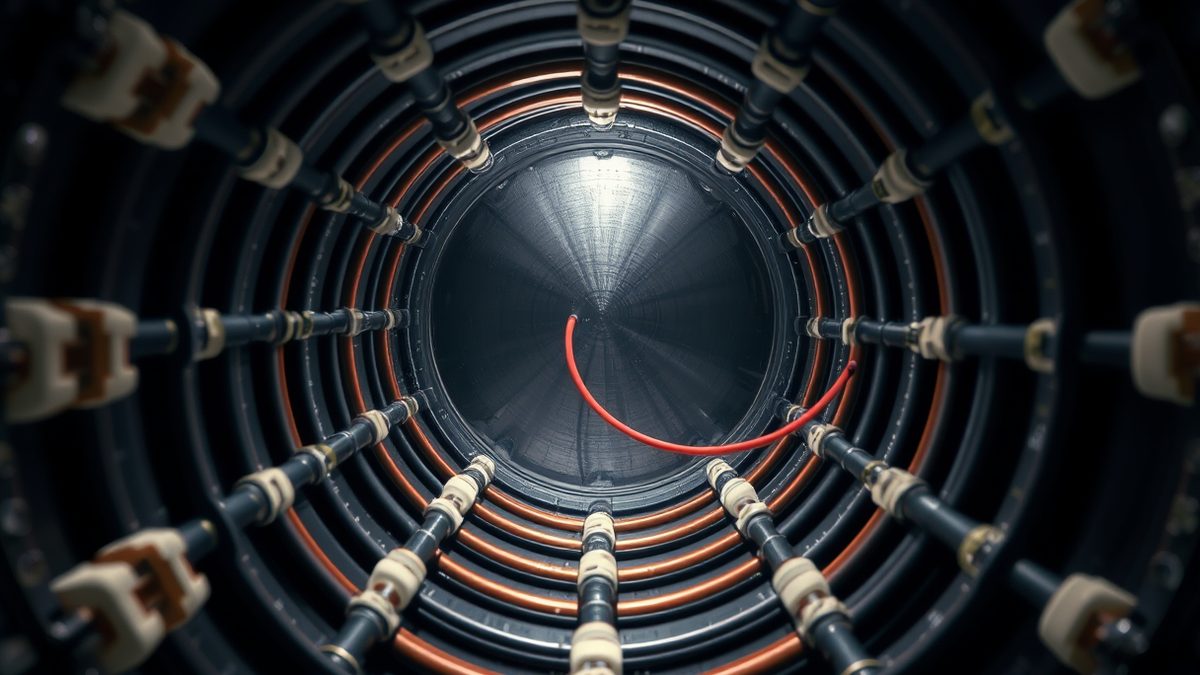
Four billion dollars, no net-energy result yet
The $1 billion round that took CFS to $4 billion was the largest single funding event for any fusion company since the company's own $1.8 billion Series B in 2021 [11]. Pension funds, sovereign wealth funds and infrastructure investors supplied new money, while Google, Nvidia, Eni, Temasek and Breakthrough Energy Ventures stayed on the cap table [11]. CFS has not yet claimed a net-energy result [8].
Bob Mumgaard, the chief executive, told reporters on a call that the sum was the minimum. "This is the scale of capital that's really needed to do fusion seriously," he said [8].
Only one entity has generated net energy from a fusion reaction, and it is not a company: a US national laboratory, using lasers rather than a tokamak, a result it has repeated 11 times [8]. Every private machine is still short of that line. The $4 billion total is roughly 30% of all capital ever invested in the private fusion industry [11]. Investors are betting CFS can hit the net-energy milestone and make the economics work for power production, according to the Yahoo Finance account of the round [8].
SPARC is the milestone, ARC is the product
SPARC, the demonstration tokamak, is roughly 80% complete and CFS is targeting net energy gain for 2027 [11]. The company says the machine is on track to start up next year [8].
ARC is the product. CFS says the plant will deliver about 400 megawatts of net electricity to the grid, converted from roughly 1.1 gigawatts of fusion power [2]. Five peer-reviewed papers in the Journal of Plasma Physics, co-authored by 58 scientists from MIT, Columbia University, the Max Planck Institute for Plasma Physics and elsewhere, set out the physics basis for that claim [2]. Alex Creely, chief engineer for ARC conceptual design, said the papers show that "if we build the ARC tokamak and power plant as we intend, it'll work" [2]. The same papers mark out where data from SPARC is still needed to reduce uncertainty [2].
Peer review is not a working plant, and the papers say as much [2].
What 400 megawatts actually means
Four hundred megawatts is enough to power roughly 300,000 to 400,000 homes, which puts one ARC plant in the same output range as a mid-sized natural gas facility [11]. ARC is planned for Chesterfield County, Virginia, with a target of connecting to the grid in the early 2030s [11]. CFS has locked down power purchase agreements covering more than half of ARC's expected output, with Google and Eni among the buyers, and Dominion Energy has signed on as a strategic partner for the site [11].
On those dates, first power from ARC trails the 2027 net-energy test by six to eight years [11].
The clock, and who else is running
CFS claims its device will create net energy by 2027, the same year China's EAST tokamak is reportedly targeting ignition [4]. The two countries fund the work differently: China through a top-down, government-funded programme, the United States by letting private companies lead [4]. OilPrice.com describes CFS as the most moneyed fusion company in the United States [4].
Others are further along on temperature. Helion reported that its Polaris machine reached 150 million degrees Celsius with deuterium-tritium fuel, the first private system in its class past 100 million degrees, according to Environmental Leader [18].
General Fusion reported electron temperatures above 12 million degrees Celsius, more than 1 keV, in its LM26 machine, measured with Thomson scattering and co-published by the UK Atomic Energy Authority [5]. Only a few fusion companies have passed 1 keV, all with other approaches, the UK government's announcement on 8 October said [5].
What happens next
SPARC's start-up is targeted for 2027, with net energy gain the stated goal for the same year [8][11]. ARC's grid connection is targeted for the early 2030s [11]. The ARC papers say SPARC operating data is still needed to close remaining physics uncertainties [2].
Neither CFS nor its named customers have published a final investment decision date for ARC, and the report on the latest round gave none [11].
Sources
32- 01Commonwealth Fusion Systems raises $4B to advance fusion energyEN
- 02'It'll take more': CFS nets another $1B to chase nuclear fusion dreamEN
- 03Commonwealth Fusion Systems Builds on Learnings From SPARC to Publish Five Peer-Reviewed Papers Validating the Physics of the ARC Fusion Power PlantEN
- 04China's Fusion Reactor on Track for Ignition by 2027, Threatening U.S. LeadEN
- 05UKAEA, General Fusion announce Magnetised Target Fusion milestoneEN
- 06Helion Hits 150M°C in Private Fusion MilestoneEN
- 07Focused Energy Sets a New Benchmark: $240 Million for the Largest Series A Financing in the Global Fusion Industry - Focused EnergyEN
- 08Nuclear fusion seems hot right now — but how close is fusion power? - CBCEN
- 09Japan’s fusion energy startup to begin power-on tests at pilot reactor in 2027EN
- 10China Creates World's First Artificial Sun, Achieves 100 Million Celsius in Fusion BreakthroughEN
- 11Japan's fusion energy startup to begin power-on tests at pilot reactor in 2027EN
- 12Elon Musk Says ‘Enormous, Free Fusion Reactor in the Sky’ Will Supply 100% of Energy NeedsEN
- 13Thea Energy und MIT testen planare HTS-Magnete für mögliches FusionskraftwerkEN
- 14Thea Energy Collaborates with MIT’s Plasma Science and Fusion Center on Planar Coil Magnet Program - The Manila TimesEN
- 15Congo launches energy supply study into economic zones, industriesEN
- 16China’s energy storage fleet grows to 167 GW as utilization improvesEN
- 17A new bill could change how the US builds energy infrastructure EN
- 18Korean researchers build all-solid battery prototype with 235.13 Wh/L energy densityEN
- 19Top clean energy wins from the midterm electionsEN
- 20Blue Wave Not Climate Related, But Critical To Clean Energy & Electric VehiclesEN
- 21Singapore Reveals Five-Year Energy Plan to Feed Data Center, Semicon ProgressEN
- 22CATL, Octopus Energy and Ampace partner to explore European home energy storageEN
- 23Text-Only Domain Adaptation for Low-Resource Medical ASR: Shallow Fusion and Density Ratio Rescoring for HausaEN
- 24Short-Term Forecasting of Heterogeneous Wind Power Fleets: Global Temporal Fusion Transformer Leveraging Static CovariatesEN
- 25More of the Same Expensive Dependence on Fossil Fuels in TEP and APS 2026 Energy PlansEN
- 26How Some Media Shape Regional Australia’s Hostility to Renewable EnergyEN
- 27Is There Anything Left in the Dream of Cold Fusion?EN
- 285 ballot proposals that could drive or derail clean energyEN
- 29Can battery swapping and energy storage power CATL’s next phase of growth?EN
- 30American Fusion Advances Texatron Testing to Target AI Data Center Power Demand - citybuzz -EN
- 31Fission vs. Fusion: Two Startups Racing to Re-Engineer Next-Gen Nuclear Infrastructure to Solve Traditional Energy BarriersEN
- 32Einstein's equations may explain the universe without dark energyEN
All figures and quotations in this text come from the sources listed below.
Content prepared by the editorial team with AI assistance.
Sofia Marchetti
Comments
0- No comments yet — be the first.