China to build Mars sample receiving lab in Hefei for Tianwen-3
China's Deep Space Exploration Laboratory said on 5 August 2026 it will build a planetary protection lab in Hefei to receive and quarantine Martian material from Tianwen-3 around 2031, the only such facility under construction.
 Sofia MarchettiScience and health
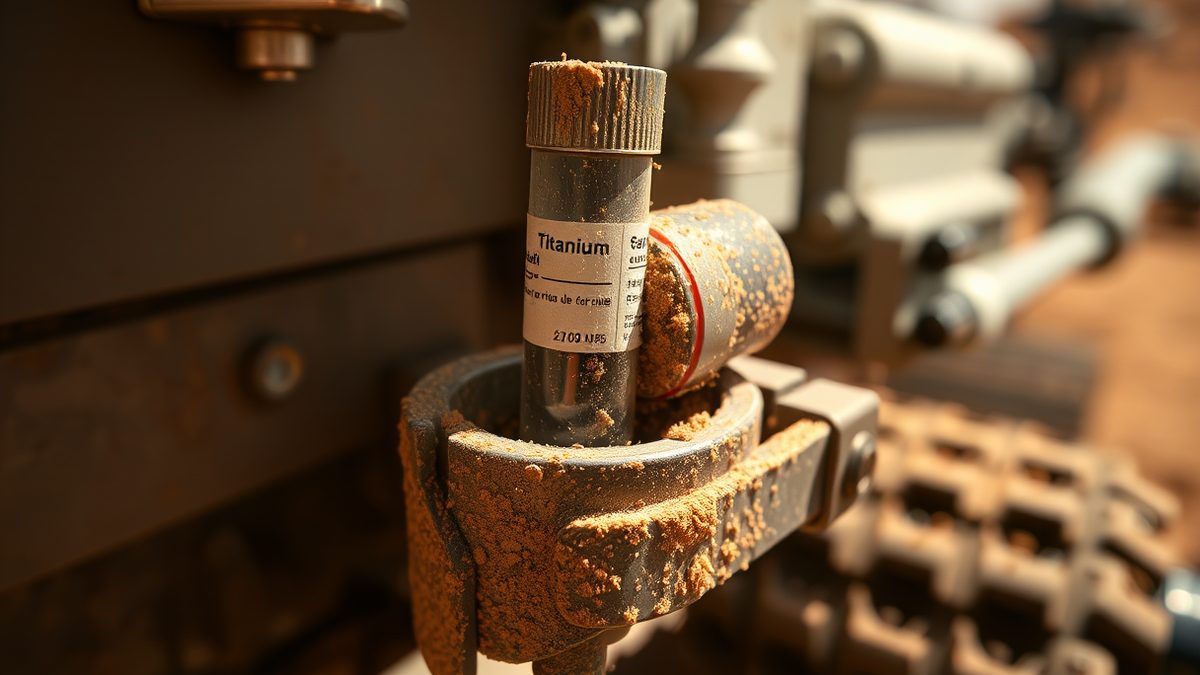
China's Mars receiving lab
The Deep Space Exploration Laboratory announced the facility for Hefei's Deep-Space Science City on Wednesday 5 August 2026. DSEL is co-founded by the China National Space Administration, the Anhui provincial government and the University of Science and Technology of China. Li Hang, DSEL's director of development planning, said the laboratory will operate in line with COSPAR's planetary protection policies. It is designed to receive, quarantine and study Martian material from Tianwen-3 around 2031.
Its core functions will include sterilising the return capsule's exterior before it is opened, unsealing sample canisters in ultra-clean environments, processing and distributing samples to scientific teams, and assessing biological risk before any material leaves containment.
COSPAR classes Mars sample return as Category V Restricted Earth Return, its highest stringency tier. Planetary protection imposes two obligations that run in opposite directions: keep terrestrial biology out of the samples, and keep the samples out of Earth's biosphere. Meeting both requires cleanroom conditions and Biosafety Level 4 containment in the same building, a combination no existing facility offers. The Hefei facility will have dedicated ultra-clean areas and separate biosafety areas.
Compliance with COSPAR's framework is voluntary, Cassie Conley, a former NASA Planetary Protection Officer, told Space.com. No international mechanism exists to inspect or certify a Mars sample receiving facility before samples arrive. John T. O'Brien of the Bipartisan Commission on Biodefense called international inspection politically sensitive and contentious, noting that even BSL-4 laboratory inspections have been hard to implement internationally.
Why China's lab has no US counterpart
Mars Sample Return was a joint NASA and European Space Agency venture to ferry Perseverance's cached tubes to Earth. NASA paused and began reassessing the programme in 2024 after sinking billions of dollars into it, and cancelled it with no clear alternative in sight, CNN reported. Congress formally cancelled the NASA-ESA programme in January 2026, eliminating both the mission to retrieve the cache and the Sample Receiving Facility designed to contain it on arrival. The European Space Agency subsequently moved to cancel its Earth Return Orbiter, the spacecraft that would have carried the samples home.
In a July statement to CNN, NASA said it was exploring "a range of potential return options" that could be simpler and more affordable than the original plan, including possible commercial or international contributions. NASA's leaders still have not revealed a path forward. The United States has no funded replacement programme and no receiving facility under construction.
The sample waiting on Mars
Perseverance landed in Jezero Crater in February 2021 to hunt for rocks created or modified by water. It collected the Sapphire Canyon sample from rocky outcrops at the edges of Neretva Vallis, a valley sculpted by rivers that once fed an ancient lake more than 3 billion years ago. The sample is about the size of a chalk stick and sits sealed inside the rover's chassis.
Scientists consider the rock promising because of its spotted appearance. On Earth, tiny dots called reaction fronts or reduction spots form in soils and sediments due to microbial activity. "When there's organic matter that's lodged in sediment or soil that's buried and microbes start to digest some of that organic matter, they form these bleached halos and spots that are quite resemblant to the ones that Perseverance found in this ancient river valley," said Adrian Broz, a member of the Perseverance science team and a postdoctoral researcher at Purdue University.
Perseverance drilled the sample from an arrowhead-shaped rock called Cheyava Falls in July 2024. Broz, a coauthor of a study about the sample published in September 2025, said: "This is the first time I think we've found something that qualifies as a 'potential biosignature'" on Mars. Returning the samples to Earth is the only way to determine whether the spots formed by life or by abiotic chemical or geological processes.
The rover cost NASA about $2.4 billion to build and launch. It lacks the instrument suite to answer the life question on Mars by itself. "We can keep doing these studies and coming up with these hints, but we're never going to know for sure until we get those samples back," said Briony Horgan, a Perseverance co-investigator and professor at Purdue University.
What happens next
China is looking to retrieve its own samples from Mars in 2031, and the rocks Tianwen-3 brings back could look very different from Perseverance's samples and offer different insights, CNN reported. Tianwen-3 is expected to launch in 2028.
Sources
28- 01NASA may already have proof life once existed on another planet. Scientists might never get to find outEN
- 02China Announces Only Mars Sample Receiving Lab on Earth After NASA Cancels PlansEN
- 03How engineer Michela Muñoz became the first Spanish woman hired by NASA: "In the US, hard work is recognized"EN
- 04AMAA 2026: NASA JPL details 3D printed lattice design for Mars Sample Return impact protectionEN
- 05NASA may already have proof life once existed on another planet. Scientists might never get to find outEN
- 06Why Magnetic Sensor Selection Has Become a System Architecture DecisionEN
- 07NASA-Weltraumteleskop Swift über Indonesien verglühtEN
- 08NASA kündigt neues Experimentalflugzeug X-70 Fractal anEN
- 09 NASA's Swift space telescope crashes back to Earth after failed rescue attempt EN
- 10 Mars isn't dead — recent volcanic activity reveals it's just sleeping EN
- 11NASA is racing against time to save the Hubble Space TelescopeEN
- 12How Do Artificial Agents Make Decisions in Light of Visual Data?EN
- 13Toward a Compositional Knowledge Architecture for a Shared Organizational CortexEN
- 14Deep Meets Classical: A CPU-Efficient Decision-Fusion Model for Automatic Modulation ClassificationEN
- 15Trace Gas Orbiter discovers potential evidence of volcanic activity on Mars via atmospheric observationsEN
- 16 NASA asks industry for ideas about saving Hubble Space Telescope EN
- 17 Do we know how many Starship launches SpaceX will need to get NASA astronauts to the moon? No. Will its refuelling plan be simple? Also no. EN
- 18NASA smashed into an asteroid. Now Hera is closing in to see what happenedEN
- 19NASA reveals a haunting skull hidden in Antarctica’s iceEN
- 20NASA's Hubble and Webb discover ancient worlds that remember their pastEN
- 21 On this day in space! Nov. 1, 1962: The Soviet Union Launches Mars 1 spacecraft to Red Planet during the Space Race EN
- 22 The moon, Mars, and Jupiter shine in the heart of the Lion overnight on Nov. 1-2 EN
- 23 An aquanaut comes home: Returning to Earth from an undersea 'space station' EN
- 24China’s CXMT defends bet on risky new DRAM architecture to circumvent US chip curbsEN
- 25Blue Origin attempts end of year return and eyes Artemis IV selectionEN
- 26Article: Systemic Approach to Memory, Knowledge, and Context in Agentic AI ArchitecturesEN
- 27NASA discovers Jupiter’s invisible shield is more complex than Earth’sEN
- 28NASA Artemis Update: SLS Stacking, Sortie Suit, Dual 2028 PathsEN
All figures and quotations in this text come from the sources listed below.
Content prepared by the editorial team with AI assistance.
Sofia Marchetti
Comments
0- No comments yet — be the first.