Copyright disputes in 2024-2026: blocked songs, redrawn domes and settled lawsuits
Six disputes from the past two years, from YouTube's SESAC blackout to a Dusseldorf ruling on the Stratocaster, show how rarely copyright fights end in a clean win for either side.
 Helen MarshCulture, food and lifestyle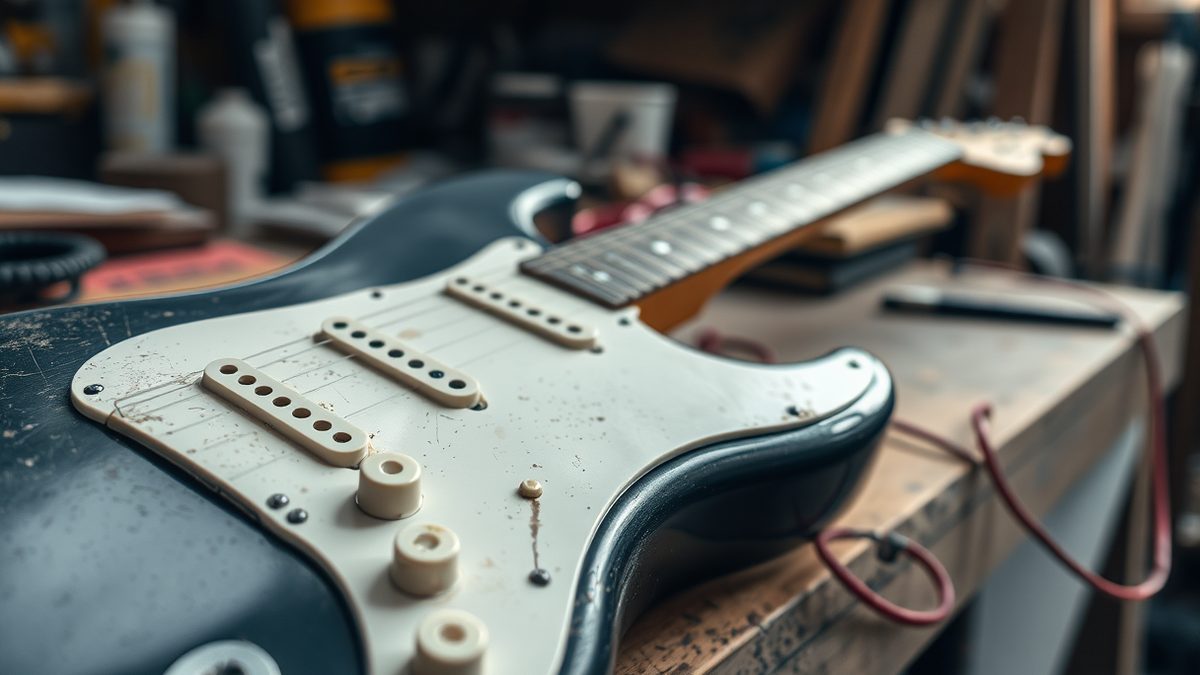
On Saturday 28 September 2024, some of the most watched and listened to music on YouTube and YouTube Music disappeared. Instead of the video, users saw a message: "This video contains content from SESAC. It is not available in your country." The Verge reported the blackout hit Adele's "Rolling in the Deep" and songs by Kendrick Lamar, Britney Spears, Green Day, Kanye West and Burna Boy, among others, as YouTube negotiated a new deal with the performing rights organisation SESAC. By Monday afternoon YouTube said it had a new deal and that the missing music would be restored "over the next day or two."
That is a copyright dispute in its most visible form: a catalogue goes dark, users notice, and a deal closes within days.
SESAC stands for the Society of European Stage Authors and Composers, founded in 1930. According to its website, quoted by The Verge, it "currently licenses the public performance of more than 1.5 million songs on behalf of its 15,000+ affiliated songwriters, composers, and music publishers." It is smaller than BMI and ASCAP, but its portfolio includes major names. In 2017 it was acquired by the private equity firm Blackstone.
Not every removal was uniform. The Verge noted that one listing for Kanye West's "Power" was blocked while the music video version continued to stream. SESAC itself did not comment publicly. YouTube spokesperson Mariana de Felice told The Verge: "We have held good faith negotiations with SESAC to renew our existing deal. Unfortunately, despite our best efforts, we were unable to reach an equitable agreement before its expiration. We take copyright very seriously and as a result, content represented by SESAC is no longer available on YouTube in the US. We are in active conversations with SESAC and are hoping to reach a new deal as soon as possible." An unnamed source cited by Variety suggested the timing was a negotiating tactic, saying "the previous deal actually does not expire until next week."
When the dispute is about a routine, not a catalogue
Two years later, the same licensing machinery nearly cost a figure skater his Olympic programme. The Guardian reported on 3 February 2026 that Spain's Tomàs-Llorenç Guarino Sabaté, a six-time national champion, learned late the previous week that his short programme, built around music from the Minions films, would not be cleared for the Milano Cortina Winter Games. He had submitted the music through the International Skating Union's recommended rights-clearance process months earlier and had skated the routine all season, including at last month's European championships in Sheffield.
On Tuesday he thanked fans after Universal gave permission. "Huge THANK YOU to everyone who reposted, shared and supported. Because of you Universal Studios reconsidered and officially granted the rights for this one special occasion," Guarino Sabaté wrote on Instagram. "There are still a couple things to be tied up with the other 2 musics of the programme but we are so close to accomplishing it! And it's all thanks to you!! I'm so happy to see that the minions hitting Olympic ice is becoming real again!! I'll keep you posted."
The near-miss fits a pattern. At last year's world championships in Boston, ISU director-general Colin Smith described licensing as "a complex issue, frankly, because the music industry has no common clearance platform," adding that "there are multiple buckets of rights, and within those buckets the clearance process isn't done on a single platform." Canadian ice dancers Marie-Jade Lauriault and Romain Le Gac learned late last year that two Prince songs planned for their 1990s-themed rhythm dance could not be cleared for Olympic use, despite being approved for the rest of the season. Canadian pairs skaters Deanna Stellato-Dudek and Maxime Deschamps abandoned a cover of a Phil Collins track after being quoted a fee in the tens of thousands of dollars.
The most expensive example predates them. At the Beijing Olympics in 2022, American pairs champions Alexa Knierim and Brandon Frazier were hit with a copyright lawsuit over a cover of House of the Rising Sun. The case was settled privately for an undisclosed sum understood by the Guardian to be around $1.4m.
"It's a complex issue, frankly, because the music industry has no common clearance platform." Colin Smith, ISU director-general, to the Guardian
A dome, a lawyer and two large corporations
Not every dispute involves a platform or a broadcaster. In a first-person account published by glass artist Victoria Balva, a Canadian based in Mississauga describes how she was contacted a few months earlier by a person in Asia about a large stained and leaded glass skylight being built for Huawei's headquarters in Shenzhen. The rendering looked, in her words, very similar in details and structure to some of her own domes and ceilings.
Balva wrote to Nikken, the Japanese architectural and interior design company working on the project. After an exchange of letters, she says, Nikken conducted an internal investigation and accepted that its employee had looked at her designs. The firm appointed a Toronto-based lawyer, Tony Prenol of Blakes, to handle the case. Balva lists projects she believes "inspired" the sketch, including a 2017 dome in New Haven, Connecticut, a 2012 domed skylight on the Bridle Path in Toronto and a 2009 dome in Hoggs Hollow, Toronto.
She eventually hired Yuri Chumak of Chumack and Company. "Based on Canadian Copyright Laws the Nikken's design is a substantial copy of my work, and my copyright was infringed," she writes. After discussions, a new proposed design was sent for approval. "I noticed that the new proposed design still contained a couple of minor elements from my work, but in general, it did not look similar to my work anymore, which I confirmed." The case, she adds, has not been fully resolved, and cost her four months of professional work. The Globe and Mail's architecture critic Alex Bozikovic later covered the story for subscribers.
The account also touches on a wider observation: that Huawei's new campus buildings have been criticised for copycat architecture, and that the rendering resembles the National Library of France, designed by Henri Labrouste and built between 1860 and 1868.
Courts asked to decide what geo-blocking means
In Europe, a dispute over the Diary of Anne Frank has turned into a test of whether geo-blocking can ever be good enough. TorrentFreak reported on 25 September 2024 that the Dutch Supreme Court referred three questions to the Court of Justice of the European Union under Article 3(1) of the Copyright Directive.
The background: Anne Frank died in 1945, her father Otto Frank published the first printed copies in 1947, and in 1963 he established the Anne Frank Fonds in Switzerland and appointed it his sole heir. Early versions are presumably in the public domain in several countries, but the original manuscripts are protected by copyright in the Netherlands until 2037. The Dutch Anne Frank Stichting blocks Dutch visitors from the scholarly edition of the manuscripts. The Fonds argues that because a VPN can bypass the block, the manuscripts should not be online at all. Lower courts disagreed, finding reasonable measures had been taken, and the case is now before the Dutch Supreme Court.
The questions put to the CJEU ask, in short: can publication count as a communication to the public in a country only if it is directed at that country; does state-of-the-art geo-blocking prevent such a communication when a VPN can circumvent it; and if the block is insufficient, does that make the publisher liable. TorrentFreak notes that if state-of-the-art geo-blocking were deemed insufficient, rightsholders could in theory pursue many streaming services and platforms, making geographical licences impossible to enforce.
AI datasets, database downloads and guitar body shapes
Three more disputes show how far the term now stretches. On 26 March 2026, BetaKit reported that the Canadian Legal Information Institute (CanLII) and Vancouver-based AI startup Caseway AI had settled a copyright dispute filed in the British Columbia Supreme Court in November 2024, in which CanLII alleged Caseway built a business by wrongfully taking its work through a bulk and systemic download. Settlement terms are confidential, but both sides issued statements. A CanLII blog post said CanLII "continues its work providing broad public access to primary legal information," while Caseway "continues developing technology solutions for organizations that operate in complex, document-heavy environments." Caseway's release called the outcome "a clear shift away from attempting to slow technological progress through litigation."
Guitar World reported on 22 June 2026 that Thomann, the world's largest music retailer, is suing Fender over its wave of cease-and-desist letters in the Stratocaster copyright dispute. The action follows a default ruling by the Regional Court of Dusseldorf in March granting "enforceable rights against any guitars using the Stratocaster body shape" in the EU, and cease-and-desist letters sent in May to firms including LsL Instruments and PRS Guitars. Thomann, whose in-house brand Harley Benton received its own letter, says it is acting for other manufacturers. "Many of those affected do not have the financial and legal means to conduct such a legal dispute," CEO Hans Thomann said. "We therefore see it as our responsibility to have this matter clarified in court not only for our own company, but for all parties involved."
Read together, the six cases point to the same thing: copyright disputes are rarely settled by a single ruling. Songs come back after a deal, an Olympic routine survives after a studio reconsiders, a dome gets redrawn, a database lawsuit ends in confidential terms. What remains contested is the machinery underneath, from clearance platforms to geo-blocking to the question of whether a guitar body can be owned at all.
Sources
6- 01YouTube pulls songs from Adele, Nirvana, and others due to SESAC disputeEN
- 02Figure skater saved from scrapping Olympic routine after Minions music copyright disputeEN
- 03New Huawei Headquarters. Copyright infringement disputeEN
- 04"Anne Frank" Copyright Dispute Triggers VPN and Geoblocking Questions at EU's Highest CourtEN
- 05Online legal database CanLII and AI startup Caseway settle copyright disputeEN
- 06Thomann suing Fender over cease-and-desistsEN
All figures and quotations in this text come from the sources listed below.
Content prepared by the editorial team with AI assistance.
Helen Marsh
Comments
0- No comments yet — be the first.