EU industry's energy bill stays high as Inbolt raises €11M for adaptive robots
Paris-based Inbolt closed an €11 million round on Wednesday to give industrial robots real-time perception, bringing its total funding to €30 million, according to Tech.eu.
 Dr. Amara PatelEconomy, business and world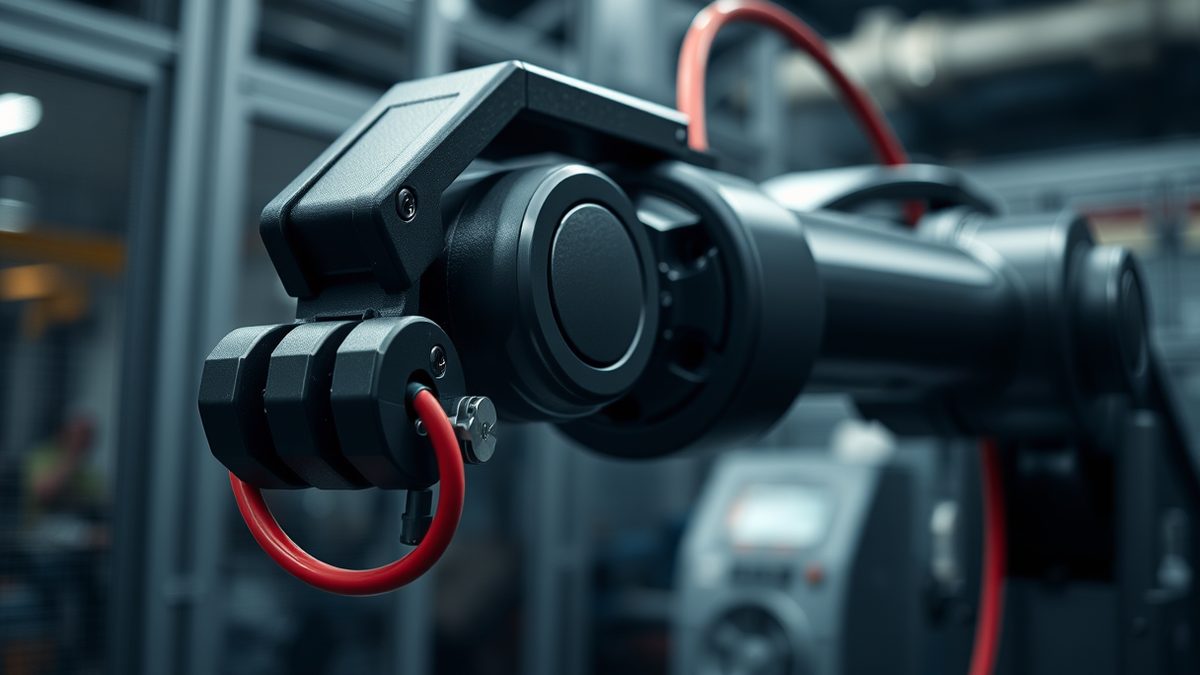
Inbolt's round is small next to Europe's energy problem, but it points at the same pressure: factories are being asked to produce more from lines that already exist. The company, founded in 2019 by Rudy Cohen, Albane Dersy and Louis Dumas, sells a hardware-agnostic AI layer that lets robots adjust their control loops when parts are misaligned or tooling wears, Tech.eu reported on 30 September. Shift4Good led the round, with Bridges Climate Transition Partners joining and BNP Paribas Développement and Ora Global following on. The system is deployed on more than 200 robots in over 100 factories across three continents, with customers including Bosch, Beko, Flex, Ford, Stellantis and Toyota.
That is the technology story. The economics around it are less tidy.
The European Commission has warned that oil and gas prices could stay very high through the coming winter, with gas stocks thin and the Hormuz disruption still feeding into import costs. Anadolu Ajansı quoted a commissioner saying the EU has paid an extra $113 billion in energy costs without receiving more gas or oil. Xinhua put the figure at 100 billion euros. The two numbers are not the same, and neither is a settled accounting of the crisis; they are both estimates of what Europe paid for the same molecules.
For manufacturers, the bill is not only about wholesale gas. It is about whether a plant can run a second shift, whether a robot can be reprogrammed instead of replaced, and whether a leasing contract for an electric van can be priced with any confidence. CleanTechnica reported on 29 September on Transport & Environment analysis showing the used-car market applies a 12.9 percentage point depreciation gap between combustion and electric cars in Germany, France, Italy and Spain. Adjusting for subsidies, acquisition taxes, inflation and fleet composition cuts that gap by 80%, to 2.6 percentage points. Another 5.1 points should come off as new EV prices fall. T&E's Stef Cornelis said the industry is painting an overly simplistic picture to justify opposing EU fleet electrification targets.
The policy fight is now running on several tracks at once.
Italy and the Czech Republic are pushing for softer EU rules on carbon permits and energy supply, Reuters reported on 29 September, and Prime Minister Giorgia Meloni was in Prague for an Italy-Czech action plan covering energy and industry, according to Agenzia Nova. The European Commission has published terms for a €1 billion industrial heat decarbonisation auction, EU Reporter said. Meanwhile, a separate Commission move to delay methane import rules by a year is being weighed amid energy price pressure, according to streamlinefeed.co.ke. Those are not compatible signals for an industrial investor trying to model the next five years.
Not all the news points one way. The Centre for Research on Energy and Clean Air said EU CO2 emissions fell 2% in the first half of 2026, just under half the pace needed for the 2030 target. European heat pump sales are rising amid tariff adjustments, according to 재경일보. And in Japan, where the same industrial energy maths applies, Helical Fusion told reporters on Tuesday that it expects preliminary power-on tests at its Helix HARUKA demonstration reactor in 2027, with a second coil and liquid-metal blanket to follow before power-on tests around 2030. The Asahi Shimbun reported that CEO Takaya Taguchi aims for a commercial plant as early as the 2040s, but listed cost, safety and construction speed as open problems. Japan's government has designated fusion as one of 17 strategic sectors and plans 3.1 trillion yen, about $19.7 billion, in public and private funding by the 2040 financial year.
The nearer-term argument is about demand. T&E has separately claimed that cutting EU EV targets would require 150 new power plants to balance the grid, a figure that assumes electrification continues at a certain pace. That is a modelling claim, not a measurement, and it sits opposite the industry's depreciation figures. Both sides are using numbers to argue about the same thing: who pays for the transition while energy prices are high.
On the factory floor, the answer is arriving in smaller increments. Inbolt's €11 million will go towards international growth and entry into data centre and electronics manufacturing, Tech.eu said. It will not change Europe's gas bill. It might change whether a mid-sized plant in Baden-Württemberg can keep a line running when a supplier delivers a batch that is two millimetres out.
Sources
8- 01Inbolt raises €11M to bring real-time vision and intelligence to industrial robotsEN
- 02Second-Hand EVs Retain Their Value Better Than Industry Claims — New StudyEN
- 03Japan's fusion energy startup to begin power-on tests at pilot reactor in 2027EN
- 04What von der Leyen left out of her Congress of Europe pitchEN
- 05Before pixels: Modular industrial dashboardsEN
- 06Beyond Utilization: Energy-Conscious GPU Sharing for Inference ServingEN
- 07How 'Industry 5.0' integrates human expertise with artificial intelligenceEN
- 08Bats may have first evolved in Europe 65 million years agoEN
All figures and quotations in this text come from the sources listed below.
Content prepared by the editorial team with AI assistance.
Dr. Amara Patel
Comments
0- No comments yet — be the first.