Five hundred milliseconds from pitch to screen: how much data a broadcast produces
A Chinese sports-market analysis offers numbers that explain why broadcasting has become part of the measurement infrastructure: an F1 car carries more than 300 sensors and generates over 1.1 million data points per second.
 Peter LindqvistSport, cars and travel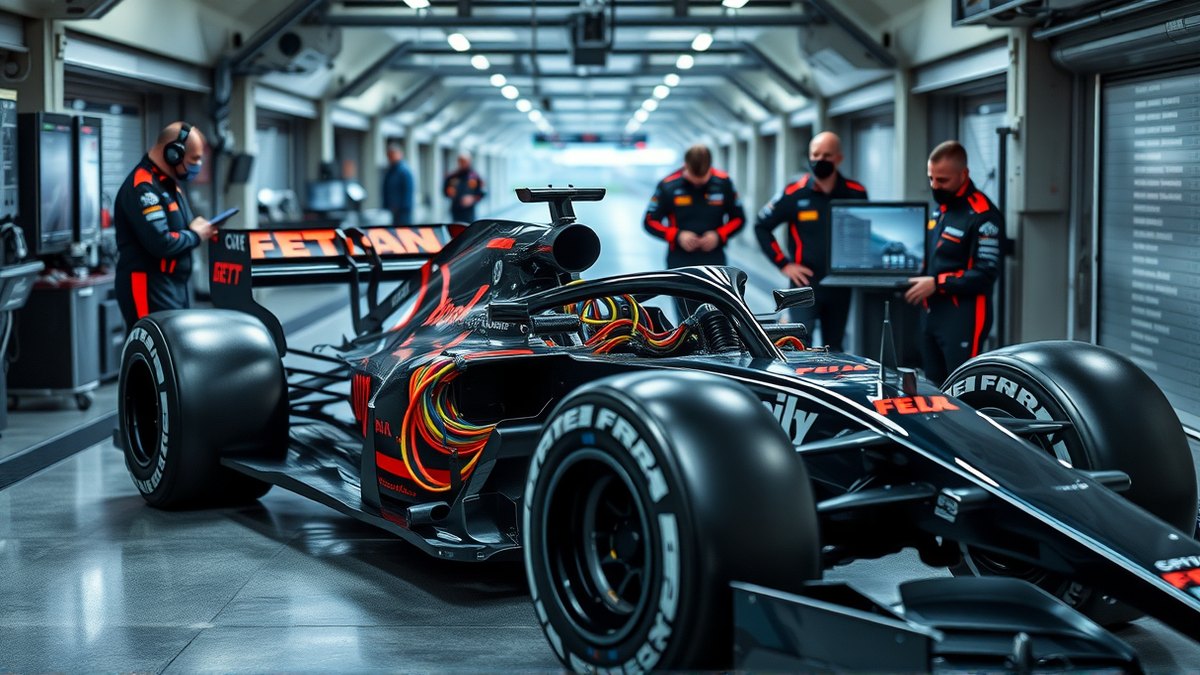
A modern stadium runs like a data factory. Players wear sensors that track heart rate, acceleration and muscle load. High-resolution cameras work with computer vision and pick up the details of movement at hundreds of frames per second. Sensors scattered around the venue monitor pitch moisture, light intensity and even crowd density.
The scale is striking. A Chinese analysis prepared for the portal 36kr counts more than 300 sensors on a single Formula 1 car, which generates over 1.1 million data points per second. In football training, ten minutes, ten players and three balls are enough to produce more than 7 million data points.
The bottleneck: half a second
Collecting data is only the beginning. In a football match the whole chain has to fit inside 500 milliseconds, from detecting an event through computing it to delivering it to a global broadcast audience. In Formula 1 the window is shorter still. A single pit stop lasts around two seconds, so the analysis has to be ready before the next one.
That is why low-latency architecture matters so much in sports broadcasting. Raw computing power alone does not. A camera that spots an event a second too late is useless to the commentator and to the coach.
Who supplies the data
Specialised companies handle the measurement layer. Genius Sports supplies data to the Premier League. Football DataCo had already picked it to provide live data from the Premier League, the Championship and Scottish competitions from the 2019/20 season. In May 2021 it acquired Second Spectrum, which supplies tracking data and analytics to leagues, clubs and broadcasters.
The same supplier also runs solutions for American college sport. In May 2018 the NCAA announced a statistics initiative for its 1,100 members, carried out jointly with Genius Sports. League data is therefore not a by-product of broadcasting. It is a commodity traded in its own right.
Football is no longer just an image. It is a stream of numbers that has to reach the screen faster than a competitor's.
Not just the camera
The Chinese analysis points to one more layer: broadcast data no longer serves the viewer alone. The same streams feed training models and player-rating systems, so the loop closes. Training generates data, the match generates data, and both end up in the same database. Broadcasting stops being the end product and becomes one of the inputs to the decision process.
For the broadcaster this means pressure from two sides. It has to deliver the picture and the graphics inside a half-second window, and it has to sell the data as a separate product. A club today buys not only the broadcast but also access to the measurement produced during it. The league sells both elements separately, sometimes to the same buyer.
For the viewer that means graphics with a predicted score, pace charts and real-time player statistics. For the club, material for decisions. And for the league, an asset sold separately, sometimes to the same entity that broadcasts the match.
Sources
3All figures and quotations in this text come from the sources listed below.
Content prepared by the editorial team with AI assistance.
Peter Lindqvist
Comments
0- No comments yet — be the first.