Catapult: wearable sensors, 580 employees and data that never makes the match report
The Australian company that started with a project at the Institute of Sport now sells Real Madrid and Chelsea a way to measure training load, plus an indoor positioning system built with CSIRO.
 Peter LindqvistSport, cars and travel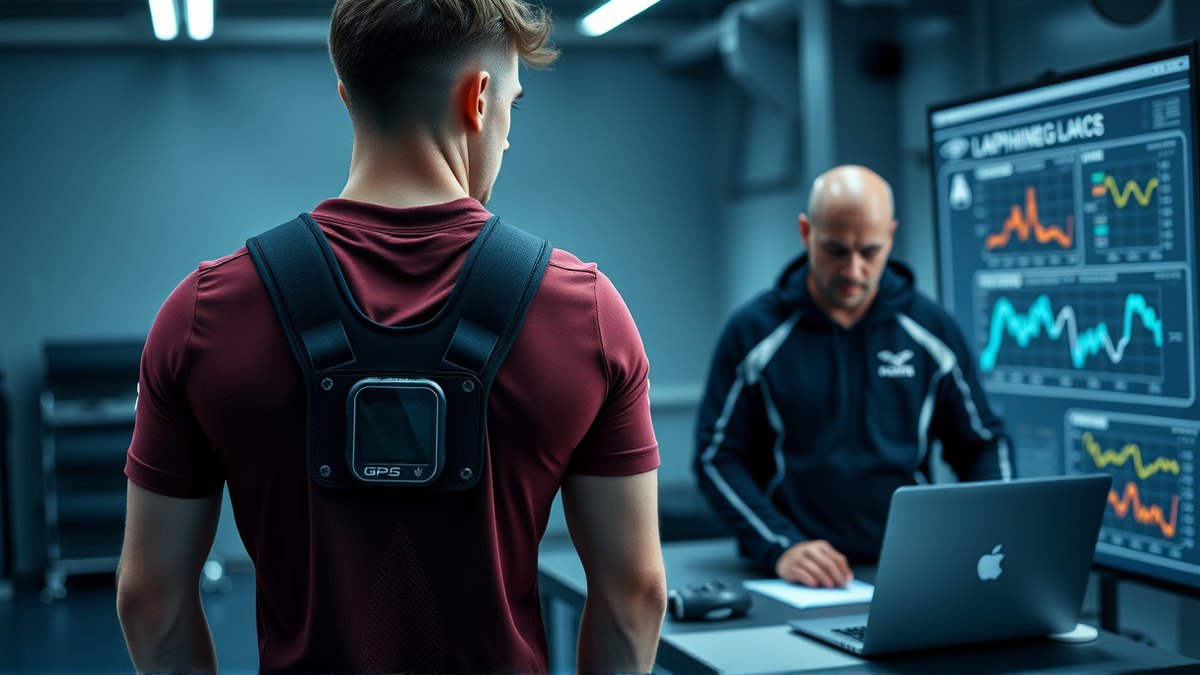
Catapult's history shows where load measurement in professional sport came from. In 1999 two engineers, Shaun Holthouse and Igor van de Griendt, worked on a project with the Australian Institute of Sport. The goal was specific: replace laboratory endurance testing with microtechnology. Players do not push themselves in a lab the way they do in competition.
The company was founded in 2006 and listed on the Sydney exchange in 2014. It is based in Melbourne, employs around 580 people and operates worldwide. Its main product is wearable sensors: Vector S7, T6 and the announced T7, which a player wears during training and matches.
More than sensors
The portfolio is wider than the label "wearables" suggests. ClearSky is a local positioning system developed with the Australian research agency CSIRO. It works like GPS indoors, which matters inside sports halls. G5 is a monitor for goalkeepers. It measures the direction and intensity of throws, jumps, accelerations and decelerations, changes of direction, repeated high-intensity efforts and recovery time.
Catapult has also bought up companies: GPSports, XOS Digital, PlayerTek, SportsMedElite and Baseline Athlete Management Systems. The result is an offer that combines sensors, video analysis and athlete management software, aimed not only at professionals but also at semi-professional and amateur teams.
Who uses it
Among Catapult's clients are the Brazil national team, Real Madrid, Chelsea, Ittihad Club, Saracens and the Australian cricket team. On the side of organisations and leagues: the England and Wales Cricket Board, NRL, La Liga and XFL.
That list explains why regulation of player data has become so urgent. A sensor on a footballer's back produces data about his body all season long, data that appears in no match protocol. A Chinese market analysis points out that this is exactly where the question of ownership and the limits of using biometrics comes up. Data that began as a coach's tool becomes an asset of the club, the technology supplier and the league at the same time.
Load measurement was an answer to a physiological problem. Today it is a legal problem.
The Catapult story is instructive not because the company succeeded, but because it shows a mechanism. A tool built for one purpose, navigation inside sports halls, was used for something completely different, and its side effect became a separate matter to settle.
Sources
2All figures and quotations in this text come from the sources listed below.
Content prepared by the editorial team with AI assistance.
Peter Lindqvist
Comments
0- No comments yet — be the first.