Hormuz war splits freight markets: tanker earnings soar, container indexes diverge
Very large crude carriers were earning about $1.37 million a day on the Middle East to China route on 16 October, against roughly $56,000 on 9 January. The figures come from a UNCTAD report published on 29 October, Safety4Sea reported.
 Dr. Amara PatelEconomy, business and world
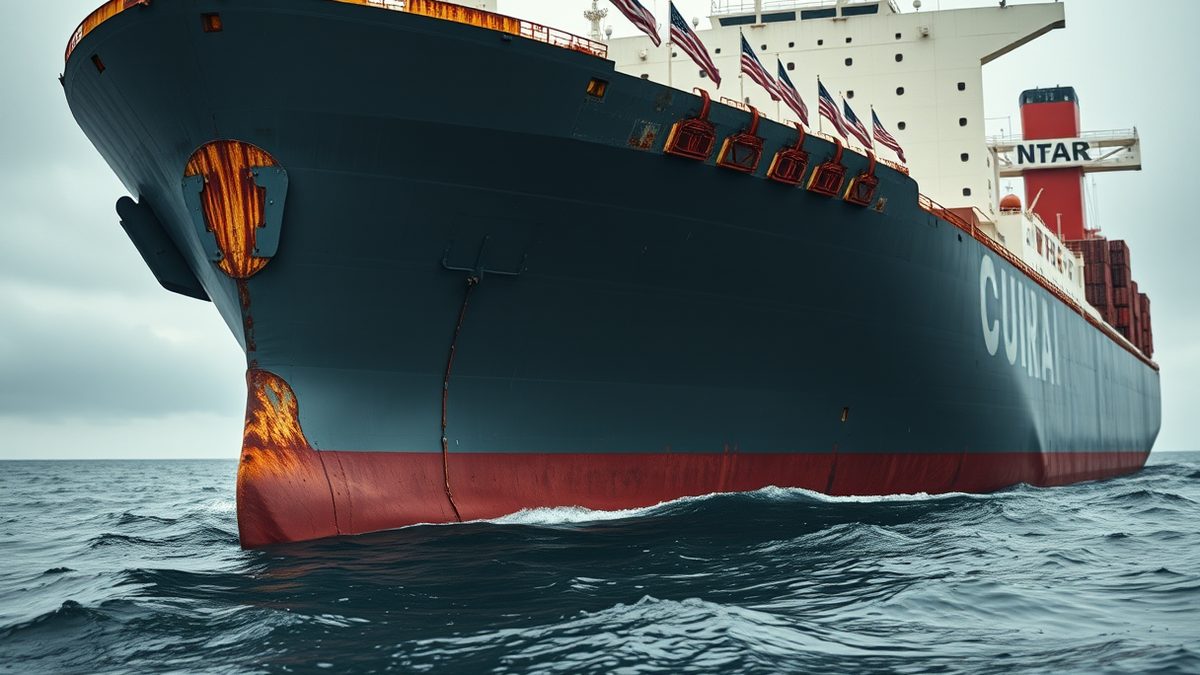
Freight sets refinery barrel costs, importer box costs and BYD's overseas car landing costs. Bunker fuel prices were 72% higher on 20 October than their six-month pre-conflict average, feeding fuel, food and goods prices.
Tankers and fuel
The Baltic Exchange Dirty Tanker Index hit 371 by 19 October, against a baseline of 100 on 27 February. The Clean Tanker Index hit 280.
West Africa to China rose from about $55,000 to $720,000; the US Gulf to China run from $60,000 to $559,000. UNCTAD calls them route-specific estimates, not fleet averages. Diesel rose 81%, jet fuel 80% and gasoline 64%. Four regional crude benchmarks averaged about $108 a barrel on 19 October, against about $66 at the start.
Containers diverge
Box rates are messier. Drewry's World Container Index fell 3% to $4,429 per 40-foot container on 29 October, reversing two weekly increases.
Shanghai to Los Angeles dropped 6% to $7,514; Shanghai to New York fell 5% to $9,631. Asia-Europe held: Shanghai to Rotterdam rose 1% to $3,686 and Shanghai to Genoa was unchanged at $4,151. Drewry counted six blank Transpacific sailings for the following week, against five this week. It cited a National Retail Federation forecast of an 11% month-on-month fall in US ocean imports in November.
The NYSHEX Freight Index rose on all five monitored lanes on 30 October. Asia to North Europe gained 5.40% to 3,203.78; the Transatlantic eastbound jumped 18.77% to 1,124.31. The Shanghai Containerized Freight Index edged up 0.16% to 3,687.35.
Refiners pay
For refiners, freight decides which barrel makes sense. Indian refiners pay about $20 a barrel above the $115 Brent futures price in the physical market, industry executives told The Economic Times. Freight adds $10 to $20 a barrel on top, depending on the source.
The IEA said surging delivered crude costs pushed Asian refiners' margins on Middle East crude negative in September. Kpler analyst Matt Wright wrote the market lacks vessels willing and able to operate efficiently in the Middle East Gulf. Storage tightens it further. Azernews reported one supertanker voyage from the US to China reached $80 million, about $40 a barrel in transport costs on a two-million-barrel cargo. Around 50 supertankers are used as floating storage in the Persian Gulf, and Saudi Arabia cut Asian prices by $5 to $7 a barrel.
BYD buys ships
Carmakers face the same arithmetic. BYD will expand its car-carrier fleet to 18 ships from eight by 2029, Rest of World reported. Each new vessel, built by China Merchants Industry, will carry about 9,200 cars. Renting a carrier of about 6,500 cars costs $95,000 a day, up from $50,000 in February, according to Clarksons Research.
Owning ships could cut BYD's per-car shipping cost abroad by up to 40% versus chartering, one industry estimate says. BYD sold 180,700 cars outside China in September, more than double a year earlier and almost 40% of its monthly total. It targets more than 2.5 million overseas sales next year. This year's figure is 1.9 to 2 million. Car carriers on Asia-Europe routes are sailing around the Cape of Good Hope, adding about 25% to the distance and up to 14 days a voyage. The China to Middle East spot rate rose to $220 per cubic metre from $65 in February.
Court
The disruption has landed in court. Mercuria wants a court to declare the Baltic Exchange breached its obligations. It argues the exchange should have suspended the TD3C assessment for Ras Tanura to China once the conflict restricted Hormuz shipments, Global Trade Magazine reported. Mercuria's lawyers cited a broker who called assessing TD3C on 2 April "utter nonsense". The Baltic Exchange said the claim was without merit and that it had fulfilled its obligations.
Sources
14- 01UNCTAD: Tanker freight rates and bunker costs surge amid Hormuz disruptionsEN
- 02Container freight rates diverge as NYFI rises and Drewry WCI fallsEN
- 03BYD expands EV shipping fleet as wars upend freight costs and key trade routesEN
- 04High freight rates narrow Indian refiners' crude oil choices, squeeze marginsEN
- 05Iran war shipping disruptionEN
- 06Oil trade's shipping bottleneck threatens a fresh wave of inflationEN
- 07Binance breach puts custody at center of crypto infrastructure tradeEN
- 08The ETS Investment Engine: Scaling Europe’s Strategic E-fuel Market for Shipping & AviationEN
- 09Goldman Sachs pulls AI coding tools from traders and bankersEN
- 10Hackers Steal About $2.7 Million From Polymarket Traders via Hijacked DebugBear ScriptEN
- 11FBI Links North Korea's TraderTraitor to Record $6.43 Billion Binance Crypto HeistEN
- 12Launch HN: Momentic (YC W24) – Agents that catch bugs by using your appEN
- 13Oil majors count the cost of runaway tanker rates - Splash247EN
- 14Reviewer-gates: Trading speed for correctness with ClaudeEN
All figures and quotations in this text come from the sources listed below.
Content prepared by the editorial team with AI assistance.
Dr. Amara Patel
Comments
0- No comments yet — be the first.