Humanoid Robots Move From Demos to Factory Floors as Supply Chain and Data Gaps Bite
China shipped more than 19,000 humanoid robots in the first half of 2026, accounting for 77.9% of global deliveries, according to IDC figures reported by TechNode on 29 September. The same week, new launches from ANYbotics and Innodata highlighted how far the supporting infrastructure still has to travel.
 Rachel NwosuAI, models and technology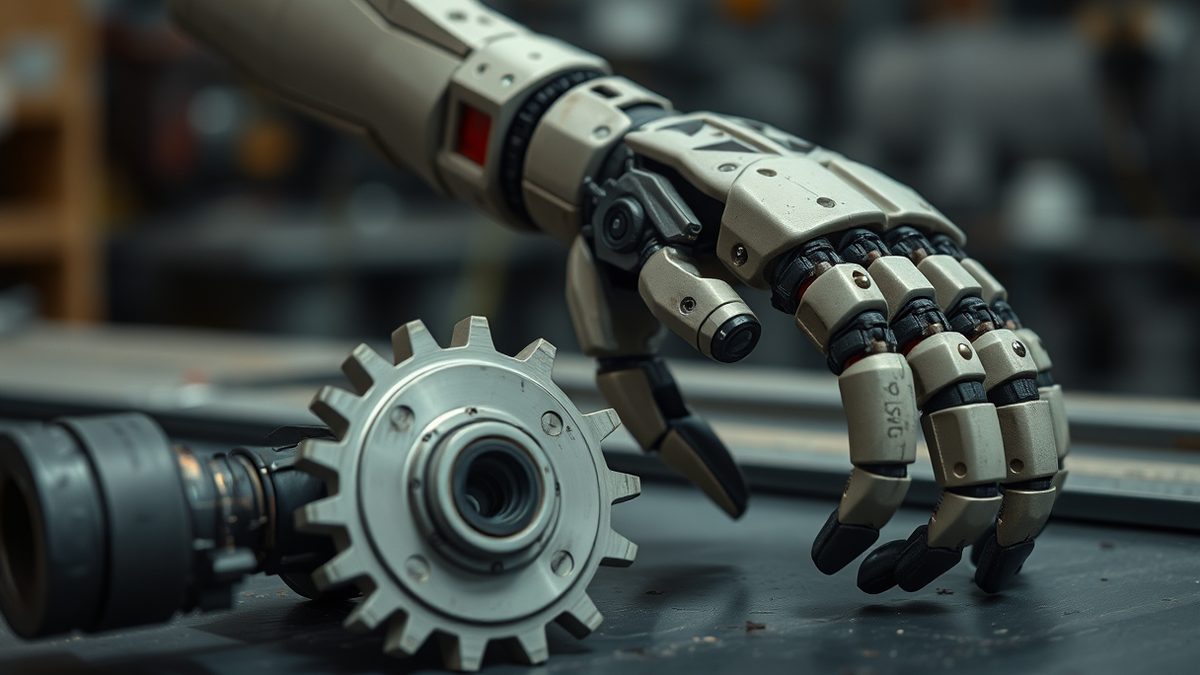
The global humanoid robot market is no longer a research demo. It is a shipment statistic. According to IDC figures attributed by TechNode on 29 September, global humanoid robot shipments reached nearly 25,000 units in the first half of 2026, up 432.1% year over year, with China accounting for 77.9% of that total. IDC also raised its 2030 forecast to more than 750,000 units.
That is the demand side. The supply side is messier.
Tesla, the company whose CEO has called Optimus potentially "the biggest product ever," is struggling to get its newest version out the door. According to extensive reporting by The Information summarized by Ars Technica on 26 September, Tesla's Fremont factory stopped making the Model S sedan and Model X SUV as of May 2026, moving line workers and engineers onto Optimus. The newest version, Optimus V3, has proven difficult to manufacture: production line equipment struggles to line up components precisely, and running the line too fast creates limitations. Tesla has reportedly scaled to hundreds of robots per week, but is targeting more than 1,000 per week by the end of 2026.
Hands, sensors and the human factor
The bottlenecks are physical. Ars Technica reports that human workers must manually assemble Optimus hands and forearms that together contain more than 100 small components such as screws. Touch sensors for the hands have proven unreliable enough that Tesla developed a glove-like layer of sensors that can be replaced without replacing the entire hand. The robot's AI capabilities are reportedly still insufficient for general-purpose operations; one source described the robots as requiring programming to do specific tasks in carefully controlled environments.
Then there is the labor problem inside the factory building the robots. Tesla had workers in Texas and California wear special suits to record their physical movements for imitation learning. The Information reported some workers complained because they "knew the robots were designed to eventually replace them." Tesla shifted that data collection to dedicated teams and set up "training hubs."
The supply chain runs through China, too. The Information reported that Tesla continues to rely on Chinese suppliers for various robot components, a dependency that persists despite the Trump administration's efforts to boost domestic supply chains. In July, the Federal Communications Commission banned new foreign-made robots including humanoid robots and four-legged robot dogs.
Tesla is not alone in the difficulty. Hyundai plans to deploy up to 25,000 Atlas humanoid robots developed by Boston Dynamics over the next several years, and Toyota plans to invest billions in upgrading factories with robots including some humanoids, according to Ars Technica. Agility Robotics, based in Oregon, first put its robots to work at an Atlanta-area warehouse owned by GXO Logistics.
The data wall behind the hardware
Every robotics team hits the same wall: not enough real-world interaction data, and what exists is expensive and slow to produce. That is the problem Innodata tried to address when it opened a motion-capture laboratory, announced by The Robot Report on 30 September. The Ridgefield Park, N.J.-based data engineering company said the facility will generate training data for humanoids, industrial robots, and other physical AI, and will independently validate performance data that robots generate internally.
"Physical AI is growing faster than any other segment in AI, but every robotics team hits the same wall: There isn't enough real-world interaction data, and what exists is expensive and slow to produce," stated Rahul Singhal, CEO of Innodata. "This facility removes that wall."
Franklin Tanner, Innodata's vice president of robotics and physical AI, told The Robot Report that large language models benefited from the vast amount of data on the internet, but robots do not have the same corpus of data on the physical world. "Physical AI has to earn its tokens one interaction at a time, and they have to be deliberate," he said. The lab, developed with motion-capture specialist Vicon, uses infrared optical tracking cameras that measure movement down to the sub-millimeter level. Tanner cited the example of telling a robot to pick up a mug: most people grab the handle, but the base also works, unless the mug is full of hot liquid. Context matters, and it is not always encoded in existing data sets.
That gap explains why Maven Robotics, a Santa Clara company founded in 2024, started from jobs rather than morphology. CEO Hamza Derbas told The Robot Report on 1 October that humanoid companies "were starting with the human form factor and trying to work backwards into a problem to be solved." Maven built a wheeled mobile manipulator instead, with a small footprint that fits through doors and a reach of up to 3 m (9.8 ft.) while carrying 30 kg (66.1 lb.) payloads. Its robots run 16 hours a day, five days a week, with up to 99% uptime, according to Derbas. The company has raised $100 million and closed a Series A last month.
Maven's first two workflows were mixed-case palletizing and tote handling. Derbas said the company deploys to automate a task, improves operations from that deployment, and then moves to the next task. "Generalization is a process; reliability is not," he said. "It's required from Day 1."
Platforms, parts and the inspection layer
The supporting software layer is consolidating too. ANYbotics launched ANYbotics Shift on 1 October, a cloud platform that coordinates fleets of ANYmal quadruped inspection robots and turns their thermal, acoustic, visual and gas readings into work orders inside enterprise systems such as SAP, IBM Maximo and GE Vernova APM. The Zurich-based company said undetected failures cost the world's 500 largest companies an estimated $1.4 trillion each year in downtime, with a single hour of outage averaging $250,000.
Péter Fankhauser, co-founder and CEO of ANYbotics, said in a statement that robotic inspection "delivers the most value when field data flows directly into maintenance action." The company said Shift requires no enterprise integration for a first deployment and that training takes days rather than weeks, with more than 1,000 users already trained through its academy.
Force and torque sensing is the next hardware layer under scrutiny. ForceN founder and CEO Robert Brooks will present a crash course on the topic at RoboBusiness 2026 on 20 October in Santa Clara, according to The Robot Report. The company designs sensors for surgical, logistics, space, humanoid, nuclear and food robotics, and Brooks said he will summarize learnings from working with many of the world's top humanoid companies over the past three years.
Europe's alternative bet
Not everyone thinks the fully anthropomorphic form is the answer. Bruno Siciliano, a professor of automation and robotics at the University of Naples Federico II and winner of the 2024 IEEE Robotics and Automation Society Pioneer Award, told Il Sole 24 Ore on 1 October that Europe should develop a model of physical AI built around human-robot interaction rather than replacement. He pointed to BMW's rethink of its use of Figure AI humanoids at its South Carolina plant as an example of insufficient return on investment. "The fully anthropomorphic version, legs and all, is not always productive in an industrial plant, for reasons of cost, stability and agility of movement in certain spaces," he said, adding that a fixed base with two arms or a wheeled robot can be less complicated.
Siciliano and international experts in the euRobin network discussed an AI-based robotics act at the European Parliament in Brussels in early September, advocating for a 30 billion euro budget and a 33% share of the global market by 2035, modeled on the Chips Act. He also argued against blanket rejection of Chinese hardware. "If the technology is truly open, I see no obstacles to using Chinese hardware on which Italian or European technology is then developed," he said.
The home market is getting its own experiment. Flourish, a startup split between San Francisco and Paris, is opening sales for Flourish One, a $3,555 wheeled humanoid-style home robot that early adopters can teach new chores in under 30 minutes using only a smartphone, The Robot Report said on 29 September. The first batch is 50 units, hand-built, with a Raspberry Pi onboard and cloud GPUs handling training and higher-level inference. Each arm has a 1.5 kg (4 lb.) payload and the battery is designed for 12 hours of arm operation. It will not do dishes or wash the dog. It will tidy, handle trash and wipe a table.
That is the shape of the market right now: record shipment growth in China, manufacturing friction at Tesla, new data and fleet platforms from smaller vendors, and a European policy push that explicitly avoids betting everything on legs. The numbers say humanoids are shipping. The reporting says the hard part is still the factory floor.
Sources
8- 01China accounts for 77.9% of global humanoid robot shipments in H1, IDC saysEN
- 02Tesla workers balk at training Optimus humanoid robots as replacementsEN
- 03Innodata opens motion-capture lab to help humanoids move more like peopleEN
- 04How Maven Robotics plans to automate industrial work, one task at a timeEN
- 05ANYbotics launches Shift to streamline robot fleet operations, scale inspectionsEN
- 06Umanoidi, il professore di robotica Bruno Siciliano: «L'Ue punta sull'interazione tra uomo e macchina»IT
- 07Meet Flourish One, the Raspberry Pi-powered humanoid built for busy parentsEN
- 08ForceN to give a crash course on force and torque sensing for humanoids at RoboBusinessEN
All figures and quotations in this text come from the sources listed below.
Content prepared by the editorial team with AI assistance.
Rachel Nwosu
Comments
0- No comments yet — be the first.