India commissions first geothermal wells as US backs 21 drilling tests
Jharkhand State News reported on 3 November that ONGC Energy Centre commissioned India's first two geothermal wells in Puga Valley, Ladakh, in July 2026. The wells are 1,000 metres deep and will support reservoir evaluation and lead toward India's first 1 MW demonstration geothermal power project.
 Sofia MarchettiScience and health
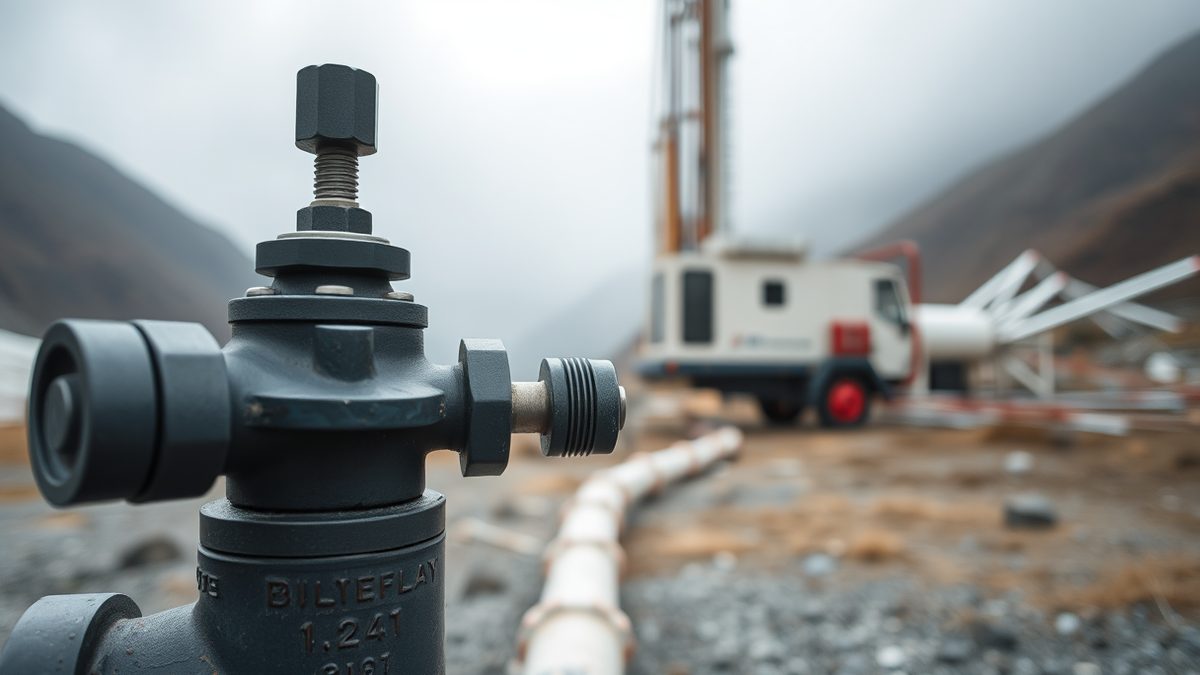
India's two wells are a small start. They are 1,000 metres deep, and Puga Valley sits more than 14,000 feet above sea level. They will support reservoir evaluation and lead toward India's first 1 MW demonstration geothermal power project. That evaluation comes first. Any decision on the 1 MW demonstration plant comes after that. India notified its National Policy on Geothermal Energy in September 2025.
The US list is separate. On 30 October 2026 the Department of Energy's Office of Geothermal published 21 field-scale tests and exploration drilling projects. Five are full-scale enhanced geothermal systems trials and sixteen are exploration wells. Both halves aim at the same problem: drilling risk.
For utilities, investors and regulators, the value of this work is information, not electricity. Each well that confirms a reservoir, or fails to, tells the industry whether drilling costs can fall far enough for geothermal to compete as baseload power. No completion dates are attached to the 21 projects.
Washington funds 21 geothermal drilling tests
The portfolio is split by purpose. Five projects are running field-scale enhanced geothermal systems tests at depths and temperatures appropriate for full-scale development. Fervo Energy is drilling, completing and stimulating wells in Elmore County, Idaho. It will also deploy what the department calls the first high-temperature three-component geophone array at or above 200°C. Quaise Energy is running a field-scale demonstration on the southern flank of Newberry Volcano in central Oregon, where bottomhole temperatures reach 265°C to 365°C. That is above the range where most conventional EGS tools and materials have been validated.
Two more tests sit in the West. AlterG Resources is testing a deep horizontal well pair in Pershing and Churchill Counties, Nevada. Zanskar Geothermal and Minerals is drilling a short-lateral horizontal injection well at Lightning Dock in Hidalgo County, New Mexico.
The University of Utah is designing, drilling and testing an EGS doublet at Dixie Valley West in Nevada. The aim is to show that a reservoir built next to an existing hydrothermal system can sustain circulation and deliver commercially relevant heat. Those five tests decide whether engineered reservoirs work at scale.
The sixteen exploration projects are the quieter half. They gather subsurface data to characterise and potentially confirm next-generation and conventional hydrothermal resources. DAVINCI EP, for one, will drill and test two paired horizontal confirmation wells in the Brawley Known Geothermal Resource Area in California. Zanskar Geothermal and Minerals is also testing a confirmation method using directionally drilled deep wells from a single pad.
Drilling is the bottleneck
Cost starts at the bit. In the western United States, geothermal drilling rates commonly run 150 to 250 ft/day. That is about an order of magnitude lower than rates in continental oil and gas development in shale rock, according to the Office of Geothermal. The rock is hard, fractured and abrasive, and formations are often underpressured, which causes circulation loss during drilling.
Well design adds to the bill. Geothermal wells are often more than twice the diameter of oil and gas wells, and casing and cement can account for as much as 50% of a well's cost.
High-temperature environments need specialised materials and tool designs, which raises the price of the downhole electronics, elastomers and monitoring gear a well requires. State-of-the-art rigs and their higher daily rental costs are often avoided because margins on many geothermal projects are tight. Data is the cheaper fix. The Geothermal Data Repository held 764 TB of information, about 60 million downloads, 1,400 datasets and 145 data providers as of mid-2026, the Oil & Gas Journal reported. The repository supports district heating pilots, play-fairway analysis and the FORGE enhanced geothermal systems site in Utah. The Office of Geothermal has also spent more than $9 million on machine learning across two phases, $5.5 million for exploration and $3.5 million for operations.
Singapore plans a 15-month study
Singapore's numbers are bigger and its timetable longer. An earlier survey found the country's underground heat sources could generate more than 60 times its current annual electricity consumption, The Straits Times reported. The government said on 26 October that a 15-month feasibility study will begin at the end of 2026, run by a consortium of Surbana Jurong and GLJ. Singapore's resource is dry, unfractured hot rock several kilometres down, not the hot water reservoirs found in volcanically active regions. The dense urban environment will also limit how many plants can be built. A 2022 report found emerging technology including geothermal could supply around 10% of the country's energy needs by 2050. The minister said the amount of electricity produced will depend on cost, technical feasibility and the pace of advances in deep drilling technology.
What happens next
The Singapore study will cover safety, technical viability and cost. Minister for Energy, Trade and Industry Tan See Leng said the country has not made a decision on tapping geothermal energy and that one could take many years.
The US list carries no completion dates. The Office of Geothermal says the field tests should reduce technical and development risk and give investors data for future commercial projects. Until wells get cheaper, progress will be measured in drilling rates and cost per well, not in announced capacity.
Sources
26- 01Pilots and Demonstrations: Next-Generation Field Tests and Drilling for New Resources - Department of EnergyEN
- 02Subsurface Accessibility - Department of EnergyEN
- 03Machine Learning - Department of EnergyEN
- 04DOE data repository supports geothermal development - Oil & Gas JournalEN
- 05Behind the News: ONGC Energy Centre Commissioned Two Geothermal Wells in Ladakh - Jharkhand State NewsEN
- 06S'pore to drill deeper into geothermal energy after promising results of its potential: Tan See Leng - The Straits TimesEN
- 07Singapore to drill deeper into geothermal energy after promising results of its potential, says energy minister - Asia News NetworkEN
- 08Accelsius Supports NSF Data Center Efficiency Research at VillanovaEN
- 09Rapid LLM development is outrunning the research meant to explain it, study findsEN
- 10More of the Same Expensive Dependence on Fossil Fuels in TEP and APS 2026 Energy PlansEN
- 11DOE Announces $8.5M for Fusion Energy Public-Private PartnershipsEN
- 12OpenAI deepens Abu Dhabi foothold as Sam Altman inks deals spanning energy, government and investmentEN
- 13Boise plans to tap its geothermal network to heat 300 affordable homesEN
- 14Hyperion Research: Nearly 20% Growth in HPC and AI-for-Science Server Market, Dell Takes Lead from HPEEN
- 15Electric Hydrofoils Save Energy, But Do They Earn Their Price?EN
- 165 ballot proposals that could drive or derail clean energyEN
- 17 On this day in space! Oct. 30, 1964: NASA's weird Lunar Landing Research Vehicle takes 1st test flight to help Apollo astronauts land on the moon EN
- 18Eugene Becomes 5th Oregon City to Adopt Home Energy Score RequirementEN
- 19Microsoft Research Focus – Edition #97EN
- 20Einstein's equations may explain the universe without dark energyEN
- 21Can battery swapping and energy storage power CATL’s next phase of growth?EN
- 22What Women in Indonesia and Malaysia Want From Research on Climate and HealthEN
- 23FORGE R&D - Department of Energy (.gov)EN
- 24More heat pumps would actually be good for the grid, researchers findEN
- 25Google plans big virtual power plant in energy-strapped PJM gridEN
- 26How Check Point accelerates vulnerability research with DaybreakEN
All figures and quotations in this text come from the sources listed below.
Content prepared by the editorial team with AI assistance.
Sofia Marchetti
Comments
0- No comments yet — be the first.