INMO Air3 Recall: Regulators Act on Overheating AR Glasses
The US Consumer Product Safety Commission ordered a recall of the INMO Air3 AR glasses on 27 September, saying the left temple can overheat during extended use and cause severe burns.
 Sofia MarchettiScience and health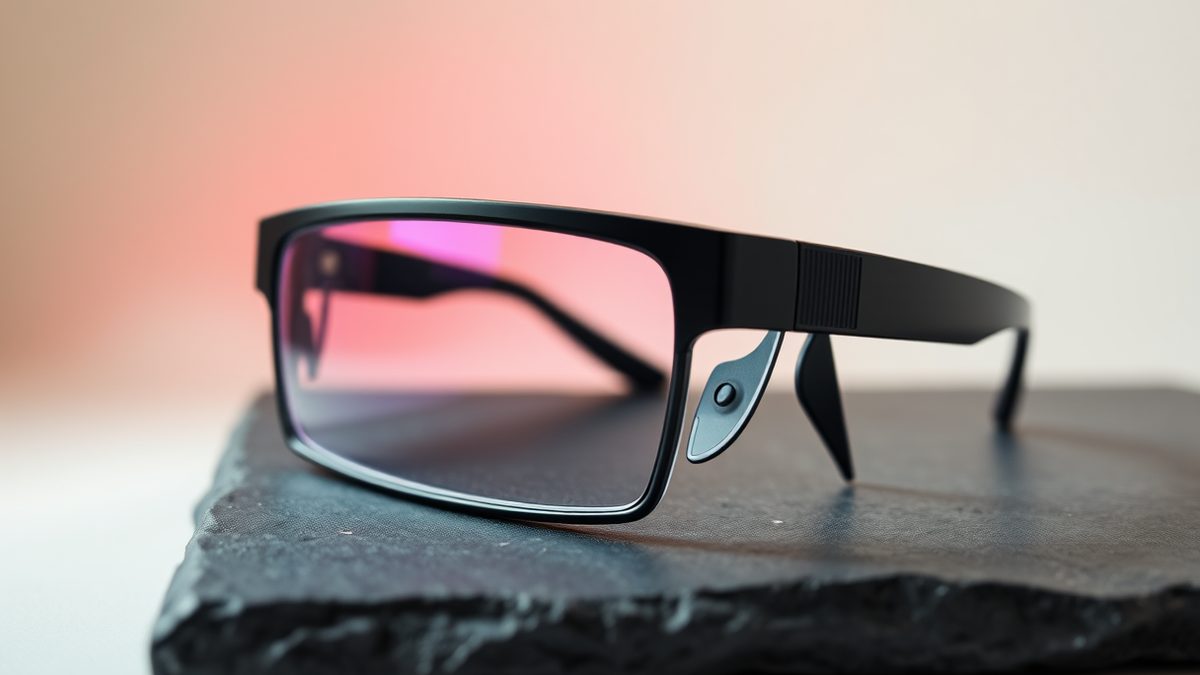
Health Canada joined the recall in a coordinated action and told users to stop wearing the glasses until the firmware is patched. The affected units shipped between December 2025 and August 2026: 1,643 in the United States and 120 in Canada, according to t3n.
INMO International Technology Limited of Shenzhen makes the glasses. Regulators say the affected units carry black colouring and the "AIR3" and "INMO" markings printed inside the right temple. Owners should update the operating system to firmware version 3.16 before wearing the device again. For now, that instruction is the whole of the official remedy. No replacement programme has been announced. No refund scheme has been published. The company's support page, hotline and email exist to walk people through the install, not to take the hardware back.
How much of a fix that is remains unclear. The battery in the temple is rated at 660 milliampere-hours, and it sits in the same housing as the rest of the electronics.
"The device became not just slightly warm, but reached temperatures that can hurt at the ear," the US hardware YouTuber "Non-Tech Tech Guy" said in a February 2026 video, as reported by Futurism.
INMO is not replacing the hardware or pulling the product. Instead, it is throttling the processor through software. The glasses run an Android-based system and drive a micro-OLED display, so performance can be capped in code. That video was not the first warning. Thermal problems showed up in early testing months before regulators moved. The company's first response appears to have been a sleeve for the temple. It blocked skin contact with the plastic but did nothing about the heat inside. Ten official reports of overheating in the US have reached the manufacturer. Neither the US nor the Canadian documents list any injuries so far.
Health Canada also flagged a legal consequence for the second-hand market. Under Canadian consumer protection law, reselling or even giving away the recalled model is prohibited. Buyers can reach the company through a dedicated support page, hotline and email set up to help with the firmware install. The glasses retailed for between $900 and $1,300 depending on configuration.
The wider evidence on wearables
The recall lands in a week when the evidence around digital health hardware is mixed. On 26 September, TechCrunch reported that an analysis by the Blue Cross Blue Shield Association attributed $942 million in additional US healthcare spending over two years to hospitals' use of AI tools in insurance claims. The same analysis found a sharp rise in patients documented with complex conditions but "no evidence of corresponding change in care delivered."
Luke Chalker, a BCBSA senior vice president, pushed back on framing the dispute as a battle. "It's not a war. It's a completely one-sided blood bath," he said, arguing insurers are the ones losing. Dr Shiv Rao, founder of AI startup Abridge, said the same technology could either cut costs or produce "a horrible dystopic future nobody wants to live in."
Consumer behaviour around these tools is also under scrutiny. A study published on 26 September by The Decoder ran five experiments with 3,132 participants. It found that simply having a language model available nearly erased people's willingness to say "I don't know." Without financial incentives, participants with AI access answered 9.2 percent of questions correctly, against 27.5 percent without it, while reporting far higher confidence.
The study used questions the researchers knew the model would mostly get wrong, so the gap cannot be read as sensible delegation. Studies 2 to 4 added cash incentives of 10 cents per correct answer. The incentives reduced how often people asked the AI and improved accuracy, but none of the three showed a statistically significant interaction with AI availability.
The bigger picture is not only Western. Writing in Rest of World on 24 September, physician Ruby Wang described China's health tech as infrastructure rather than an add-on, with telemedicine and AI doctor avatars built into WeChat and Alipay for a population of 1.4 billion. She said China now accounts for half of global drug licensing deals, and that its share of out-licensing could reach 60 percent this year.
Sources
5- 01Wenn das Wearable zur Gefahr wird: Behörden warnen vor smarter BrilleEN
- 02Insurers claim AI is already increasing healthcare costsEN
- 03AI access makes people almost entirely unwilling to say "I don't know," study findsEN
- 04China is excelling in health tech. That's good news for the worldEN
- 05RFK Jr.'s use of the National Center for Health Statistics will add confusion to measles deaths countEN
All figures and quotations in this text come from the sources listed below.
Content prepared by the editorial team with AI assistance.
Sofia Marchetti
Comments
0- No comments yet — be the first.