Fitbits in the field: what wearable sleep studies can and cannot tell us
Researchers at the University of Texas at Austin tracked sleep and activity in 82 young adults for months, not one night, using consumer wearables. The results, published in Nature Scientific Reports, show that physical activity lengthened REM latency, the time it takes to reach REM sleep.
 Sofia MarchettiScience and health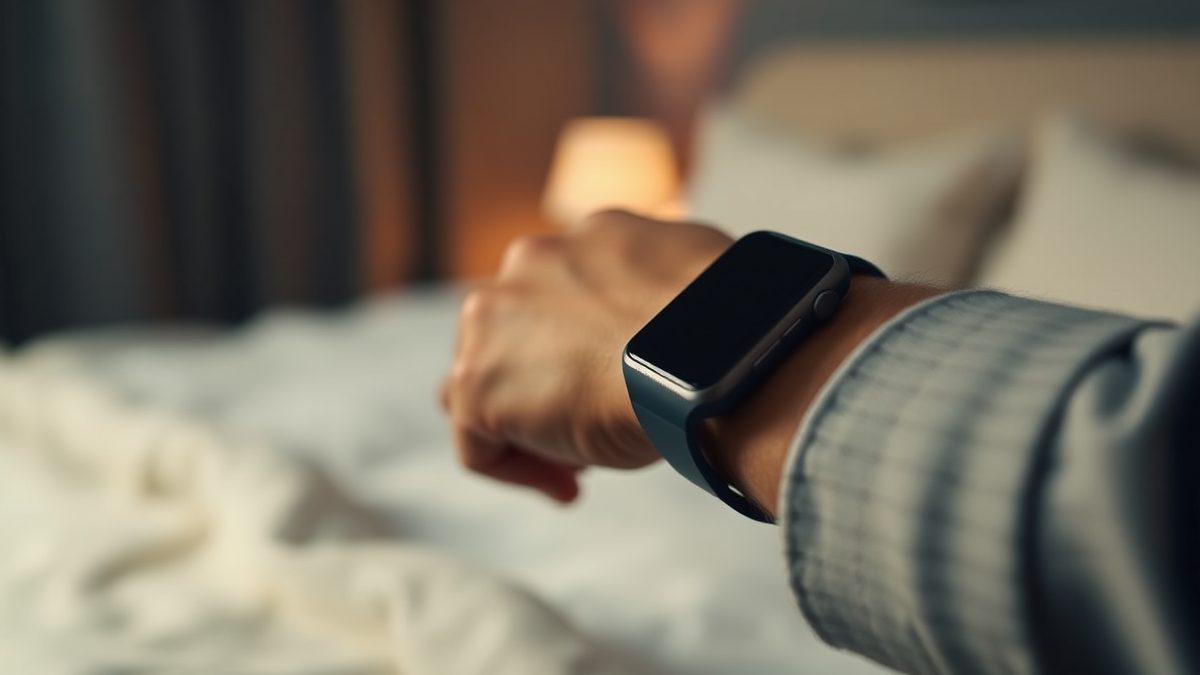
The study appeared in Nature Scientific Reports, and UT News announced it on 2 April 2024. The team tracked 82 young adults with a wrist-worn activity tracker that logged movement and heart rate. From those signals the researchers worked out periods of deep (NREM) sleep and REM sleep, along with physical activity. A separate smartphone app collected self-reported well-being data.
It is the latest entry in a fast-growing category of research that treats consumer devices as instruments rather than toys.
The headline finding is narrow and specific: physical activity lengthened REM latency, the time it takes to enter the REM stage. The UT Austin team says this may mean exercise helps consolidate deeper sleep stages before the brain moves into REM, the stage where vivid dreams occur and brain activity resembles waking.
The study also replicated findings previously confined to sleep labs. Low-intensity activity and moderate-to-vigorous activity were both linked to deeper, more restorative sleep, and better sleep in turn came with more energy and less stress the following morning. What changed this time was the method, not the message. Participants were monitored continuously at home, at work and during daily activities over weeks and months, rather than for one night wired to electrodes in a clinic.
Why one night in a lab is a weak instrument
Benjamin Baird, a research assistant professor of psychology and one of the authors, was direct about the limits of the older approach. "You can learn a lot from lab studies, but obviously there are limitations to studying the sleep patterns of individual participants in just one night," he said. "It's an unfamiliar, clinical-type setting, which can be stressful. And you can't really look over time, either. So, there are always questions about generalizability from that kind of design."
That problem is well documented outside this study. Danny Eckert, director of the Adelaide Institute for Sleep Health at Flinders University, told ABC News in September 2024 that single-night diagnostic tests are unreliable. A 2022 study he co-authored found that up to half of single-night diagnostic studies for sleep apnoea misclassify severity. "The single-night tests are hugely noisy and inaccurate," he said.
Wearables do not solve that by being more precise. They solve it by being cheap, repeatable and wearable for months.
What the device actually measures
The UT Austin team used a standard Fitbit, not a research-grade instrument. David M. Schnyer, co-author and chair of the Department of Psychology, framed that as the point. "We've shown using a standard Fitbit that anyone could wear, not even an expensive scientific device, that it is actually sensitive to these sorts of sleep architecture measures, and in a way that's showing predictive results," he said.
Sleep architecture, as the study defines it, is the structure of each 90 to 120 minute sleep cycle: three stages of non-REM sleep (light, deep and deepest NREM) plus REM, which makes up roughly the final 25% of each cycle. Schnyer argued the implications reach beyond sleep research. "The world is your oyster now," he said. "You can use this device to study all manner of different sleep architecture data related to lifestyle, related to mood and mood disorders, in the field, not in a lab, that people might have thought was not possible previously."
That claim deserves a caveat. Consumer trackers infer sleep stages from movement and heart rate, not from brain activity. The UT Austin study validates that inference against population-level patterns and self-reported well-being, not against polysomnography for every participant and every night.
The scale argument, and its problems
ABC News reported on 24 September 2024 that sleep tracking has moved from a niche hobby to a research infrastructure. Less than ten years after the first sleep-tracking Apple Watch, the world is wired for the study of sleep, the network reported. When a powerful earthquake hit New South Wales in September 2024, data scientists in Sweden detected an above-average number of people briefly waking at the time of the quake, according to the Swedish-made app Sleep Cycle.
Michael Gradisar, Sleep Cycle's head of science, described the logic bluntly to ABC News. "We can look at a huge chunk of the world now," he said. "Sleep is one of the first things to go wrong in a person's health. Sleep is the canary in the mine."
Gradisar's team found something similar during the Omicron wave in New York: night-time coughing rose among users roughly a week before confirmed cases did. "It's almost like it's an early warning system," he said. "We had all of these phones at night collecting information."
But scale is not the same as accuracy, and the research community spent years saying so. Gabriel Pires, a sleep researcher in Brazil, told ABC News that early papers from his group warned colleagues off the technology. "We started posting papers saying, 'Be careful with these new technologies, they don't work well,'" he said. Gradisar himself was sceptical before joining the private sector. The turning point was commercial: pandemic-era sales of smart watches grew, investment followed, and Apple added sensors for heart electrical activity, blood oxygen and body temperature.
The regulatory line is blurring
The clearest sign that consumer wearables are crossing into clinical territory came from regulators, not researchers. In early 2024, Samsung's smart watch sleep apnoea detection system received approval from the US health regulator after an eight-month review. It was the first consumer smart watch to clear that hurdle. Apple's smart watch, the most popular in the world, received the same approval later that month, in September 2024.
Sleep apnoea may affect as many as a billion people worldwide and is under-diagnosed, according to ABC News. Conventional diagnosis requires a night in a sleep lab, which is inconvenient and often expensive. Samsung says its feature is not meant to replace a sleep clinic, but the approval means millions of people can access a test without a medical professional.
Eckert, of the Adelaide Institute for Sleep Health, thinks consumer devices could end up better than the gold standard for diagnosis, precisely because they can measure night after night. "We've never been able to monitor accurately what's going on with sleep apnoea in the home," he said. "Now we can do it every single night for weeks, months and years."
What the studies still cannot settle
Both the UT Austin study and the broader consumer sleep-tracking boom share a structural weakness: the data comes from people who chose to wear the device. Selection effects are real, and they are rarely quantified in press releases.
The UT Austin work also emerges from a pilot conducted as part of Whole Communities and Whole Health, a research programme that engages communities and participants in how health data are collected. That design choice matters, because it shapes whose sleep gets studied and how.
For now, the practical takeaway from the Texas study is modest and testable. Physical activity, at low intensity or moderate to vigorous, was linked to deeper sleep, and deeper sleep was linked to better next-morning energy and lower stress. The mechanism behind the lengthened REM latency is not established. The study shows an association, in a natural environment, over months, using a device you can buy.
That is a real advance over one night in a lab. It is not proof that a fitness tracker will fix your sleep.
Sources
2- 01Move More, Sleep Better, UT Study Finds - UT NewsEN
- 02Sleep-tracking devices are wiring the world for the study of sleep. What will we find? - ABC NewsEN
All figures and quotations in this text come from the sources listed below.
Content prepared by the editorial team with AI assistance.
Sofia Marchetti
Comments
0- No comments yet — be the first.