Innodata Opens Motion Capture Lab as Factory Fires Board Adviser Over Spy Claims
Innodata opened a motion-capture lab in New Jersey on 30 September to generate training data for humanoid robots, saying direct 3D capture beats inferring motion from 2D video. In the same 24 hours, Factory's CEO accused his VC board adviser of sharing confidential information with rival Cognition.
 Rachel NwosuAI, models and technology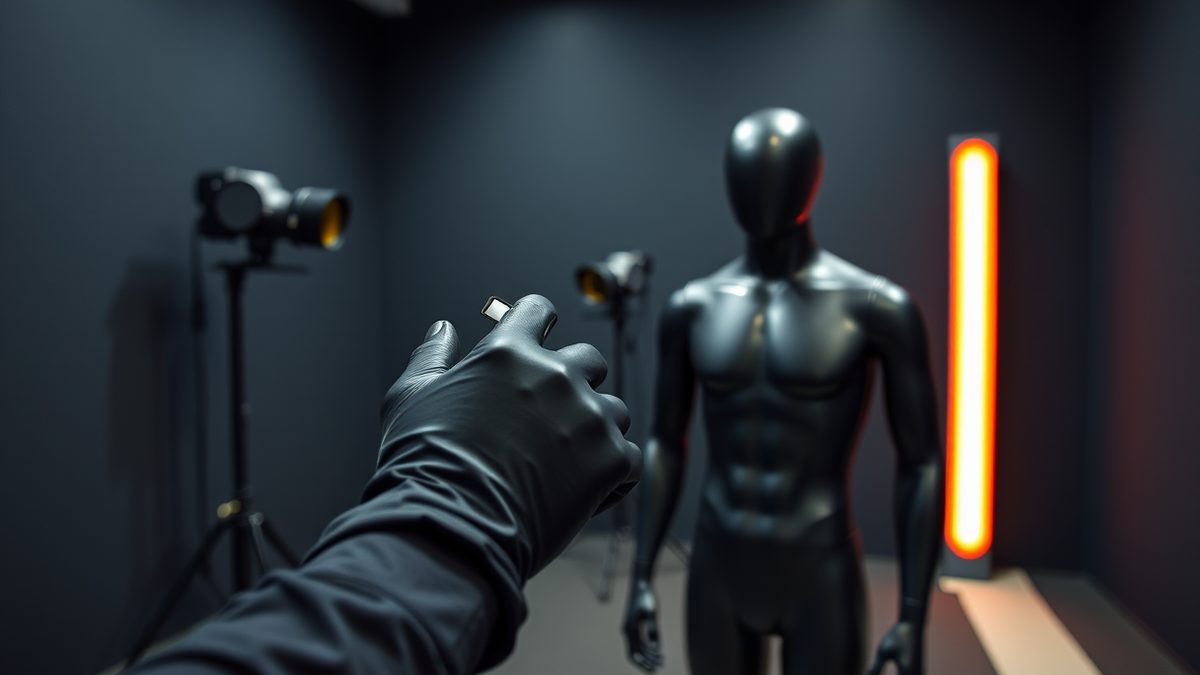
Innodata Inc. said on 30 September that it has opened a research and development laboratory to capture motion data for training physical AI, according to The Robot Report. The Ridgefield Park, New Jersey company says the facility captures 3D motion directly from bodies, human or mechanical, rather than inferring it from 2D video.
That claim is the whole pitch. "There's just no substitute for direct 3D motion capture," Franklin Tanner, Innodata's vice president of robotics and physical AI, told The Robot Report. "When a computer vision model tries to make sense of a 2D grid of pixels, mistakes inevitably creep in."
The lab was built with Vicon, a motion-capture company that continues to provide technical consulting, and is equipped with infrared optical tracking cameras that Innodata says measure movement down to the sub-millimeter level. Innodata was founded in 1988 and has spent most of its life in data engineering. Now it wants to sell that capability to robotics teams that cannot generate enough real-world interaction data on their own.
The data problem nobody has solved
Large language models got a free lunch: the internet. Robots did not. Tanner's framing of the gap is blunt. "Physical AI has to earn its tokens one interaction at a time, and they have to be deliberate," he told The Robot Report.
That is a real constraint, not a marketing line. Teleoperation data is slow to collect and expensive to scale, and the demonstrations themselves carry the tempo of the human operator, which models then learn and reproduce. Real-world capture has its own failure modes. Tanner noted that if a person drops a knife during a data-collection session, they may step back and switch off the device, assuming they made a mistake. The most useful data, in other words, is the data people instinctively discard.
Innodata says it captures data across humanoids, teleoperated hardware, wearable systems, sensor rigs, Universal Manipulator Interface grippers and other multimodal setups, then uses digital twins to generate edge cases. Simulation is the multiplier. "The crux of it is how can we create enough real-world data and then seed a simulation with that?" Tanner asked, pointing to NVIDIA's Cosmos environment as an example of real-to-sim translation getting good enough to permute environments.
"There isn't enough real-world interaction data, and what exists is expensive and slow to produce," stated Rahul Singhal, CEO of Innodata. "This facility removes that wall."
One gap remains unclosed, by Tanner's own account. "We don't have training data right now where humans and robots are interacting," he told The Robot Report, adding that instrumenting multiple agents to work together is one of the things the lab is working on.
The commercial logic is straightforward. Humanoid robots are moving from demonstration videos into pilot deployments, and every team deploying one needs motion data that generalises beyond a fixed cell. Innodata is betting that whoever supplies that data owns a chokepoint. It is a bet on a market that does not yet have standard benchmarks for physical AI data quality.
Meanwhile, in AI coding: a board adviser, a rival, and two versions of events
The same 30 September produced a very different kind of robot-adjacent story. Matan Grinberg, co-founder and CEO of the AI coding startup Factory, said in a post on X that he had fired VC Chris Degnan from his role as a board adviser, alleging Degnan shared confidential information with Factory's biggest competitor, Cognition, according to TechCrunch.
Two hours later, Degnan announced on X and LinkedIn that he had joined Cognition as chief revenue officer. He then refuted the allegation, saying he was not fired but resigned after telling Grinberg he was taking the job. Degnan was Snowflake's first sales hire and spent 11 years as its chief revenue officer. For the past five months he has been a partner at RPT Partners, an investor in Factory.
Grinberg's account, as reported by TechCrunch, is that Degnan had earlier described a "casual" conversation with a Cognition executive and assured him he had no interest in working for the competitor, saying he had "made too much money" and was "too lazy" to go to Cognition. On Monday, Degnan disclosed ongoing talks. Grinberg says he fired him on Tuesday.
Degnan disputes that timeline. He says the last Factory board meeting he attended was weeks before he had "ever spoken" to Cognition, and that he has not shared confidential information. He also says that when he told Grinberg he was resigning, Grinberg offered him a full-time job at Factory, which he declined.
The story matters beyond one startup's boardroom because it exposes how tangled AI investing has become. Khosla Ventures is an investor in both Cognition and Factory. Vinod Khosla called Factory a "struggling second tier competitor" and accused Grinberg of lying about the firing. Khosla Ventures partner Keith Rabois posted that "it is unethical per se to even interview at a competitor while attending Board meetings and Board dinners." Cognition CEO Scott Wu said his company has "no interest in Factory's" information, in TechCrunch's account. Three-year-old Factory raised $200 million at a $5 billion valuation this month, with customers including Nvidia, Blackstone, Royal Bank of Canada, Palo Alto Networks, Adobe and T-Mobile. Cognition, maker of the Devin coding agent, raised $2 billion at a $48 billion valuation this month.
The benchmarks are jagged, and the numbers show it
Underneath the funding news sits a measurement problem that should worry anyone buying robot capability claims. Fig Inc. published an evaluation on 30 September comparing frontier models on web automation and physical tasks, and its central finding is that benchmark averages hide almost everything useful.
The study covers seven models on 177 closed-loop VisualWebArena tasks across three websites, plus three models across four offline physical domains: Bench2Drive, VLABench, IndEgo and Assembly101. For every model pair tested, the authors report that the weaker model solves at least one task the stronger one misses. One model's spread across three websites matches the spread of seven models on a single site. Difficulty labels shipped with the benchmarks track model success only weakly.
Fig Inc. also reports that a model update can leave the average almost unchanged while many individual tasks flip, and that an update which raises the average still loses tasks the older model solved. The team released a dataset called RIDGE with item-level results and model traces. The practical implication for robotics buyers is uncomfortable: a headline score is not a deployment decision.
What actually ships
The counterweight to all of this comes from someone who has shipped hardware rather than benchmarked it. Rongzhong Li, the maker behind OpenCat, Nybble and Bittle, wrote on Hackster that Petoi has shipped more than 30,000 quadrupeds since the Nybble campaign in 2018, and that his third product, Quaddle, is on Kickstarter from $99.
His argument is that the field's most-delivered product has been videos. He does not treat that as fraud. If you see many robots as a modern form of puppetry, he writes, it makes more sense, and the robot sports people watch serve the same purpose as the Olympics: showing what a body can achieve within fixed physical limits. But inspiration may not be sustainable, he warns, and AI-generated video can now produce visual miracles at zero marginal cost. If robotics wants to be something other than a branch of the video industry, it has to deliver real things.
He offers one quiet signal for that: compare the second-hand price of an impressive robot with its bill-of-materials cost a few months after delivery. Neither number captures the product's full value, he writes, but the relationship between them can reveal how much practical value the market still sees after the novelty wears off.
Put the three stories together and the shape of the moment is clear. Innodata is selling the data layer that humanoid deployment needs. Fig Inc. is documenting that model capability claims are far more uneven than leaderboards suggest. Li is reminding everyone that the scoreboard that matters is customers paying out of their own pockets. Factory and Cognition are fighting over people and information because the stakes in agentic software are already enormous. For humanoid robots, the equivalent fight is still ahead, and it will be fought over data, not demos.
Sources
5- 01Innodata opens motion-capture lab to help humanoids move more like peopleEN
- 02Factory CEO just accused his VC board adviser of spying for CognitionEN
- 03Astra, Opus 5.5, and other Frontier Models Demonstrate Jagged Performance Across SoTA Agentic Tasks from Web Browsing to RoboticsEN
- 04What 30,000 robot dogs taught me about degrees of freedom and shipping a real robot productEN
- 05The Robot Report parent Arrowfly launches AI for Engineers platform, events for engineers navigating AIEN
All figures and quotations in this text come from the sources listed below.
Content prepared by the editorial team with AI assistance.
Rachel Nwosu
Comments
0- No comments yet — be the first.