ISRO's GSLV-F18 puts NVS-03 in orbit, restoring NavIC's four-satellite minimum
ISRO ran NVS-03's first orbit-raising burn for 36 minutes and 15 seconds on 31 October. The burn followed GSLV-F18's 30 October launch, which restored NavIC's four-satellite minimum for standalone positioning.
 Sofia MarchettiScience and health
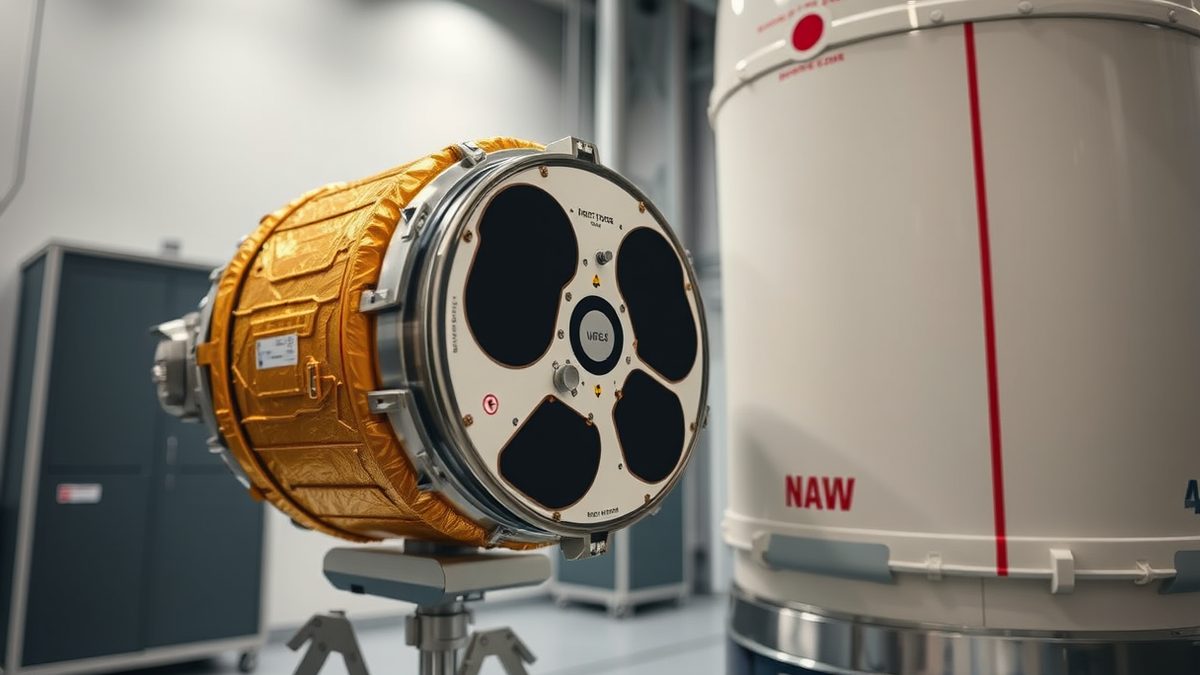
What launched, and when
GSLV-F18 lifted off from the Second Launch Pad at the Satish Dhawan Space Centre in Sriharikota at 11:51 pm IST on 30 October. ISRO confirmed separation into a geosynchronous transfer orbit about 18 minutes later.
NVS-03 is the third satellite in ISRO's second-generation NVS series, the fleet meant to replace the first-generation IRNSS spacecraft and keep NavIC running. The mission was the 20th flight of the GSLV, a three-stage vehicle just under 50 metres tall that can put about 2,250 kg into geosynchronous transfer orbit. ISRO chairman V. Narayanan gave the injection figures at a post-launch press conference the next day. Perigee came in at 170.31 km against a planned 170.36 km, and apogee at 38,080 km against a planned 37,247 km. He called the result one of the best accuracies achieved by any launch vehicle. Reports of the satellite's mass differ: ISRO's briefing put it at 2,240 kg, while several outlets reported about 2,250 kg and others 2,232 kg.
The flight also set a turnaround record. It came 56 days after GSLV-F17, which carried the EOS-05 mission in early September, the shortest gap between two GSLV launches. Counting is not uniform across reports. The 20th GSLV flight overall includes six flights of the earlier Mark I, which retired in 2010, and 14 of the Mark II, 12 of them successful.
Why four satellites is the number that matters
Before the launch, NavIC had three working satellites: IRNSS-1B, IRNSS-1I and NVS-01. That was enough to distribute timing signals but not enough to fix a position without help from another system.
The shortfall built up in stages. NVS-02 reached a transfer orbit in January 2025 but never got further, because valves controlling oxidiser flow failed to open and its thrusters could not fire. The failure pushed back the planned launches of NVS-03, NVS-04 and NVS-05. In March 2026 the last working atomic clock on IRNSS-1F stopped, taking one more satellite out of the positioning service. By the time GSLV-F18 rolled out, the constellation was one short of the minimum needed for standalone fixes.
Narayanan's summary after the launch was blunt. "We already have three functional satellites, but with this satellite we have the minimum satellites needed to restore NavIC's PNT services," he said.
The fix carried on board
ISRO did not simply repeat NVS-02's propulsion sequence. It flew NVS-03 with three pyro valves already open. Narayanan said a national committee chaired by former ISRO chief Kiran Kumar had validated the change through vibration and shock testing. A panel had traced the NVS-02 failure to a drive signal that never reached the pyro valve on the oxidiser line, most likely because a connector contact disengaged.
The payload is a modest upgrade on NVS-01. NVS-03 carries an indigenous rubidium atomic clock built by the Space Applications Centre alongside procured clocks, and it adds the L1 navigation signal to the existing L5 and S-band transmissions. Narayanan said two indigenous atomic clocks are already working in orbit, with the third now flown on NVS-03. Coverage is specified as India's landmass plus a region extending about 1,500 km beyond the country's borders. NavIC offers a Standard Positioning Service for civilians and an encrypted Restricted Service for authorised users. The mission also lands alongside the government's Legal Metrology (Indian Standard Time) Rules, 2026, aimed at tightening the country's timekeeping infrastructure.
What L1 changes for receivers
L1 is the frequency most navigation receivers already use. GPS and most smartphones listen there. Adding it to NavIC's L5 and S-band signals means commercially available devices can pick up the Indian constellation without bespoke hardware. L5 is designed for more precise navigation, while the S-band carries NavIC's regional service, and receivers that hear both L1 and L5 can combine them to correct for atmospheric delay.
That does not mean NavIC appears on phones this year. Asked when civilian handsets would get the service, Narayanan said it would happen once the full seven-satellite constellation is complete. The ground segment is already carrying traffic. Some 10,400 locomotives and 64,000 fishing vessels are tracked in real time, and 15 lakh tracking devices are fitted across vehicles. Under the Pradhan Mantri Matsya Sampada Yojana, ISRO aims to reach 100,000 fishing vessels within six months.
What happens next
The satellite is not yet at its operating position. Its first orbit-raising burn ran for 36 minutes and 15 seconds on 31 October. The burn lifted the orbit from the injection ellipse to an apogee of 37,833.4 km, with further manoeuvres planned to reach geosynchronous orbit. The target slot is 32.5 degrees East, and the satellite has a design life of 12 years.
Narayanan said NVS-04 is planned in five months and NVS-05 in 10, which would take the constellation to six. Seven satellites are envisaged for full regional service. ISRO also has five more launches planned this financial year, including the first uncrewed Gaganyaan mission.
Sources
28- 01ISRO successfully launches GSLV-F18 carrying next-gen navigation satellite NVS-03EN
- 02ISRO NVS-03 Launch News: GSLV-F18 places Next-Gen Navigation satellite in orbit, strengthening NavICEN
- 03Mission accomplished: ISRO successfully launches next-gen navigation satellite aboard GSLV rocketEN
- 04ISRO Successfully Launches NVS-03 Satellite Aboard GSLV-F18 to Revive and Strengthen NavIC Navigation SystemEN
- 05ISRO's GSLV-F18 Launches NVS-03 Satellite to Boost India's GPS-Like NavIC Navigation SystemEN
- 06India launches next-gen navigation satellite to orbit (video)EN
- 07ISRO successfully launches next-generation navigation satellite, NVS-03: Here is how it will benefit IndiaEN
- 08ISRO launches third next-gen NavIC satellite after NVS-02 setbackEN
- 09Watch LIVE: Isro successfully launches NVS-03 satellite aboard GSLV-F18EN
- 10PM Modi congratulates ISRO scientists on successful GSLV-F18 launchEN
- 11To overcome technical hurdles, ISRO flew NVS-03 satellite with pyro valves open: NarayananEN
- 12 Rocket Lab launches Japanese Earth-observing satellite on 99th mission to date (video) EN
- 13Launch Preview: Falcon 9 to launch USSF missions, China to launch internet satellitesEN
- 14Griechischer Satellit testet Laserkommunikation zur ErdeEN
- 15 Drone warfare in space: Swarms of autonomous, laser-shooting cubesats could defend Western satellites in orbit EN
- 16 Happy Halloween! SpaceX launches 27 Starlink satellites to orbit from California (video) EN
- 17Watch: Moment Isro's GSLV-F18 turned night into day, roared into space with NVS-03 - India TodayEN
- 18Zeekr files for updated 001, paving way for Q1 2027 launchEN
- 19BYD teases new model for Guangzhou Auto Show, with next-gen Han expectedEN
- 20CrowdStrike launches AI kill switch that it says can stop internal agents that go rogueEN
- 21EcoFlow launches TITAN Series backup ecosystem with up to $2,199 savings, Lectric limited-edition XP4 750 e-bike deals, moreEN
- 22Ex-Phoenix Court partner launches $17M debut solo fund to discover next LovableEN
- 23NIKKE PC game launcher hacked to spread remote access, data-stealing malwareEN
- 24D-Wave Updates Stride Solver and Launches Quantum Optimization CoursesEN
- 25Novo won't launch CagriSema in Europe for 'a couple of years,' CFO saysEN
- 26Nio to expand ES8 lineup with special edition set for late-November launch at Guangzhou Auto ShowEN
- 27Jackery Launches Explorer 100D Portable Power Station. Maximum Capability For Carryon CompatibilityEN
- 28 16GB Raspberry Pi 5 hiked to $385, more than triple its launch price EN
All figures and quotations in this text come from the sources listed below.
Content prepared by the editorial team with AI assistance.
Sofia Marchetti
Comments
0- No comments yet — be the first.