Mazda adds LiDAR to China-market CX-6e as robotaxi scale debate sharpens
Mazda added a LiDAR suite to its CX-6e electric SUV in China on 27 September, enabling what the company calls advanced L2 autonomy and hands-free navigation on set routes. The same weekend, reports from Germany and California showed how far the industry still is from scaling driverless fleets.
 Daniel FisherSport, cars and travel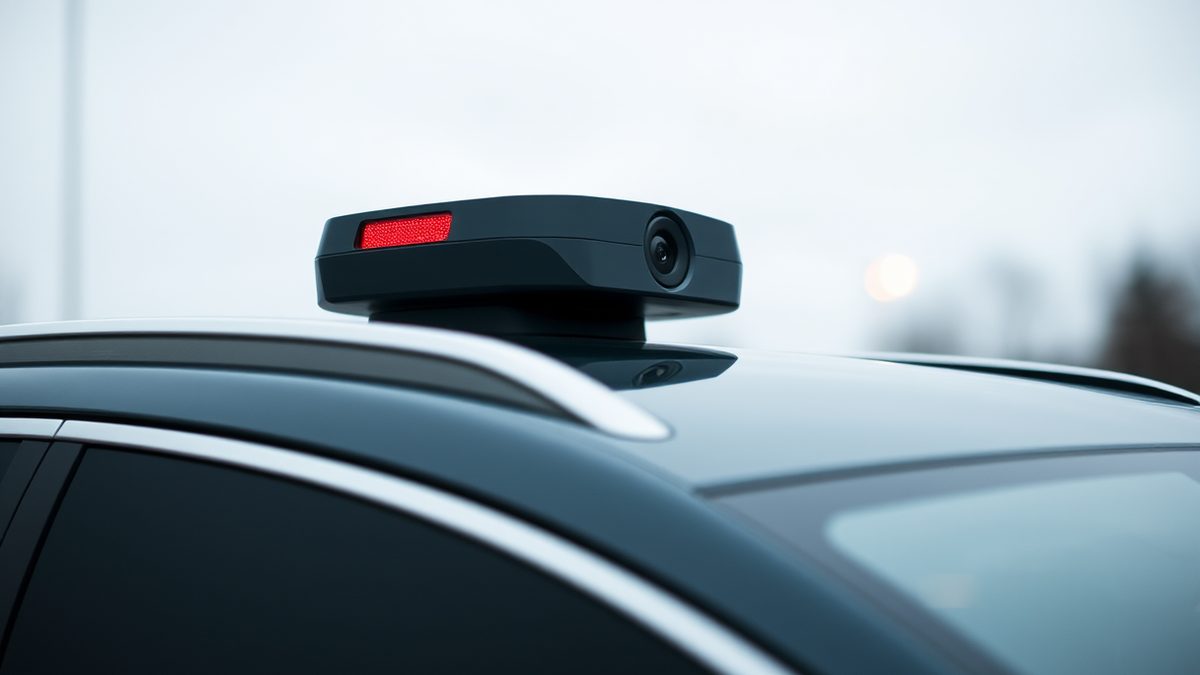
Electrek reported on 27 September that Mazda's CX-6e received a new LiDAR suite. The company says the sporty electric SUV can now handle "advanced L2" autonomy, navigation on autopilot (NOA) and automated parking. Changan Mazda, the joint venture between Mazda and China's Changan Auto, calls the system the EZ-60 Laser Edition update.
The hardware list is long: 11 high-definition cameras, 12 ultrasonic radar sensors and three millimeter-wave radar sensors work alongside the LiDAR. Changan Mazda says the combination gives "full-domain" perception for highway and urban driving, and that it responds to cars, bikes and pedestrians even in poor visibility. All data feeds into the vehicle's onboard computers.
What the system claims to do
On highways, Electrek reports the system offers lane change assist, obstacle avoidance assist, ramp entry and exit assist, and service area entry and exit assist across a speed range of 0 to 130 km/h. In cities, it relies on Tencent's lane-level navigation and an end-to-end architecture to handle cut-ins, construction detours and narrow passages. An over-the-air update will add a "follow-up tour" function for driving in groups.
On automatic emergency braking, Mazda claims the car can stop for stationary objects ahead at up to 110 km/h, for pedestrians in its path at up to 90 km/h, and for crossing pedestrians and cyclists at up to 60 km/h. It also claims to handle "ghost pedestrians" and crossing vehicles at up to 50 km/h. If braking is insufficient, the system can steer to avoid the obstacle. Mazda describes this as "AEB & AES braking and yielding in one."
"The vehicle performs the driving task completely autonomously and is monitored by a safety driver acting as an operator," Holon said, according to heise online.
The CX-6e is the second EV from Mazda's partnership with Changan and the joint venture's first "global" product. It launched in Asian, European and other markets earlier this year. It uses a rear-mounted electric motor producing 190 kW (258 hp) and 214 lb-ft of torque, a 77.94 kWh lithium-iron-phosphate battery, and a claimed range of up to 600 km (about 375 miles).
Mazda says the L2 system passed government-sanctioned safety tests covering 11 high-risk real-world scenarios, including narrow mountain roads and rainy-night highway driving. The EZ-60 Laser Edition received a TOP Intelligence Intelligent Safety Challenge certificate from CATARC, the China Automotive Technology and Research Center.
The car is not sold in the United States. The "NOA" label, which mirrors the "Tesla Assisted Driving" branding on Chinese-market Teslas, is unlikely to reach American buyers soon.
Germany expands a pilot, and may lose a flagship
On the same day, heise online reported that Deutsche Bahn and the Rhein-Main-Verkehrsverbund (RMV) will expand autonomous shuttle service in parts of Darmstadt and the Offenbach district from next year. The vehicles are small Holon shuttles with five seats and a wheelchair space. With the wheelchair space in use, three passenger seats remain. Holon says up to 15 people fit in total. The shuttles are barrier-free and were approved for test operation in Germany at the end of 2025.
The project, called Kira+, replaces Kira, which has run in southern Hesse since May 2025 using five-seat cars in Darmstadt, Langen and Engelsbach. By the end of May, around 4,200 test users had been approved, and the vehicles served roughly 130 stops, bookable through an app. Kira ends at the end of this year.
RMV chief Knut Ringat said the goal is to integrate autonomous services into regular public transport. "Driverless transport offers the great opportunity, with the right political support, to offer attractive and affordable public transport everywhere and at any time," he said, according to heise online.
Germany's other autonomous flagship looks less secure. Also on 27 September, heise online reported that Volkswagen is considering an exit from its Moia ridepooling subsidiary, citing an internal strategy paper reported by Wirtschaftswoche. Moia no longer plays a central role in VW's 2030 target picture, according to the report, and the group wants to work through exit options by the end of 2026, ranging from a takeover by new investors to a full wind-down.
Moia has been testing autonomous operation in Hamburg using a VW ID.Buzz with technology from supplier Mobileye. According to company insiders cited by heise online, the hardware and software do not meet expectations for trouble-free driving, and proof of Level 4 autonomy is still pending. VW is also unwilling to spend the billions needed to continue development, the report says, and potential investors including Uber and Lyft have withdrawn interest. Moia's leadership had recently asked the state for money.
Heise online notes that Waymo, Alphabet's self-driving unit, has invested an estimated $27 billion over more than 15 years and now completes more than half a million paid rides per week in the US alone, while preparing European expansion. BMW and Mercedes hold their ground in assisted driving up to Level 3, the article says, but lag in the AI needed for robotaxis.
The bottleneck nobody funds
Writing in The Robot Report on 26 September, Aseon Labs co-founder Dan Keene argued that the industry's real constraint is not driving software but vehicle servicing. Waymo has logged more than 220 million autonomous miles and reports more than 94% fewer serious injury crashes than human drivers, according to the article. It operates around half a million paid rides a week and is present in 14 cities. Uber, by contrast, is in more than 15,000 cities and did 3.9 billion trips last quarter. It processes Waymo's entire weekly ride volume every 17 minutes, the article says.
Keene's arithmetic focuses on depot runs. Each reset costs roughly two hours, and California data shows that of 86 million Waymo miles reported through 2025, only 54% carried a passenger. A robotaxi may drive up to 15 miles empty to a centralized depot for cleaning, charging and inspection. California's regulator targets six months just to energize a standard charging site, while a new circuit takes 1.9 years, a substation upgrade 2.8 years and a new substation 8.9 years, the article states. Keene discloses that his company is building a robotic charging, cleaning and inspection station designed to go live within a day.
For anyone watching the sector, the contrast is the story. Mazda's sensor stack shows how quickly assisted driving is improving in China. The German and American reporting shows that the harder problems, from proving Level 4 to finding land and power for service depots, remain unsolved.
Sources
5- 01Mazda adds LiDAR to CX-6e, rolls out "self driving" tech in ChinaEN
- 02RMV baut autonomen Nahverkehr in Darmstadt und Offenbach ausDE
- 03Autonomes Fahren: Warum VW bei Moia die Reißleine ziehen könnteDE
- 04From 14 cities to 15,000: What it will take to scale robotaxis?EN
- 05Autonomy Levels For Design Agents: L1 To L5 ExplainedEN
All figures and quotations in this text come from the sources listed below.
Content prepared by the editorial team with AI assistance.
Daniel Fisher
Comments
0- No comments yet — be the first.