Memory price surge hits consumers as clean energy sheds 36,949 jobs
Memory makers Micron, Samsung and SK Hynix have locked up capacity in long-term deals and diverted supply away from consumers, driving the average price of a 32GB DDR5 kit up 363% since last September, according to GamersNexus.
 Dr. Amara PatelEconomy, business and world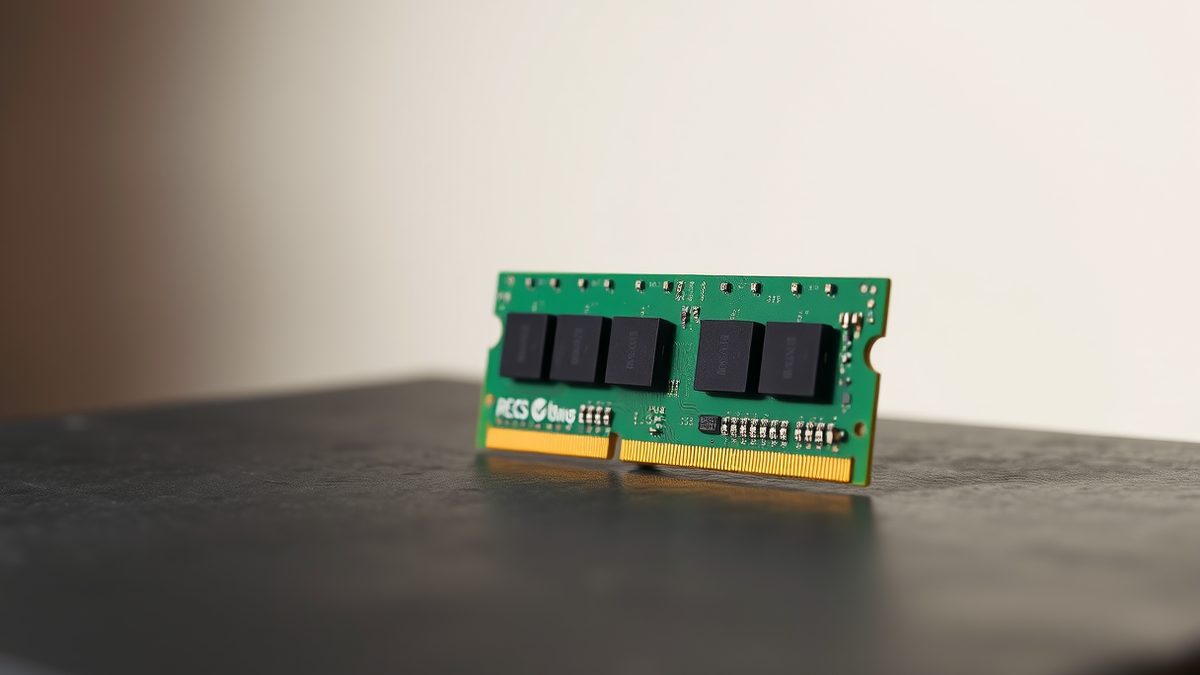
The RAM bill arrived before the AI layoffs did. Since last September, the average price of a 32GB DDR5 memory kit has risen 363%, according to a report published by GamersNexus on 29 September. A 2TB SATA SSD is up 183% over the same period. A 2TB NVMe drive is up 137%. None of these are data-centre parts.
GamersNexus, which originally published the analysis as a video on 21 September and then adapted it to written form unchanged, places the blame on Micron, Samsung and SK Hynix, which have "diverted a flood of memory away from consumers" and committed to larger, longer long-term agreements with fewer customers. The report argues this has broken memory's historical pricing cycle, which used to oscillate between shortage and glut. The new model, in its reading, is a permanent shortage for anyone buying outside a hyperscaler contract.
The consumer market is the release valve
The numbers GamersNexus collected from product listings are stark. DDR5-6000 64GB kits have gone from $240 to between $1,300 and $1,400 on average, a rise of around 483%. The outlet notes it bought 128GB of DDR5-6400 GSkill ECC Registered memory in 2024 for $1,060; comparable NEMIX modules now list at $6,800 from third-party sellers, while 512GB kits that used to cost $4,200 are listed at $23,811. A 4TB Samsung 990 Pro bought for $390 in 2024 now sells for $1,100, a 254% increase.
The knock-on effect is not confined to PC builders. GamersNexus cites a forecast that worldwide smartphone shipments will fall 16.7% in 2026, with the average selling price reaching $581, up 27.6% in a single year. Apple raised prices across its MacBook, iPad, HomePod, Apple TV and Vision Pro lines, a move the report attributes to what the company's outgoing chief executive, quoted in his final earnings call, called a "100-year flood on the memory pricing with exponential increases in memory prices". Microsoft announced on its own site that from 1 August 2026 Xbox console prices would rise by $100 for 512GB models and $150 for 1TB models, with the 2TB model discontinued.
Amazon, for its part, has publicly stated that more users than ever will consider its cloud services because of the rising cost of on-premises hardware. GamersNexus reads that as the endgame: consumers priced out of ownership and pushed into rental.
The cyclical nature of memory manufacturing may finally be broken, and not in a good way for consumers.
That framing matters because it reframes the AI jobs debate. If the cost of the physical substrate of computing is rising this fast, the labour market consequences are not just about which tasks models can perform. They are about who can afford the tools.
Clean energy lost 36,949 jobs in 2025
On the employment side, the newest hard data in the dossier points in a different direction. The US clean energy sector lost 36,949 jobs in 2025, ending four straight years of growth, according to findings from E2 reported by Electrek on 28 September. The analysis, based on US Department of Energy employment data, puts clean energy employment at 3.52 million, the first annual decline since the pandemic. The losses erased nearly 40% of the gains made in 2024 and reached 35 states. California shed nearly 21,000 clean energy jobs, the most of any state, while Florida gained about 3,800.
E2 connects the downturn to the rollback of federal support for clean energy and electric vehicles under the Trump administration and the Republican-controlled Congress, which led companies to cancel or scale back projects. Its project tracker recorded 142 clean energy manufacturing, generation and storage projects cancelled or downsized in 2025. Electrek notes the employment figures show the extent of the decline but do not establish how many jobs were lost because of any particular policy change.
Energy efficiency, renewable energy and EVs all lost jobs. Battery storage and grid work, along with biofuels, posted small gains. The broader US energy industry shed an estimated 86,000 jobs in 2025, according to the DOE data cited by E2, with clean energy accounting for roughly 43% of that decline. Clean energy remains the largest part of the energy workforce at more than 3.5 million people, compared with 958,000 in oil and gas, 125,000 in coal and 70,000 in nuclear.
These are E2's initial findings. Its full Clean Jobs America 2026 report, with more detailed state, county and industry figures, is expected in October.
Where the AI jobs money is actually going
The two data points sit awkwardly together. Memory prices are rising because AI infrastructure is consuming supply. Clean energy jobs are falling because policy support was withdrawn. Neither is a story about AI replacing workers directly, and that distinction is worth holding on to as the commentary piles up.
The dossier's recent headlines show how crowded that commentary has become. The BBC reported on 28 September that a UK minister said the country needs a plan in case of "unprecedented" AI job losses, a line picked up by City AM the same day. Goldman Sachs has published warnings about labour market exposure, with one report from 30 September suggesting AI could force 11 million Americans into new careers. A separate report from 27 August argued AI may cut jobs quietly without triggering mass layoffs. The Conference Board published its US consumer confidence reading on 29 September. MarketWatch reported on 28 September that choosing certain AI-exposed college majors could dent job prospects and lower pay.
Fed Governor Lisa Cook, speaking about AI infrastructure spending, said it is pushing up inflation first and that only a small fraction of a $2 trillion investment has been spent, according to a report from finance.biggo.com on 29 September. European Central Bank President Christine Lagarde warned of an AI "bubble" and risks to markets from corporate debt, Eunews reported on 28 September. Those are macro warnings, not labour market data, and they point at the same tension the memory numbers expose: the investment is real, the returns are not yet visible, and the costs are landing on consumers now.
Meanwhile, the tooling layer of the data economy is getting faster. BMLL Technologies, a market data firm spun out of Cambridge research labs, wrote on its blog that it now processes 1.5TB of market data in under four minutes using the Polars library, with a single day of US equity trade data loading in 4.3 seconds against roughly 3.5 minutes for pandas. That is a roughly 48x improvement on the same 11,000-plus REG NMS securities, on a single 192-core, 1.5TB RAM machine. BMLL says it recommends Polars to clients working with its data programmatically.
Faster tools on cheaper hardware would, in the ordinary run of things, mean more firms can do more analysis. The memory market is currently making the hardware half of that equation more expensive, not less.
What to watch
Three things will determine whether the current picture holds. First, whether memory makers' long-term agreements leave any capacity for consumer channels, or whether the diversion GamersNexus describes becomes permanent. Second, whether E2's full October report confirms the 2025 clean energy decline as a policy effect or a broader energy transition slowdown. Third, whether the AI infrastructure spending Fed Governor Cook described as mostly unspent translates into employment gains large enough to offset losses elsewhere.
For now, the most concrete number in the dossier is not a jobs figure. It is 363%, the rise in the price of a 32GB DDR5 kit in twelve months, a cost that any small business, design studio or research group buying a workstation will absorb before it hires anyone.
Sources
3- 01Memory Companies Have Destroyed the Consumer Market | GamersNexusEN
- 02US clean energy jobs fell for the first time since the pandemic | ElectrekEN
- 03Polars — How BMLL Processes 1.5 TB of Market Data in Under 4 MinutesEN
All figures and quotations in this text come from the sources listed below.
Content prepared by the editorial team with AI assistance.
Dr. Amara Patel
Comments
0- No comments yet — be the first.