Tech's Energy Bill Comes Due: Data Centres, Chips and the Price of Electrification
Newfoundland and Labrador's energy minister said on 29 September that the province's door is "open for business" to AI data centres, the same day a startup announced $97M to chase 10-100x efficiency gains in processors.
 Dr. Amara PatelEconomy, business and world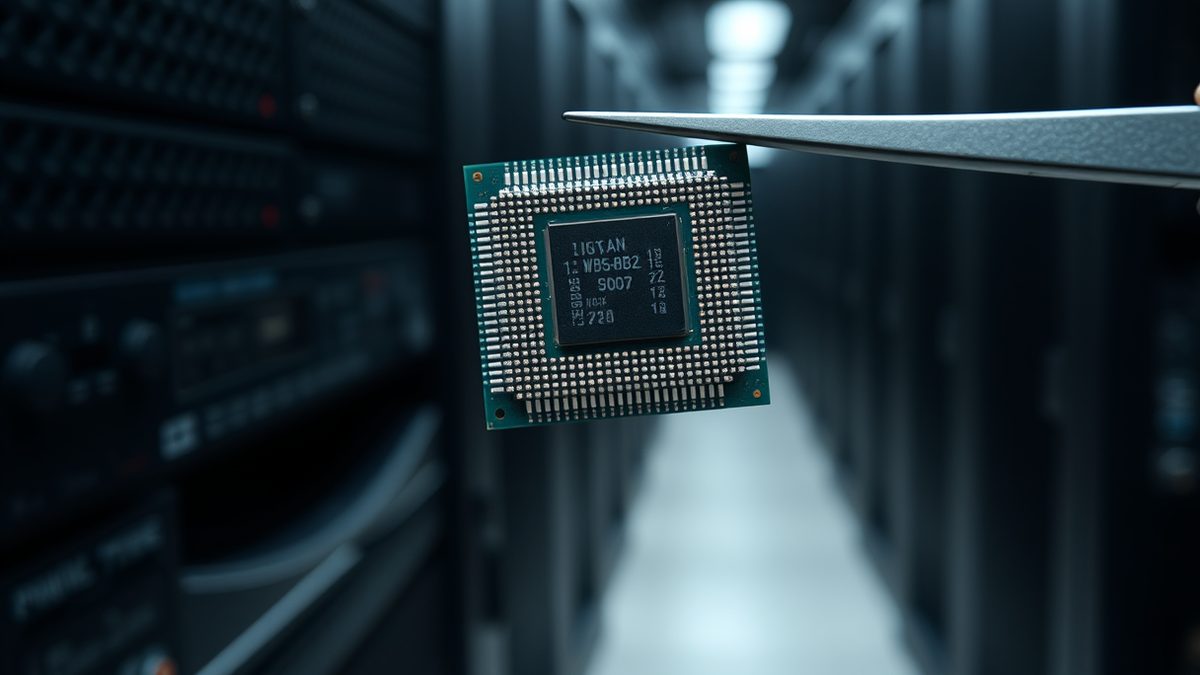
On 29 September, CBC News reported that companies looking to build AI data centres have approached the Newfoundland and Labrador government. Energy and Mines Minister Lloyd Parrott told the House of Assembly the province is "open for business." The same day, processor startup Efficient Computer said it had raised a $97 million Series B led by TQ Ventures. The money is meant to scale chips the company claims deliver 10-100x better energy efficiency than traditional CPU architectures.
Two announcements, one problem.
Europe's industrial base is already absorbing the shock of high energy prices, and the computing sector is now competing for the same electrons. The question of where the power goes, and who pays for it, is moving from the fringe to the centre of energy policy on both sides of the Atlantic.
The grid is the new bottleneck
Data centres have existed for years, but demand has spiked as AI workloads have grown. Paris Marx, a tech journalist and author of a book on data centres, told CBC that tech companies "needed a lot more computation in order to power them." TechNL CEO Andrea King said Labrador meets the criteria proponents look for, including low-carbon hydro electricity, cold weather and land. But she warned that "you have to look at economic costs and opportunity costs of what else you could do with that electricity."
That caution is not isolated. This year, Meta and Bell have announced billions of dollars for data centres in Alberta, Ontario and Saskatchewan, CBC reported. In Alberta, the Meta facility planned for Sturgeon County is expected to cost $13 billion and come online in two to three years, according to the same report. Nova Scotia Premier Tim Houston has outlined five starting conditions any proponent must meet, and EverWind Fuels has expressed interest in building in that province.
Efficient Computer's pitch is that the industry cannot keep buying its way out of the problem. In a post announcing the round, CEO Brandon Lucia wrote that performance "can no longer come at the expense of efficiency," and that narrowly specialised AI accelerators are a "devil's bargain." The company says its Electron E1 chip is launching at volume for embedded systems including robots, drones and wearables.
Electrification changes the arithmetic
The broader energy picture complicates the data centre debate. Writing on her Substack on 29 September, researcher Hannah Ritchie worked through numbers from Oxford professor Nick Eyre suggesting global final energy demand could fall by about 40% in a decarbonised system, from 416 to 247 exajoules, even as electricity demand rises from 110 to 189 EJ. The reason is straightforward: electric cars convert around 80% of energy to motion against 20% for petrol, and heat pumps outperform gas boilers.
That is the optimistic case. It assumes electrification is deployed where it works and hydrogen covers the rest. High-temperature industrial processes remain hard to electrify, and the model excludes energy growth as countries develop.
Oil markets show what happens when supply is disrupted. Writing in The Conversation on 29 September, two economists noted that the U.S. crude benchmark stood at $66 a barrel in late February 2026 before the U.S. and Israel attacked Iran, and reached $101 a barrel on 13 April. Where that money lands depends on ownership: Norway channels oil revenue into its Government Pension Fund Global, valued at over $2 trillion, while Russian crude under Western price sanctions can only be shipped if priced below $60 per barrel.
For European industry, the near-term pressure is not theoretical. The dossier's recent headlines point to diesel price surges, gas storage questions and warnings that electrification will not spare a painful decade. Against that backdrop, the fight over data centre power is a fight over who gets the cheap kilowatt-hours, and at what price.
Sources
6- 01AI data centres in N.L.? The door is 'open for business,' says energy ministerEN
- 02Solving computing's energy problem with Efficient Computer's $97M Series BEN
- 03Electrification efficiency: The world will need less energy after the transitionEN
- 04When oil prices spike, where does the money go?EN
- 05The Tech Industry: An AutopsyEN
- 06Energy Timelines PhotovoltaicEN
All figures and quotations in this text come from the sources listed below.
Content prepared by the editorial team with AI assistance.
Dr. Amara Patel
Comments
0- No comments yet — be the first.