NASA Killed Its Swift Rescue Mission. Here Is What Went Wrong
NASA and Katalyst Space Technologies called off the robotic rescue of the Neil Gehrels Swift Observatory on 19 August 2026, after attitude control failures left the LINK spacecraft spinning and unable to reach the falling telescope.
 Sofia MarchettiScience and health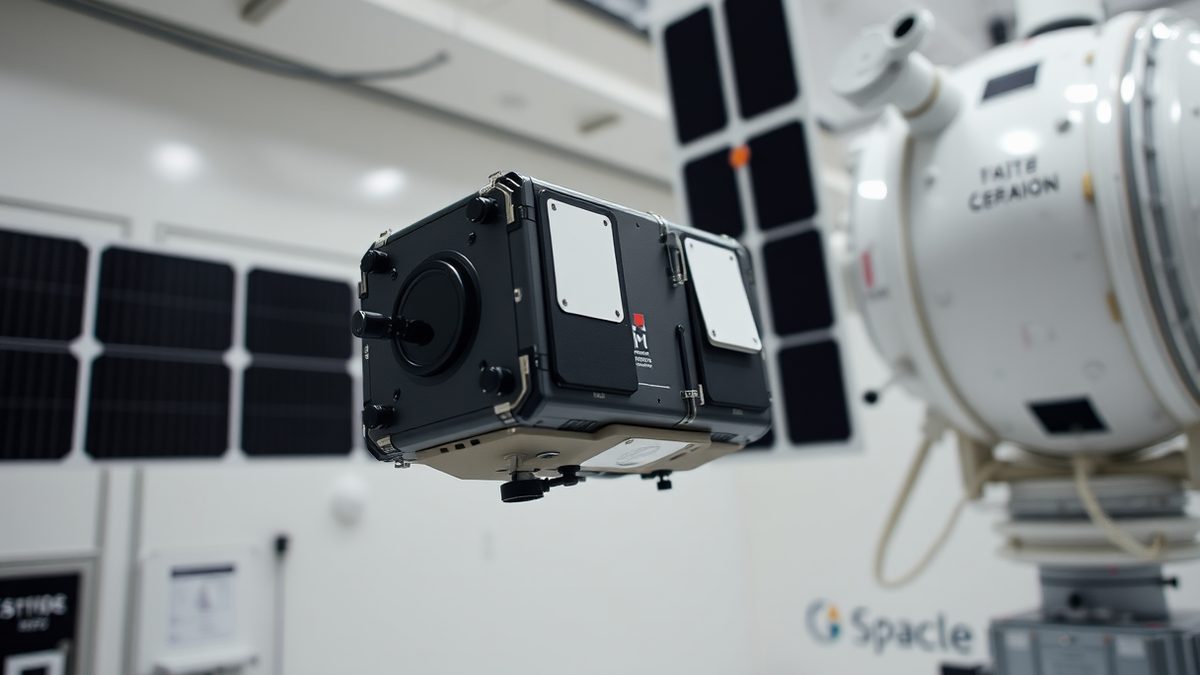
The rescue attempt cost NASA $30 million. The contract went to Katalyst Space Technologies, an Arizona company, in 2025, according to NBC News. On paper the plan was simple: launch a small spacecraft called LINK, grab Swift with robotic arms, and lift it to a higher orbit before the atmosphere swallowed it.
It did not work.
Swift launched in 2004 into low Earth orbit. It was built to run for two years, Ars Technica notes, and it kept working for nearly 22. That longevity made the failure harder to accept for the astronomers who still depend on it. Swift detects gamma-ray bursts, the most powerful explosions in the known universe. Its multi-wavelength instruments and fast pointing let it pinpoint those bursts so other telescopes can follow up.
Every satellite in low Earth orbit slowly loses altitude to atmospheric drag. When the Sun gets more active, it heats Earth's atmosphere and drag increases. According to NBC News, Swift's problems started in 2024, during a period of intense solar activity, and the orbit began decaying faster than expected. Swift has no thrusters of its own, so only an external spacecraft could push it back up. That is what made the LINK contract urgent. NASA needed a launch by summer 2026, which gave Katalyst nine months to design, build and fly a first-of-its-kind satellite. Ars Technica reports the usual timeline for such a spacecraft is several years.
The launch happened on 3 July 2026, on a Northrop Grumman Pegasus XL rocket.
Then the problems started. Mission managers made contact after launch. Less than two weeks in, teams reported orientation issues. On 15 July, NASA said engineers had addressed early communications and attitude control problems, according to NBC News. Software patches appear to have failed. On 28 July, NASA said LINK's attitude control systems had malfunctioned, causing the spacecraft to spin and making communications sporadic. LINK was rotating at about 9 degrees per second.
Ars Technica reported that two of the satellite's three reaction wheels, used for attitude control, stopped working. There were also issues with cold gas thrusters used for finer pointing. That left three low-impulse plasma thrusters as the only way to regain control, while the spacecraft moved around Earth at nearly 5 miles per second. Mission managers did fire the thrusters to slow the spin this month, NBC News reported, but the underlying attitude control problems remained.
On 19 August, NASA and Katalyst said the capture and boost would not happen.
"Katalyst designed, developed, and launched an experimental spacecraft to go after an ambitious mission on an aggressive timeline," said Katalyst CEO Ghonhee Lee. "We took on this high-risk, high-reward challenge and are proud of the milestones we reached along the way."
NASA administrator Jared Isaacman said the outcome was not what anyone hoped for, "but it does not change why this mission was worth attempting." Shawn Domagal-Goldman, director of NASA's astrophysics division, called it a first-of-its-kind attempt developed on an unprecedented timeline driven by the Sun's activity.
LINK is still alive. Katalyst says it will keep gathering data and may still attempt a rendezvous with Swift to demonstrate close-in navigation, though it will not capture or boost the observatory. Swift is expected to reenter the atmosphere and burn up later this year. Ars Technica puts the observatory's cost at $500 million.
There is a wider irony in the timing. The same week NASA confirmed Swift's fate, the agency was already dealing with a separate problem at its Goddard Space Flight Center, where workers told NPR that forced relocations had cost them labs, equipment and staff. Both stories point at the same question: what happens to the science when the machinery behind it gets harder to hold together.
Sources
4- 01NASA calls off rescue mission for its falling Swift space telescopeEN
- 02NASA mission to save its sinking space telescope failsEN
- 03NASA scientists say relocations put space missions at riskEN
- 04NASA calls off mission to rescue Swift gamma-ray observatoryEN
All figures and quotations in this text come from the sources listed below.
Content prepared by the editorial team with AI assistance.
Sofia Marchetti
Comments
0- No comments yet — be the first.