NASA graphic shows Starship refueling sequence for 2028 Moon landing
NASA presented a graphic in late October 2026 showing how SpaceX's Starship lander would refuel in Earth orbit before Artemis IV, the first crewed lunar landing, scheduled for 2028; the tanker count remains unsettled.
 Sofia MarchettiScience and health
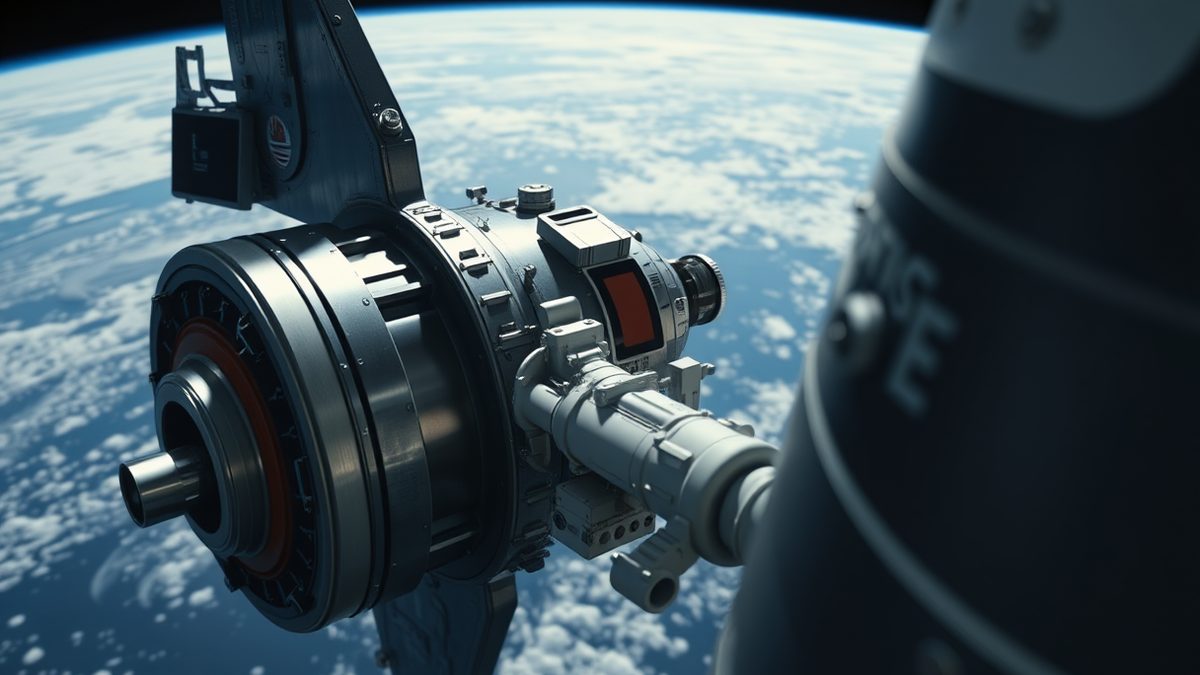
NASA's refueling sequence
NASA presented the graphic at an agency briefing in late October 2026, and Satnews reported on the graphic on 3 November. The sequence covers how SpaceX would fuel the Starship Human Landing System in Earth orbit before Artemis IV, the first crewed lunar landing, scheduled for 2028. It follows Starship's first orbital flight, Flight 14 on 28 September 2026, a step toward the refueling tests SpaceX still must conduct.
According to Space.com's account of the graphic, a propellant depot would sit in low Earth orbit. Multiple tanker Starships would deliver liquid methane and liquid oxygen to it. Once the depot is filled, an uncrewed Starship lander would launch, dock and take on propellant. The lander would then raise its altitude to a final tanking orbit. A second round of tankers would refill the depot, which would meet the lander for a final transfer. The lander would then climb to high Earth orbit to meet Orion.
NASA says the staggered staging gives it flexibility on when the Space Launch System can launch Orion and reduces the fuel SpaceX needs. Space.com reported that part of the saving comes from a change in mission design: Starship will take Orion directly to low lunar orbit, instead of the much higher orbit envisioned in earlier plans.
How many tanker flights
The graphic does not settle the tanker count. It shows a tanker docked to the depot with the label "(multiple)" written next to it, Space.com reported. Satnews reported that a summer 2021 Government Accountability Office audit estimated up to 16 launches. That audit predates the current Artemis IV architecture and Starship V3, so it is not a current planning figure. During an October 2026 public meeting, Charlie Precourt of NASA's Aerospace Safety Advisory Panel said fueling the lander could require as many as 22 launches, according to Satnews.
Elon Musk disputed that on X, saying the number would be closer to six or eight, Space.com reported. BASENOR, a Tesla accessories blog, reported that Tim Dodd, known as Everyday Astronaut, applied a 65-metric-ton payload estimate for Starship V3 to his published refueling model and got roughly 22 refueling trips per mission. Dodd's figure is his own model, not a SpaceX or NASA estimate. The two 22 figures come from different methods: Precourt's came from a safety panel assessment, and Dodd's came from a payload-sensitivity model.
The 65-metric-ton figure is a stress test, not a prediction. SpaceX's published target is more than 100 metric tons to low Earth orbit for Starship V3 in a fully reusable configuration. A drop from 100 to 65 metric tons, a 35% cut, pushes the trip count up significantly. Each refueling trip means a separate tanker launch, a rendezvous in low Earth orbit, a propellant transfer and a safe de-orbit of the tanker.
What has not been demonstrated
SpaceX has yet to demonstrate on-orbit refueling with Starship. Flight 14 in September reached orbit and deployed 26 Starlink V3 satellites, but it did not test orbital propellant transfer, Scientific American reported. Interesting Engineering, citing reports, said SpaceX is struggling to limit boiloff, where cryogenic propellants turn to gas, pressure builds and gas must be vented overboard.
NASA's LOXSAT mission is meant to test the underlying technology. It is a collaboration with Eta Space of Rockledge, Florida, selected under NASA's Tipping Point initiative. The satellite is designed to test 11 cryogenic fluid management technologies over roughly nine months. NASA said the technologies were selected to address "the core challenges of using cryogenic, or super-cold, propellants in microgravity, including reducing boiloff, transferring propellant, maintaining tank pressure, and gauging propellant levels."
What happens next
SpaceX is preparing a Starship lander to rendezvous and dock with Orion in Earth orbit for Artemis III, Starlust reported. Satnews reported that Artemis III has been restructured into a low Earth orbit docking and systems test flight. If that succeeds, Artemis IV in 2028 is to be the first crewed landing. Space.com reported that NASA's outline calls for Orion and Starship to dock in high Earth orbit, travel to low lunar orbit and separate. Two astronauts would descend in Starship, then launch back to lunar orbit and dock with Orion for the trip home.
Before that landing, flight controllers and SpaceX engineers are scheduled to conduct an initial orbital cryogenic propellant transfer demonstration ahead of full uncrewed lunar test flights, Satnews reported. Space.com reported that NASA could still select Blue Origin's Blue Moon lander for Artemis IV if SpaceX cannot demonstrate its refueling strategy or complete an uncrewed lunar landing by the end of next year.
Sources
31- 01Do we know how many Starship launches SpaceX will need to get NASA astronauts to the moon? No. Will its refuelling plan be simple? Also no.EN
- 02NASA Graphic Outlines Artemis IV Starship Refueling Architecture as Launch Estimates VaryEN
- 03NASA mission to test space fuel transfer tech for future moon journeysEN
- 04Starship V3 Orbital Refueling: 5 Details That MatterEN
- 05When will Starship Flight 15 launch? Possible date for SpaceX's most ambitious flight test revealedEN
- 06Once again, SpaceX has set a new record for the tallest rocket ever built - Ars TechnicaEN
- 07SpaceX eyes tower catch for next Starship after auspicious end to 13th flight - Ars TechnicaEN
- 08Starship reaches orbit after Texas launch. What's next for SpaceX?EN
- 09SpaceX’s Starship lifts off in make-or-break orbital test flightEN
- 10Starship reached orbit for 1st time. What's next for SpaceX's rocket?EN
- 11SpaceX puts Starship megarocket in orbit for first timeEN
- 12SpaceX launches first starship flight to orbit in key testEN
- 13Starship reaches orbit in milestone SpaceX testEN
- 14SpaceX Starship Tracker: Flight Log, Next Launch & Test History (2026)EN
- 15Best Wireless Chargers (2026): My Picks After Testing 100+EN
- 16Thea Energy und MIT testen planare HTS-Magnete für mögliches FusionskraftwerkEN
- 17Tokyo tests solar-powered hydrogen production at high-rise office complexEN
- 18Why Testing Automated Driving Is Harder Than It LooksEN
- 19Hier nicht sparen: Der beste Bürostuhl im TestEN
- 20Routes of Reasoning: Reading and Reshaping Test-Time Compute in MoE ModelsEN
- 21Readable Is Not Steerable: Pre-Registered Tests of Physical Structure in Learned Fluid RepresentationsEN
- 22SpaceX Starship Will Need to Re-Fuel 22 Times in Space to Make It to the MoonEN
- 23New Research Tests Whether AI Models Know Their Own ThoughtsEN
- 24 What is Starshield? A look at SpaceX's military satellite network EN
- 25A simple blood test could reveal Alzheimer’s risk 10 years before symptomsEN
- 26A proof-of-concept test can spot bladder cancer in urineEN
- 27Red Hat Patches 9.8-Rated Linux TCP RCE Flaw While Ubuntu Releases Fixes for TestingEN
- 28SpaceX Completes Three Static Fires in Three Days for Flight 15EN
- 29Starship Commercial Payloads: $715M a Year or Loss [2026] - https://tech-insider.org/EN
- 30Possible Roberts Road Expansion as SpaceX pushes for Flight 16EN
- 31Ukrainian startup, GomSpace test satellite for future communications networkEN
All figures and quotations in this text come from the sources listed below.
Content prepared by the editorial team with AI assistance.
Sofia Marchetti
Comments
0- No comments yet — be the first.