Poland: secondhand clothing sales rise as production disappears
In January 2026, sales of textiles, clothing and footwear rose 17.6 percent, the strongest gain of any category. Over the same period, around 500 clothing companies vanished from the market. Exports are 48 times smaller than imports.
 Naomi FeldmanCulture, food and lifestyle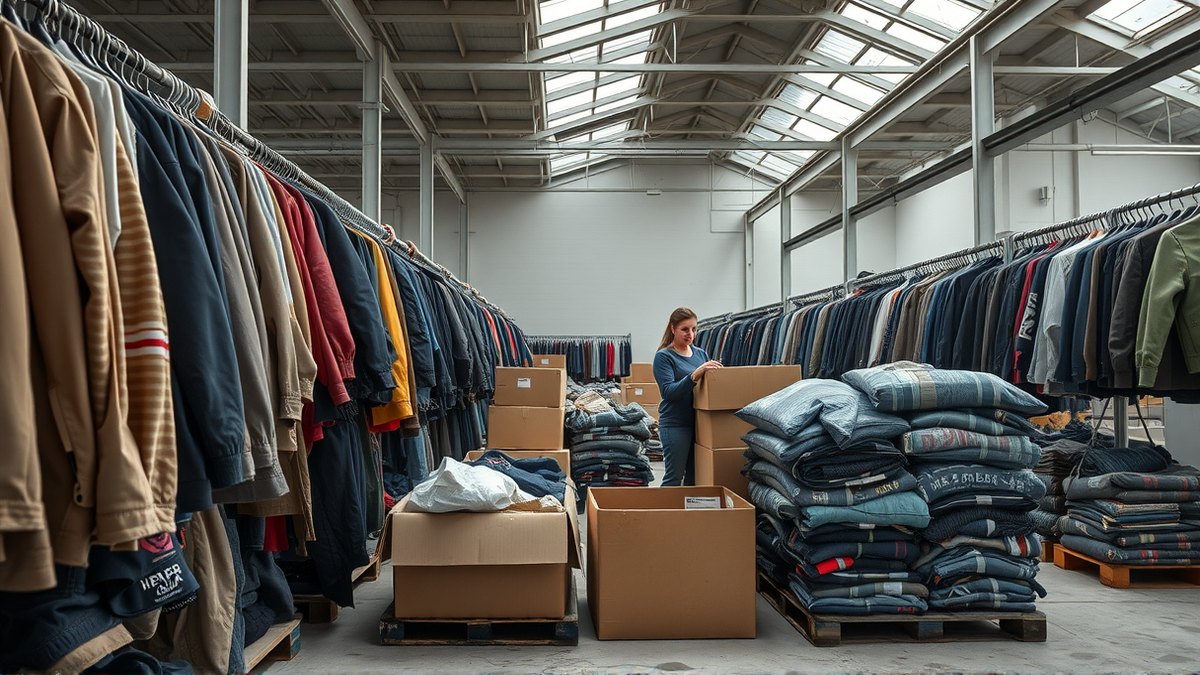
The Polish fashion market has two faces. The first is demand. GUS data published by Retailnet shows retail sales at constant prices rose 4.4 percent year on year in January 2026. The fastest-growing category was "textiles, clothing, footwear", up 17.6 percent. Online sales that month were 10.9 percent higher than a year earlier. In March 2026 retail sales rose 8.7 percent and the clothing category 13.6 percent, while the overall market grew 4.8 percent in the first quarter. Clothes and shoes are selling faster than the economy.
Secondhand sheds its stigma
The second face is the structure of supply. The used-goods segment is growing fastest. Forbes described two students from Kalisz, Gabriel and Filip, who trade clothing from charity shops and earn as much as 10 000 zlotys a month each. At their peak they offered up to 300 garments a month, and they admit that delivery day is a fight for stock. Luxury secondhand is no longer a niche. According to Forbes, branded secondhand clothing now attracts people who can afford new items, among them the director Małgorzata Szumowska and the actress Joanna Jabłczyńska. At the same time, 300Gospodarka notes that since the start of 2025 a separate collection system for textile waste has been in force. Worn-out clothing may not go into mixed waste, and good items can be left in charity containers or sold.
Production falls behind
The third face, and an increasingly faint one, is manufacturing. As Forbes reported on 18 May 2026, around 500 clothing companies disappeared from the Polish market in 2024 alone, among them the brands Top Secret and Femi Stories. Poland exports clothing worth around 1 200 000 000 zlotys a year and imports it for 58 000 000 000 zlotys. It is Europe's fourth-largest economy by number of clothing companies, yet in practice it has become an outlet market, mainly for Chinese producers.
What follows
A country where consumers buy ever more and sew ever less is unusually exposed to EU regulation. The ban on destroying unsold clothing and ecodesign obligations will hit importers and retail chains, not domestic production, which barely exists. At the same time, the growing secondhand sector is creating a new job. Sorting, photographing, describing and shipping used clothing is now ordinary work, not a hobby.
Sources
4- 01GUS: tekstylia, odzież i obuwie liderem wzrostu sprzedaży detalicznej (Retailnet)PL
- 02Vinted zmieniło ich życie. Dwóch studentów z Kalisza podbija rynek używanej odzieży (Forbes Polska)PL
- 03Luksusowe ubrania z drugiej ręki podbijają Polskę (Forbes Polska)PL
- 04Branża fashion w pułapce. Polska stała się rynkiem zbytu, nie producentem (Forbes Polska)PL
All figures and quotations in this text come from the sources listed below.
Content prepared by the editorial team with AI assistance.
Naomi Feldman
Comments
0- No comments yet — be the first.