Portugal starts Lisbon-Porto high-speed line as Spain's crash raises safety questions
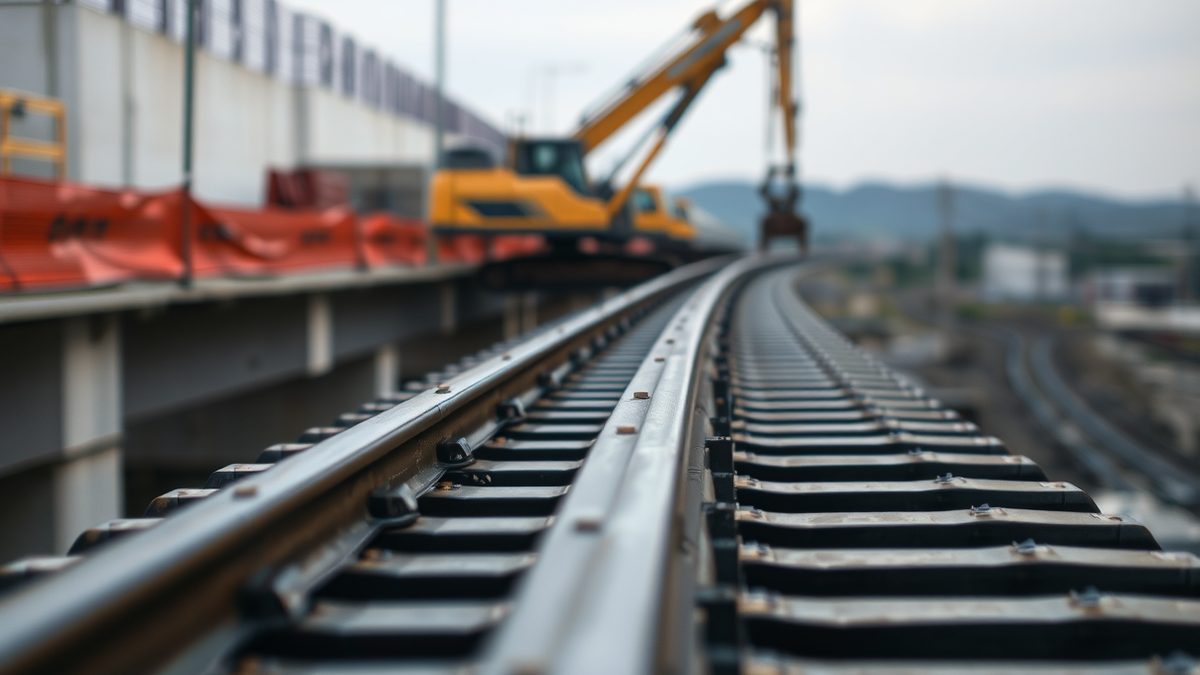
Portugal began construction on Monday on the first 71 km section of the Lisbon-Porto high-speed line. AICEP reported on 4 November that it is worth around €2 billion.
 Daniel FisherSport, cars and travel
For travellers, the finished line would cut Lisbon to Porto to one hour and 15 minutes. A Lisbon-Madrid trip would take about three hours by 2034.
For taxpayers and regulators, Spain offers the warning. Its fatal crash at Urda shows that signalling upgrades can trail construction by years. EU cash can also be tied to contracts rather than to working systems. Portugal has not said what the full line will cost or when the whole route will open. The contrast with Spain is stark. It shapes how the Portuguese project will be judged. On 28 October two high-speed trains collided at Urda in Toledo province.
Portugal starts the first section
Work started on the Porto-Campanhã to Oiã stretch in Aveiro district. That is 71 km of new high-speed railway.
The concession contract for the section was signed on 29 July 2025. It represents an investment of around €2 billion. The financing package includes €875 million from the European Investment Bank and €480 million from the Connecting Europe Facility. The section includes a new road and rail bridge over the River Douro and a new station at Vila Nova de Gaia-Santo Ovídio. It also covers the expansion and redesign of Porto-Campanhã Intermodal Station. The section is part of the Lisbon-Porto high-speed line.
Lisbon to Porto would take one hour and 15 minutes.
The government frames the project as part of its national airport strategy. It supports the new Lisbon airport and aims to strengthen rail links with Spain. The government aims for a three-hour Lisbon-Madrid trip by 2034. Miguel Pinto Luz, Portugal's Minister for Infrastructure and Housing, said: "Alongside the new Lisbon airport, high-speed rail lines represent the largest infrastructure projects the country will undertake this century".
Spain crash sharpens safety questions
The BBC's live coverage reported at least 68 killed. That figure differs from the provisional toll cited by Brussels Signal. Brussels Signal put the provisional toll at 69 dead and more than 200 injured, citing Spain's rail accident investigators. The crash involved a state-owned Renfe AVE train and an Iryo convoy. Both were on the Madrid-Seville line. Preliminary findings say the legacy LZB signalling system failed at 8.31am, 22 minutes before the crash. It was the second deadly crash on the line this year, after 46 people died near Adamuz in Córdoba province on 18 January.
EU money and the ERTMS gap
The corridor was supposed to run on ERTMS Level 2. That is the European Rail Traffic Management System. It was meant to replace German LZB equipment installed ahead of the 1992 Seville Expo.
Spanish transport minister Óscar Puente said physical installation of ERTMS Level 2 was completed in June 2026. It still needed testing and authorisation, he said. It would not be operational until early 2027. Puente rejected claims that Madrid had reported progress while passengers relied on legacy kit. "The European Union is not deceived, it is provided with certificates of completion of works," he said. The European Commission told Brussels Signal that funds earmarked for completion of the works have not yet cleared its assessment. Under Target 85 of Spain's recovery plan, Spain qualified for EU cash by proving it had legally awarded contracts for rail modernisation. The money was disbursed at the procurement stage. No new signalling had entered service.
In October 2021, Adif Alta Velocidad awarded a €93.8 million contract to Thales España to install ERTMS Level 2 on the Madrid-Seville line. The tender set a 52-month execution timeline. It expired in February 2026.
What happens next
Puente was due to appear in parliament on 3 November. The opposition People's Party demanded his departure. The corridor's new signalling will not be live until early 2027.
In Portugal, the first 71 km of the Lisbon-Porto line is now under construction. The government still targets a three-hour Lisbon-Madrid trip by 2034. Neither figure is a completion date for the full route.
Sources
28- 01Portugal starts work on Lisbon–Porto high-speed railEN
- 02EU funding for Spanish rail safety under scrutiny after latest high-speed crashEN
- 03Two high-speed trains collide near Toledo, SpainEN
- 04At least 68 killed in Spanish high-speed train crashEN
- 05Tesla cuts FSD’s speed margin from 50% to 10% over the limit in EuropeEN
- 06Railway Bearings Market To 2035: High-Speed Rail and Urban Transit Drive Growth - News and Statistics - IndexBoxEN
- 07 Dimorphos in sight: Europe's Hera probe gets its 1st look at battered space rock (photo) EN
- 08Food suppliers in UK hit by cyber-attacks after freezers targeted in EuropeEN
- 09Hanwha Q-Cells shifts focus to research and development in EuropeEN
- 10Supermarket fridges hit with cyberattacks across Europe — here's what's happeningEN
- 11Slovenia tenders solar-plus-storage projectEN
- 12Mercedes-Benz Is Giving Up On Its EV Charging Network In EuropeEN
- 13Portuguese AI startup Granter bags €1.6M to expand across EuropeEN
- 14‘A serious failure’: CPS prosecutor cites imaginary case to high court after AI searchEN
- 15The ETS Investment Engine: Scaling Europe’s Strategic E-fuel Market for Shipping & AviationEN
- 16Accepting Orders for the LED Light-Sourced Projection AlignersEN
- 17Sanofi may seek higher European drug prices, not withhold launches, under Trump dealEN
- 18Mistral CEO: Europe faces ‘complete trap’ without frontier AIEN
- 19How Europe’s battery passport could have a big impact on US e-bikesEN
- 20European tech weekly recap: Over €1.3B invested across 60+ dealsEN
- 2130,000-year-old DNA reveals Ice Age Europeans were far more connected than we thoughtEN
- 22Record Demand Catches (Some) OEMs with Their Pants Down — Europe September 2026EN
- 23Bull and Schwarz Digits Sign MOU to Develop European AI InfrastructureEN
- 24New Wave of Refrigeration Cyberattacks Hits Supermarkets Across Europe, Forcing Stores to Pull FoodEN
- 25Analysis of a cheap Android projector that ships with a malware loader for c2EN
- 26Forget AI, Europe has a plan to win the next tech revolutionEN
- 27Hyundai IONIQ 3 Named European Car of the Year 2027 FinalistEN
- 28Less than 42 minutes of bright daylight linked to higher dementia riskEN
All figures and quotations in this text come from the sources listed below.
Content prepared by the editorial team with AI assistance.
Daniel Fisher
Comments
0- No comments yet — be the first.