Tesla wins 14 months of duty deferral in Texas, but not on China tariffs
Tesla's Megapack factory in Brookshire, Texas, became a foreign-trade zone on 2 November, when the FTZ Board published its approval in the Federal Register, Electrek reported a day later. The approval runs for 14 months.
 Dr. Amara PatelEconomy, business and world
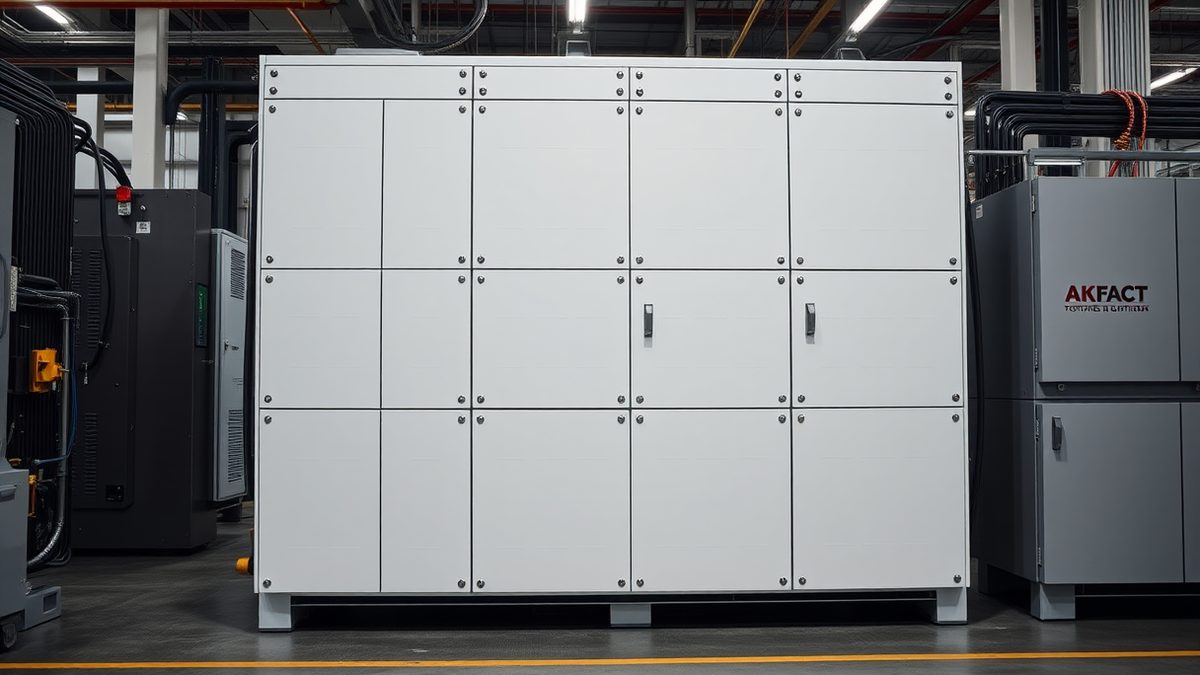
A foreign-trade zone defers duties on imported parts. Tesla applied on 20 May for Subzone 84AM, part of FTZ 84 in the Houston area. The application lists roughly 80 imported components, including coolant pumps, transformers, busbars, wiring harnesses, circuit boards and battery cells, according to Electrek. Duty rates on those parts run as high as 6.5%, while finished Megapacks and Bento inverters carry rates from duty-free to 3.4%. That gap is the usual reason manufacturers seek zone status: they can elect the finished product's lower rate instead of paying on each part. Brookshire began Megapack 3 production in August, with planned capacity of 50 GWh a year.
The relief is narrower than the headline suggests. Tesla's own application says parts hit by Section 301, Section 232 or Section 122 tariffs still pay them.
For anyone buying grid batteries, the effect is cash flow rather than price. Chinese LFP cells still carry the Section 301 duty on non-EV lithium-ion batteries, which rose from 7.5% to 25% on 1 January 2026, Electrek reported. Tesla pays that duty later, when a finished Megapack leaves the zone. Tesla has not said what the deferral is worth.
The mechanics are in the notice. Components subject to Section 122 of the Trade Act, Section 232 of the Trade Expansion Act or Section 301 "require subject merchandise to be admitted to FTZs in privileged foreign status," it says. Privileged foreign status locks in a part's own tariff treatment when it enters the zone. A Chinese cell inside an American Megapack keeps its Chinese rate; Tesla only pays on the way out. The board also kept its 2026 habit of time limits. Production was "authorized on a limited basis" and "further subject to a fourteen-month time period." Tesla got an identical decision for Fremont, Livermore and Lathrop in California this summer, with a one-year limit. Eastman Chemical, Rose Batteries and Qorvo won similar approvals this year.
Tesla has been blunt about the exposure. When tariffs escalated in April 2025, CFO Vaibhav Taneja said the hit to energy storage would be "outsized since we source lithium iron phosphate (LFP) battery cells from China."
The company is fighting on a second front. The Diplomat reported in November that USTR must finish a Section 301 investigation into Vietnam's intellectual property enforcement by 29 November. New duties are possible after that. Tesla told the agency in July to "take into account the supply chain needs of American manufacturers," according to Reuters reporting cited by The Diplomat. It said some advanced components and precision equipment cannot be sourced at home. Samsung's US unit made a similar argument, and Samsung is Vietnam's largest foreign investor, with about $25 billion committed, BolNews reported. Vietnamese goods already face a flat 12.5% tariff imposed in July after a forced-labour investigation.
What new duties would cover is still open. BolNews reported it is unclear whether they would hit all Vietnamese imports or specific industries. The Business Software Alliance, whose members include Microsoft, Oracle and IBM, says about three-quarters of software installed on Vietnamese PCs was unlicensed, citing a 2017 study, Fakti.bg reported.
Robots are the other live case. Ars Technica reported that a proclamation issued on 28 October ordered talks with trading partners and held out "tariffs, duties, quotas, and fees" if they fail within 180 days. Supply Chain Dive noted it was the third time in three months Trump chose negotiations over immediate tariffs after a Section 232 probe, following wind turbines and commercial aircraft. US automakers and aerospace firms buy heavy arms from FANUC, ABB, Yaskawa and KUKA, based in Japan, Switzerland and Germany, Ars Technica reported. The International Federation of Robotics counted nearly 38,500 new US industrial robot installations in 2025.
Medical technology shows how fast costs can land. Medtech Canada said on 3 November that devices, diagnostics and lab products face 50% US tariffs under Section 338, in force since 30 October. "Medical technologies should not be caught in the crossfire of a trade dispute," said chief executive Nicole DeKort.
The Megapack clock has its own deadline. The 14-month approval expires around the end of 2027. That is roughly when LG Energy Solution is due to start supplying Tesla with LFP cells from Michigan under a $4.3 billion contract, with mass production expected in the second half of 2027, Electrek reported. Tesla has opened its own LFP cell plant in Nevada. Taneja has said it covers only a fraction of installed capacity, and Brookshire alone is designed for 50 GWh a year, on top of a 40 GWh Lathrop factory in California.
Sources
7- 01Tesla wins trade zone status for Texas Megapacks, but China tariffs stayEN
- 02Tesla, Samsung Express Opposition to New US Tariffs on VietnamEN
- 03Major tech companies resist Trump's latest tariff push against VietnamEN
- 04Tesla and Samsung oppose Trump's new tariffsEN
- 05Trump declares robot imports a national security threatEN
- 06Trump opts for trade talks over tariffs for robotics, industrial machineryEN
- 07Medtech Canada Urges Zero-for-Zero Tariffs on Medical TechnologiesEN
All figures and quotations in this text come from the sources listed below.
Content prepared by the editorial team with AI assistance.
Dr. Amara Patel
Comments
0- No comments yet — be the first.