AI infrastructure eats 3.6 percent of US GDP. Oracle signals risk
An economist puts the AI buildout in the United States at the equivalent of 3.6 percent of GDP. Oracle is now seeking legal cover in case its flagship data center project in New Mexico slips.
 Dr. Amara PatelEconomy, business and world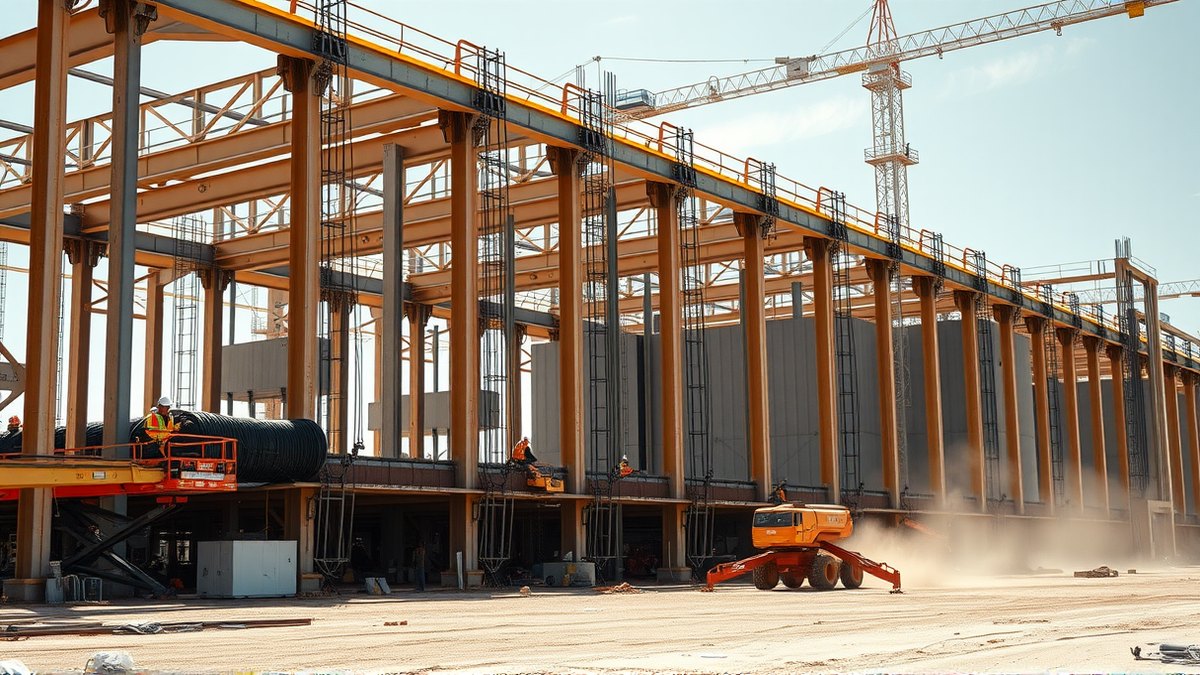
Spending on artificial intelligence infrastructure is no longer just a technology story. In an analysis published by heise.de, economist Stijn Van Nieuwerburgh estimated that AI expansion in the United States absorbs the equivalent of 3.6 percent of gross domestic product over the years.
Who pays for it
Hyperscalers and big technology companies still build the data centers. Paying for them out of their own pockets is getting harder, Van Nieuwerburgh writes. Through 2024, Oracle, Amazon, Alphabet, Microsoft and Meta earned at least twice what they spent. In 2026 the ratio is set to flip: investment will exceed revenue. Outside capital is taking a bigger share, and the risk grows with it.
The economist sees parallels with earlier booms. A general-purpose technology forces complementary investment in a vast physical network whose return depends on uncertain demand. The difference is how fast hardware bought in bulk ages. Infrastructure financing is spread over years, while graphics cards can lose value much sooner. Van Nieuwerburgh admits the AI boom reminds him of the mortgage crisis, and points out that the risk is becoming less transparent.
The Oracle example
A day earlier, investors got a concrete signal. As Bloomberg reported, Oracle sent STACK Infrastructure, a company owned by Blue Owl Capital, a so-called force majeure notice tied to the Project Jupiter data center in New Mexico. Oracle spokesman Michael Egbert argued that projects of this scale often use such notices, and that the letter itself does not determine a delay or change expectations for the project's completion date. The company maintains that Project Jupiter is proceeding on schedule.
The market reacted nervously. Oracle shares fell about 4 percent on Thursday afternoon. RBC Capital Markets analyst Rishi Jaluria wrote in a report that the notice "indicates a change in the internal assessment of the project's execution risk, sufficient for the company to seek legal protection". The problem is measurable. Oracle's capital expenditure in the first quarter came to 28.5 billion dollars against 8.5 billion a year earlier, and the company keeps its forecast of 90 to 95 billion dollars for fiscal 2027. Without bringing new capacity online, it will not convert a growing order backlog into revenue.
Oracle shows how that arithmetic works in practice. Capital investment in the first quarter was 28.5 billion dollars against 8.5 billion a year earlier, and the forecast for fiscal 2027 speaks of 90 to 95 billion dollars. At the same time the company sent STACK Infrastructure, owned by Blue Owl Capital, a force majeure notice concerning the Jupiter data center project in New Mexico. Oracle maintains that construction is running to plan and that such letters are ordinary in the industry. The RBC analyst judged, however, that the signal changes how execution risk is seen, and the share price fell 4 percent.
The comparison with the mortgage market before 2008 is not a prophecy, but it points to a mechanism. When an investment is financed to a growing extent by outside debt, and its key component wears out quickly, the sensitivity of the whole system grows along with its size.
Sources
2- 01Analyse: In KI-Ausbau der USA fließen über Jahre 3,6 % des BIPDE
- 02甲骨文为数据中心延期风险留后路,发出“不可抗力”通知引华尔街质疑ZH
All figures and quotations in this text come from the sources listed below.
Content prepared by the editorial team with AI assistance.
Dr. Amara Patel
Comments
0- No comments yet — be the first.