WHO recommends two Bundibugyo vaccine candidates for DRC's Tumaini trial
WHO said on 4 November that its expert groups had recommended adding two candidate vaccines designed for the Bundibugyo strain of Ebola to the Tumaini trial in the Democratic Republic of Congo, pending national approvals.
 Sofia MarchettiScience and health
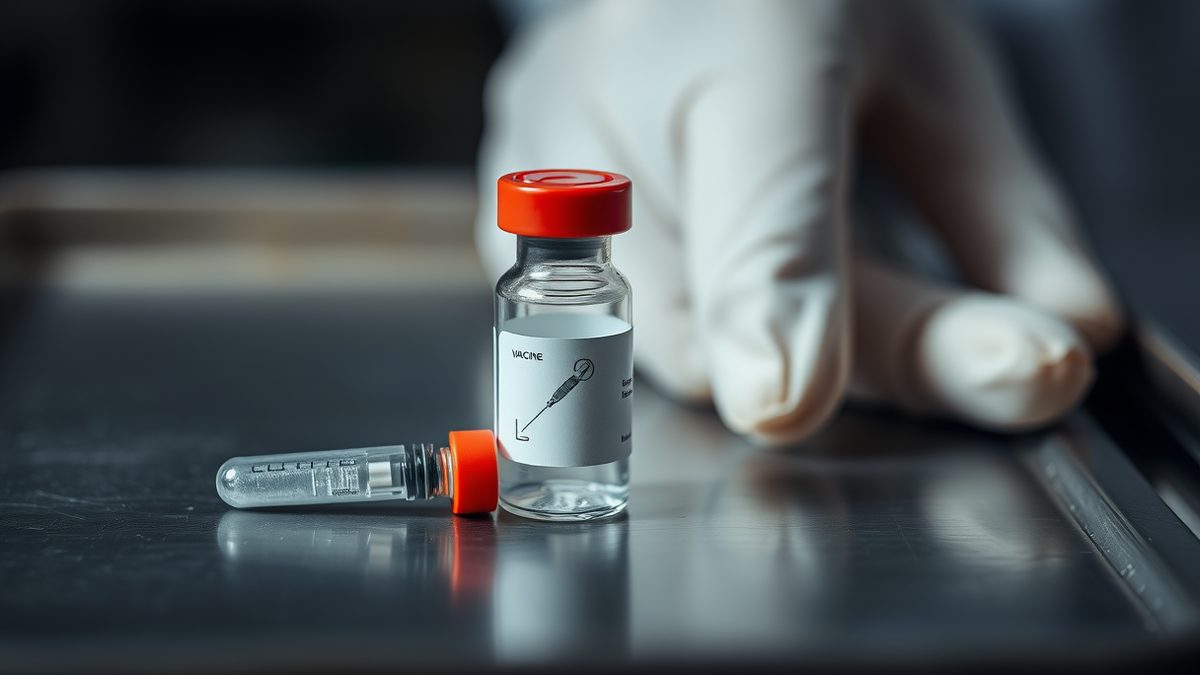
The two candidates are ChAdOx1 BDBV, from the University of Oxford and the Serum Institute of India, and mRNA-1469, from Moderna.
WHO's independent Technical Advisory Group on Candidate Vaccines Prioritization recommended both on the basis of preclinical and early clinical evidence, and the companies were informed on Monday, WHO said in a release dated 4 November. The candidates enter Tumaini only after national approvals. WHO called the step the first time vaccines designed specifically to protect against Bundibugyo virus will be evaluated during an outbreak of the disease. Tedros Adhanom Ghebreyesus, the WHO director-general, said the candidates could become "a powerful new tool for bringing it under control". He also warned that "vaccines alone will not end this outbreak".
Both have already entered Phase I safety and immunogenicity trials, including an Oxford study launched in Uganda earlier in October, EMJ reported.
Tumaini is led by the DRC's Institut National de Recherche Biomédicale. Partners include the University of Antwerp, WHO, Epicentre, Médecins Sans Frontières, the Institute of Tropical Medicine of Antwerp and Africa CDC.
Why the trial matters now
No vaccine is licensed specifically for Bundibugyo virus.
Ervebo, the vaccine used in this response, is approved against the Zaire strain of Ebola, and its effectiveness against Bundibugyo remains unproven. Africa CDC counted 10,444 confirmed cases across the continent and a fatality rate above 50%. National tallies differ. Latin Times reported that the DRC alone had 10,351 cases and 5,026 or more deaths. The Congolese government's 31 October report put the country at more than 10,300 confirmed cases and more than 5,000 deaths across eight of its 26 provinces.
MSF's access campaign has warned that supplies of Ervebo could be constrained by manufacturing challenges. It called on Merck Sharp & Dohme to allocate all doses produced in the coming months to the global stockpile. Julien Potet, a senior vaccines adviser at MSF Access, said vaccines are "only useful if they are available to those at risk".
Tedros said vaccines "are not substitutes for the proven measures that can save lives now", listing early care, contact tracing, isolation, safe burials and community engagement.
How Tumaini tests vaccines mid-outbreak
Tumaini, which means hope in Swahili, began enrolling participants on 23 October in Bunia, in Ituri province.
The design is an adaptive platform, built to test several candidates inside one trial rather than one after another. It uses ring vaccination: teams vaccinate contacts of people with confirmed Bundibugyo virus disease, and others at high risk, rather than the general population. Participants are randomly assigned on day one to a candidate vaccine or a comparison treatment. They receive the other on day 29, so everyone is eventually offered a candidate. An independent data monitoring committee reviews results as they arrive and can drop candidates that look ineffective.
The first candidate in the rings is Ervebo, which is being tested for cross-protection.
Bunia was the early epicentre of the outbreak, and mobile vaccination teams could extend access to other affected areas. The trial includes pregnant women and children aged 12 and older, with children as young as 1 eligible for the Ervebo component. Four vaccination rings are already in place, and WHO says several more are being prepared. WHO said investments by the Coalition for Epidemic Preparedness Innovations made the rapid development of the candidate vaccines possible.
What the outbreak looks like
The first cases were reported on 14 May 2026, and the DRC and Uganda declared simultaneous outbreaks on 15 May, Latin Times reported. The CDC calls it the second-largest Ebola outbreak on record. Ituri in the northeast remains the epicentre, where conflict complicates access to affected populations.
The outbreak passed 1,000 confirmed cases within 40 days of the response starting, Medical Daily reported, citing CDC figures that put the 2018 outbreak in the same country at about 235 days to reach that mark.
It has also crossed borders. Kenya has recorded nine cases including two deaths, all in Nairobi and linked to a travel-related infection with no community spread reported, according to Medical Daily. Nigeria confirmed its first Bundibugyo case on 21 October, Latin Times reported: a woman who had been on a business trip to eastern DRC and transited through Uganda, with exposure believed to have occurred in DRC. The Nigeria Centre for Disease Control and Prevention put the laboratory confirmation on 20 October. Latin Times counts five countries with confirmed cases: the DRC, Uganda, Kenya, Nigeria and France, where one patient recovered. Africa CDC director-general Jean Kaseya has said as many as 12 countries are now at risk.
The DRC's case fatality rate crossed 51% on 30 October, one of the highest recorded for a modern Ebola outbreak, Latin Times reported.
What happens next
WHO's PARTNERS trial, launched in July, is testing whether the monoclonal antibody MBP134, the antiviral remdesivir, or a combination of both can improve survival in confirmed Bundibugyo cases. WHO said maftivimab will soon be added, and a post-exposure prophylaxis study with obeldevisir is underway.
Initial findings from the treatment trials are expected in the coming months. Results from the vaccine trial are expected in early 2027.
Sources
11- 01Two new candidate vaccines to join Ebola trial as treatment research advancesEN
- 02WHO approves clinical trials for two new Ebola vaccinesEN
- 03Ebola in the DRC: Two candidate vaccines recommended for the Tumaini trialEN
- 04Bundibugyo Ebola outbreak crosses borders as DRC fatalities top 5,000 and vaccine trials beginEN
- 05WHO approves trials of two Ebola vaccines in the DRCEN
- 06Ebola Vaccine Trial Begins in Congo as Bundibugyo Outbreak Tops 10,000 Confirmed Cases and 4,900 DeathsEN
- 07Ebola Vaccine Trial Begins as Congo Outbreak Deaths RiseEN
- 08Vaccines for the 2026 Bundibugyo Ebola disease outbreak: access gaps and recommendationsEN
- 09DRC: Ebola outbreak death toll exceeds 5,000EN
- 10WHO Approves Ebola Vaccine Trials for DRC and Nigeria OutbreaksEN
- 11WHO hopes DRC vaccine trials will help tackle Bundibugyo Ebola outbreakEN
All figures and quotations in this text come from the sources listed below.
Content prepared by the editorial team with AI assistance.
Sofia Marchetti
Comments
0- No comments yet — be the first.