Zhejiang opens spot market to grid batteries as US pledges $1.9B for grid tech
China's Zhejiang province will let independent grid-side batteries trade in its electricity spot market under a notice issued on 23 September, covering 40 projects totalling 2.54 GW/5.1 GWh, according to pv magazine. Three days earlier, the US Department of Energy said it would put $1.9 billion behind 31 advanced grid technology projects.
 Dr. Amara PatelEconomy, business and world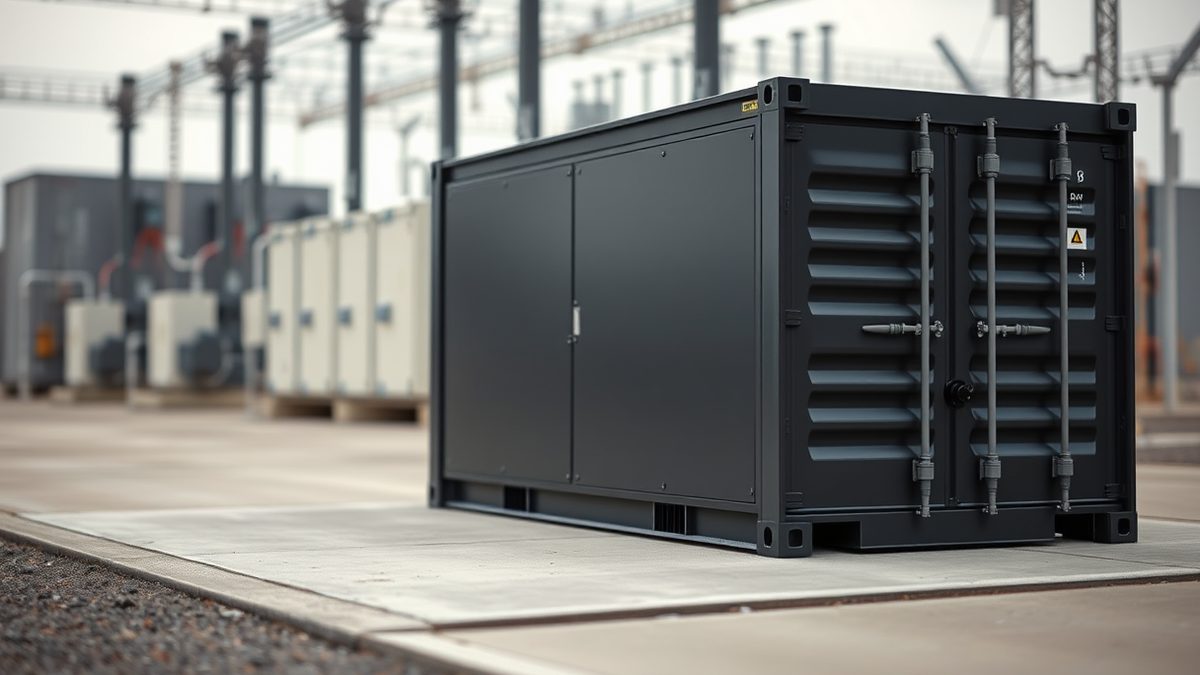
Two pieces of grid spending news landed within days of each other this week, in two very different power systems. One is a market rule change in eastern China. The other is a federal grant round in the United States. Both are about getting more out of hardware that grids either already have or are about to install.
The newer of the two came from Hangzhou. Regulators in Zhejiang province opened the provincial electricity spot market to independent grid-side batteries, pv magazine reported on 26 September, citing a regulatory statement issued on 23 September by the Zhejiang office of China's National Energy Administration, the provincial development and reform commission, and the provincial energy bureau. Under the notice, storage projects register, settle and meet technical entry requirements on a defined set of rules. They self-schedule, and each day they choose whether to earn money in the energy market or in frequency-regulation ancillary services. Projects holding retail electricity contracts can exit them through the trading platform before entering. Those not registered as storage, the regulator said, will in principle not be dispatched in normal grid operation.
A project list attached to the notice covers 40 projects totalling 2.54 GW/5.1 GWh.
The numbers behind the policy are specific. Of the 40 projects, 28 with a combined 2.13 GW/4.27 GWh are already in commercial operation and centrally dispatched, which makes them eligible for both markets. Another six operating projects, totalling 0.11 GW/0.22 GWh, can enter the energy market only. Zhejiang plans to move storage to price-and-quantity bidding from 1 January 2027.
The context matters as much as the rule. pv magazine ties the move to China's 2025 decision to scrap its energy storage mandate for renewable energy plants, and to the capacity price floor for grid-scale storage set in February. In other words, storage in China is being pushed from an obligation attached to renewables toward a merchant asset that has to earn its keep in dispatch.
Washington funds cables, sensors and controls
In the US, the money is federal and the mechanism is grants rather than market design. On Thursday, the Department of Energy announced $1.9 billion for 31 projects across 26 states under its SPARK grant program, Canary Media reported on 24 September. SPARK was created last year to repurpose money obligated by Congress in the 2021 bipartisan infrastructure law. Participating utilities have pledged a collective $3.35 billion in matching funds, bringing total investment to $5.25 billion, according to the same report. Recipients include American Electric Power, CenterPoint Energy, Duke Energy, Eversource Energy, Rocky Mountain Power and PPL Electric Utilities, plus four public power utilities and rural electric cooperatives in Arizona, New Mexico and North Carolina.
What the projects buy is largely equipment. Many will deploy advanced conductors, cables that are lighter, stronger and able to carry more power than the aluminium-and-steel lines used across most of the grid, so capacity can rise along existing corridors without new towers. Others will install dynamic line rating systems, which assess a line's real capacity hour by hour using sensors on towers, devices on cables or software alone.
Energy Secretary Chris Wright said in a Thursday statement that the grants will "get more out of the infrastructure we already have, move more electricity across the grid, and help deliver affordable, reliable, and secure power that will fuel American prosperity for decades to come." Canary Media noted the program is a rare point of alignment between the Trump and Biden administrations on energy policy, even as Trump appointees have blocked billions for other Biden-era grants.
Two projects dominate the list by size. A $1.2 billion project headed by the Colorado Energy Office and an $832 million project by the Oklahoma Office of Management and Enterprise Services each received a $250 million grant, both aimed at expanding capacity to share power between the Eastern and Western US grids. Julia Selker, executive director of the Working for Advanced Transmission Technologies Coalition, told Canary Media the grants will produce "phenomenal" experience, and argued federal cost-sharing is a good deal for ratepayers.
Why adoption has lagged
The technologies are not new. Canary Media reports that studies from the DOE, utilities, grid research organisations and clean energy think tanks have found benefits far exceeding deployment costs. Some pilot projects stretch back more than a decade.
Adoption has still been slow, for two reasons the report sets out plainly: utilities are wary of unfamiliar technology, and they are not incentivised to choose alternatives to building grid assets, on which they earn regulated profits. At the same time, they face pressure to control the rising cost of upgrades that is already pushing up customer rates.
Zhejiang's problem is different in kind. Its rules force storage to compete for revenue, which means the projects on its list now face dispatch and price risk rather than a guaranteed return. The province said it will keep monitoring participation and press market operators to tighten oversight.
Neither development answers the demand question that sits underneath both. On the same days these two stories ran, industry coverage pointed to data centres and electrification loading grids faster than capacity is being added, and to utility rate pressure in several markets. Extra capacity from better cables, better sensors and better-paid batteries helps at the margin. It does not add a new power plant.
The Volvo and trucking news of the past week shows where some of that demand is heading. CleanTechnica reported on 27 September that Volvo's new heavy-duty electric range won International Truck of the Year 2027 at IAA Transportation in Hanover, with the FH Aero Electric claimed at up to 700 kilometres on a charge and megawatt charging support. Electrek reported on 26 September that the Scania and sennder joint venture JUNA had deployed its 110th electric semi, with plans for up to 40 more before year end.
Ars Technica's account of Tesla's Semi launch on Thursday put the constraint bluntly: the trucks need a countrywide network of specialised megawatt chargers, and Tesla's website showed two such public chargers operating in the LA area, with the company planning 30 by the end of the year. That is the same problem as Zhejiang's, in a different shape. The vehicles, the batteries and the cables exist. The grid connection and the revenue model are what decide whether they get used.
Sources
5- 01Chinese province moves grid-side batteries into spot marketEN
- 02Advanced grid tech gets a $1.9B DOE boostEN
- 03Volvo's Electric Trucks Win International Truck of the Year 2027 at IAAEN
- 04JUNA puts more than 100 Scania electric semi trucks to workEN
- 05Tesla's big electric truck faces an even bigger infrastructure challengeEN
All figures and quotations in this text come from the sources listed below.
Content prepared by the editorial team with AI assistance.
Dr. Amara Patel
Comments
0- No comments yet — be the first.