Drought 2026: France's potato harvest to fall by at least 23 percent
French potato growers expect a harvest 23 percent smaller than a year earlier and losses of nearly 400 million euros. EU yield forecasts were cut for almost every summer crop.
 Naomi FeldmanCulture, food and lifestyle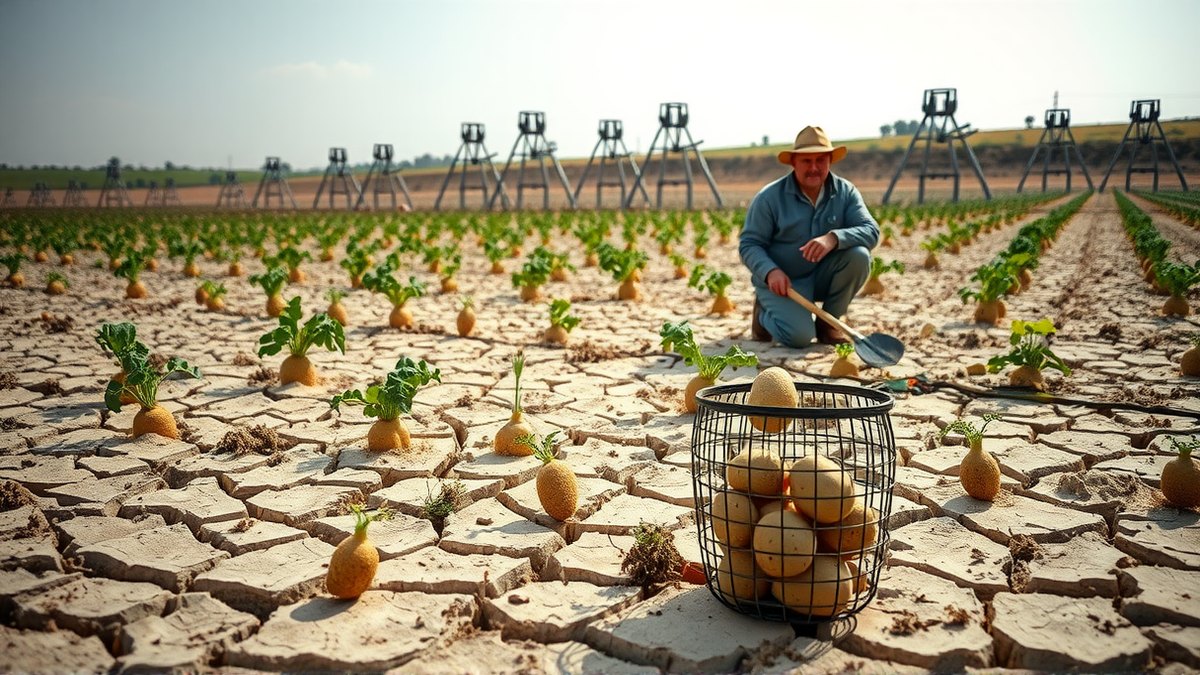
France went through five heatwaves in the summer of 2026. From the second half of May, rain was scarce and the soil bone dry. Yicai reported the fallout on the first day of September: potato production in the country will fall by at least 23 percent against the previous year, the lowest result in more than thirty years.
"Last year we harvested slightly more than 43.5 tonnes per hectare. This year the forecast is around 34.5 tonnes per hectare," Geoffroy D'Evry, president of the national potato growers' association, told the paper. That is lower even than 2022, itself a historically weak year. The industry puts its losses at nearly 400 million euros.
Why the drop, when the area was cut
Two factors combined to cause the decline. First, after overproduction in 2025, potato plantings were reduced by 10 percent in France and by 11 percent in north-western Europe. Then came the weather. In the Netherlands, the late-June heat and the drought that followed have left potato fields ageing fast. Field reports do not limit the losses to the traditionally dry regions of southern Europe.
For the french fry market, Belgium matters. It is the world's largest exporter of frozen fries, processing more than 6 million tonnes of potatoes a year, with about 90 percent of the finished product going to more than 120 markets. A shortage of raw material there quickly feeds through to availability and prices along the whole chain.
Grains: maize at its lowest in decades
Potatoes are not the only problem. A late-July 2026 brief from the European Commission's Joint Research Centre cut yield forecasts for almost every summer crop in the Union: maize and sunflower down 6 to 7 percent, winter crops by 1 to 4 percent, and total EU grain production about 1 percent below the five-year average. Andrew Kanyemba of the analytics platform Expana says outright that EU maize is "the biggest worry": the harvest is set to fall to its lowest level since 1995, and France, the region's main producer, may post its worst result since 1977.
For the consumer, the sum is what counts: more expensive potato raw material and more expensive feed grain translate into the prices of fries, bread and meat. The FAO grain index rose in August 2026 to 116.3 points, the highest since May 2024. The 2026 drought is therefore not only the farmers' problem: it is an item in the shopping basket.
Sources
2All figures and quotations in this text come from the sources listed below.
Content prepared by the editorial team with AI assistance.
Naomi Feldman
Comments
0- No comments yet — be the first.