China: beef at its priciest in over two years, wholesale up 6 percent
Wholesale beef prices in China have climbed nearly 6 percent since the start of August, and nearly 9 percent year on year. The cattle herd keeps shrinking, and safeguard measures on imports brought in during 2026 are adding to the pressure.
 Naomi FeldmanCulture, food and lifestyle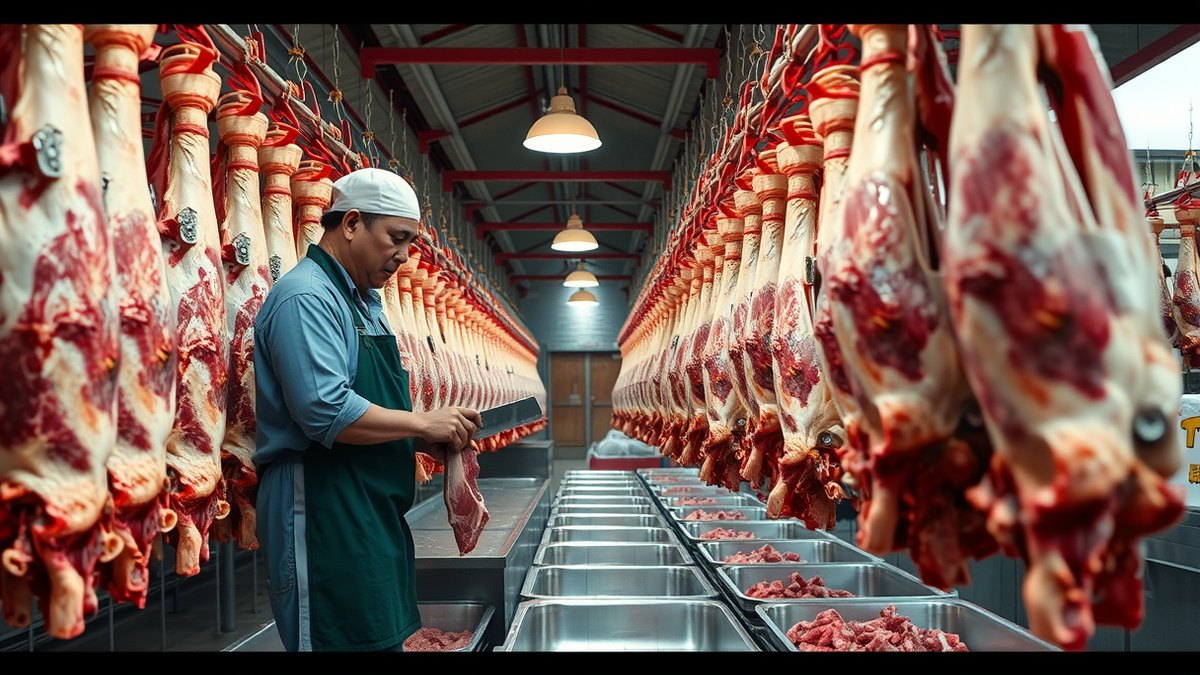
The outlet 第一财经 (Yicai) spoke to traders in Shanghai and described the jump in beef prices in September 2026. At 西郊国际, one of the city's largest wholesale agricultural markets, the popular cut 牛腱子 went from nearly 80 to about 90 yuan per kilogram. "Since August, beef has gone up five, six times," one wholesaler told the paper. In a little over a month the wholesale price climbed by about 10 yuan per kilogram.
Figures from the Ministry of Agriculture and Rural Affairs (农业农村部) confirm the trend. On 21 September the average national wholesale price of beef was 71.59 yuan per kilogram, nearly 6 percent more than at the start of August and nearly 9 percent more than a year earlier. Quotes from the Beijing 新发地 market show the scale even more clearly. 牛前腱 went from 71 yuan at the start of August to 80 yuan per kilogram on 24 September, a rise of 9 yuan. Retail prices rose by a similar 10 yuan per kilogram. 界面新闻 reported the same increase and called it a "more than two-year high" at a price of "more than 71 yuan per kilogram".
Three years of losses and fewer cows
Shrinking supply is the first cause. Yicai notes that in 2023-2025 the breeding industry in China lost money three years in a row, and many smaller farmers culled dairy and breeding cows. The National Bureau of Statistics (国家统计局) puts the cattle herd at 96.08 million head at the end of 2025 and 95.57 million head at the end of the second quarter of 2026, down 4.3 percent year on year. In some regions breeding cow herds are 10-30 percent smaller than at the 2023 peak.
Trade is the second cause. Under Ministry of Commerce (商务部) notice no. 87 of 2025, growing beef imports were found to cause "serious harm" to domestic production, and safeguard measures followed. Seasonal demand adds to the squeeze. Meat consumption in China rises before the end of the year, during the holiday period.
Global context
Chinese beef is not getting more expensive in a vacuum. The FAO meat price index stood at 127.9 points in August 2026, 1.0 percent more month on month, with clear increases in poultry, pork and mutton. The Chinese domestic market, though, is right now the product of its own investment cycle. Rebuilding a cattle herd takes years, because a calf has to grow before it goes to slaughter. Until the herds recover, supply will stay tight regardless of the level of imports.
Sources
3- 01第一财经: 牛肉价格创两年多新高,上涨行情还会持续多久?ZH
- 02界面新闻 (dział 消费): 一公斤71块多,牛肉价格涨至两年多新高ZH
- 03FAO Food Price Index — meatEN
All figures and quotations in this text come from the sources listed below.
Content prepared by the editorial team with AI assistance.
Naomi Feldman
Comments
0- No comments yet — be the first.