Fuel eats 31 percent of airline costs as engine bills jump 5.7 billion USD
IATA puts airline industry costs at 1.117 trillion USD in 2026, with 350 billion USD of that going to fuel. Engine servicing is counted separately.
 Peter LindqvistSport, cars and travel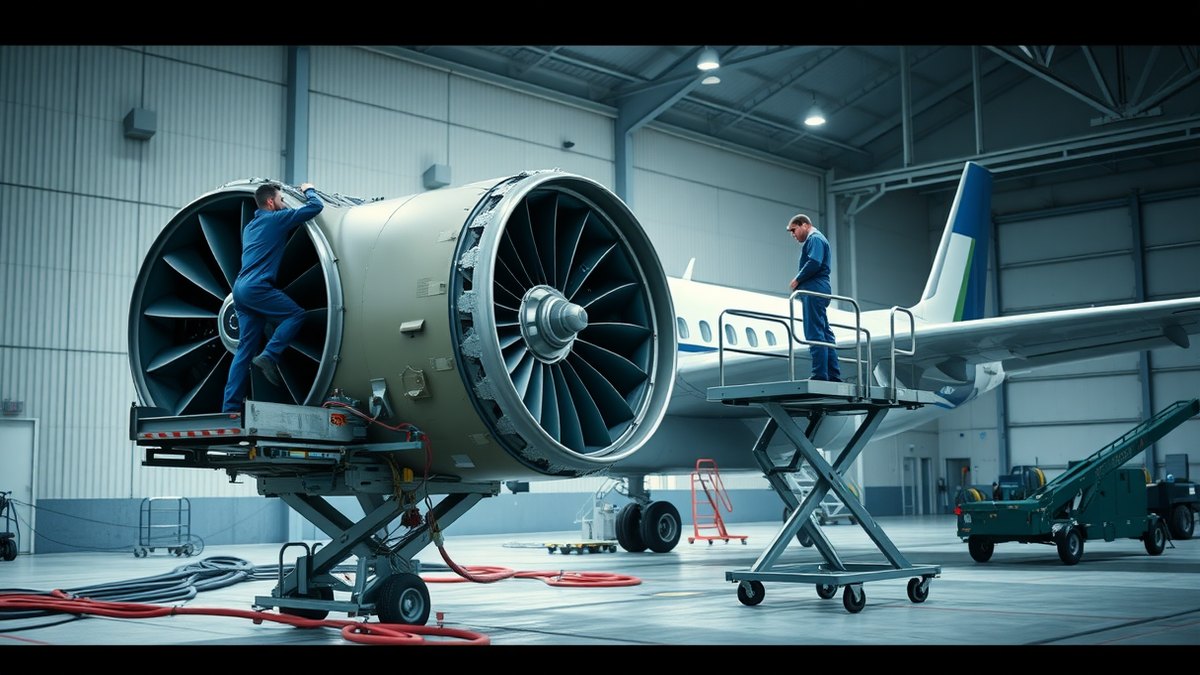
Fuel is still the single biggest item on an airline's books. IATA's forecast for 2026 has carriers spending 350 billion USD on it. That is 31.4 percent of all industry costs, which the association puts at 1.117 trillion USD. The forecast assumes jet fuel at 152 USD per barrel, against 90 USD in 2025. Brent crude is expected to average 95 USD per barrel, up from 69 USD a year earlier.
Fuel is the main reason revenue and costs are growing at different speeds. Total industry revenue in 2026 should reach 1.165 trillion USD, 9.4 percent more than a year earlier, while expenses rise 13.0 percent. That gap shows up in the bottom line. Airline net profit should fall from 45.0 billion USD to 23.0 billion USD, and the net margin from 4.2 percent to 2.0 percent.
Engines: 5.7 billion USD in extra costs
Engines are the second place carriers look for savings. IATA notes that a ruling by the European Commission's Directorate-General for Competition in the Pratt & Whitney Canada case added about 5.7 billion USD to airline bills for engine leasing and servicing in 2025.
Earlier that same year, IATA renewed its agreement with CFM International on aftermarket servicing practices. The deal is meant to open up competition across the whole portfolio of CFM commercial engines. It lets independent service providers bid for tenders and backs the use of all parts and repair variants approved by regulators.
IATA says more competition and more options for parts and repairs are among the measures that can ease this cost pressure. The organisation represents more than 370 airlines, so it speaks for most of the world passenger market.
What it means for the ticket price
IATA's forecast shows that higher fuel prices do not have to mean higher fares for the passenger. Carriers pass on only part of the increase to customers. IATA assumes real growth in revenue per passenger kilometre of 7.0 percent and growth in total unit revenue of 7.5 percent, alongside a 13.0 percent rise in costs. The industry's financial result covers the difference, and in 2026 it will shrink by nearly half.
Sources
2- 01IATA — Industry Statistics Fact SheetEN
- 02IATA — Pratt & Whitney Canada: Step Improved Engine AftermarketEN
All figures and quotations in this text come from the sources listed below.
Content prepared by the editorial team with AI assistance.
Peter Lindqvist
Comments
0- No comments yet — be the first.