China now requires AI content labels. Platforms are testing how visible they should be
Since September 1, 2025, AI-generated content in China must carry labels, both openly and in metadata. Sina checked more than a dozen platforms and found three different approaches, from automatic watermarks to labels buried in the share menu.
 Rachel NwosuAI, models and technology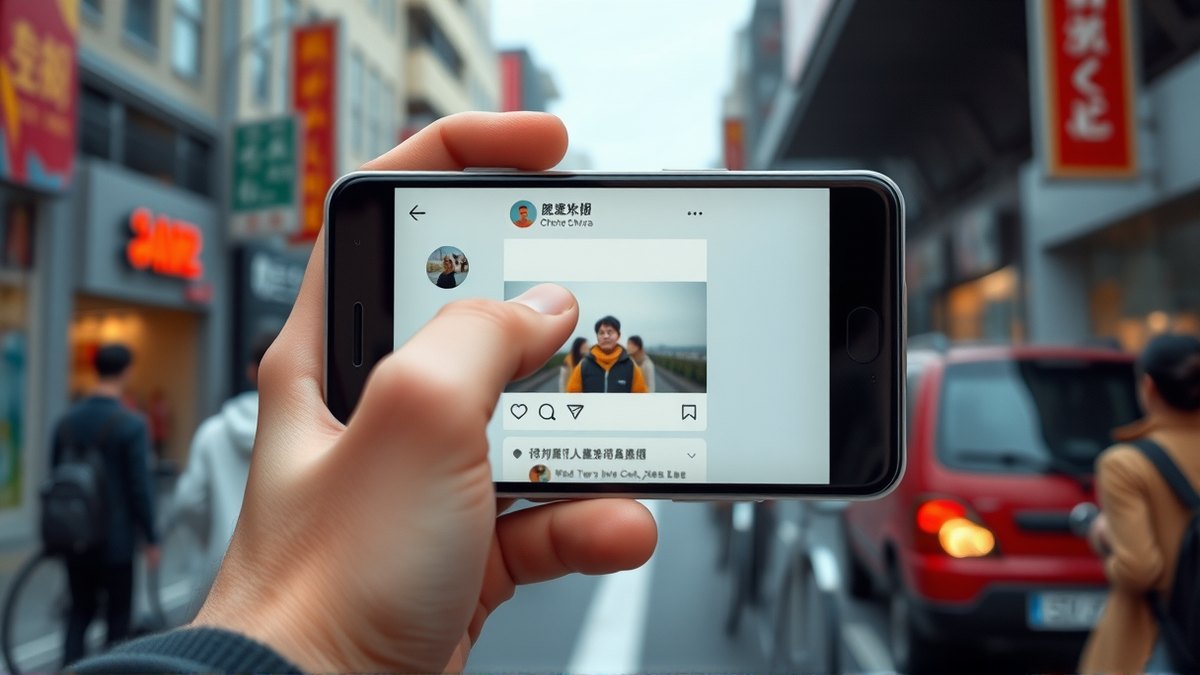
China's rules on labeling content generated by artificial intelligence took effect on September 1, 2025. The regulation requires two kinds of labels: an explicit one, visible to the user, and a hidden one in the file metadata that identifies the model provider and the time of generation.
Sina checked how more than a dozen platforms are putting the rules into practice. The findings are mixed. Douyin, ByteDance's video app, added a checkbox at publishing and a watermark for content marked as generated. WeChat Channels let authors declare their use of AI. When the platform suspects AI content, it runs a manual review on top. Weibo put the label in the share menu, with the wording "content may be generated by AI." Toutiao introduced automatic labeling and stores metadata with the provider code and the time the material was created.
Not every service made the deadline. Several smaller apps still had no mechanism in place when Sina ran its test. The government did roll out a national tool for verifying labels, along with the technical standard GB 45438-2025, which defines how the metadata is written. The maximum penalty for a missing label is 100 000 yuan. For large platforms that is a symbolic sum. The reputational risk and the prospect of having reach throttled already hurt.
Reach as a sanction
Throttling reach turned out to be a more effective tool than the fine. On August 29, Douyin announced that content without the required label would get reduced visibility, and that repeated violations could end in an account ban. That changed the cost calculation. For a creator whose income depends on views, losing distribution is a far harsher punishment than any sum.
Tencent's double standard
The outlet 36Kr described a separate case. Tencent is testing an AI-based writing assistant in its Moments feature (朋友圈), while at the same time tightening the rules for AI content in official public accounts. Channels run by companies and creators must declare their use of models, and posts not generated by a human have their reach limited. Newsrooms in China consider this the most restrictive approach on the market. It is not a ban on using AI, but an obligation to separate the private sphere of conversation from publication.
The financial context shows why Tencent can afford caution. In the second quarter of 2026, the company's capital expenditure rose 176 percent year on year, to 52.78 billion yuan, while free cash flow was negative at 13.8 billion yuan. At that scale of investment in AI infrastructure, regulatory risk becomes a strategic variable rather than an operational one.
A lesson for European newsrooms
The Chinese model shows that a label alone is not enough. What matters is who sees it and how quickly. A label hidden in the share menu meets the formal requirement but does not help the audience tell real material from generated material. Effectiveness comes from combining three elements: automatic labeling in the metadata, a visible mark in the interface, and a real sanction for omitting it. The EU AI Act moves in a similar direction, but provides for longer transition periods and milder penalties for platforms.
Sources
3All figures and quotations in this text come from the sources listed below.
Content prepared by the editorial team with AI assistance.
Rachel Nwosu
Comments
0- No comments yet — be the first.