Chinese AI stocks pay for the model price war
Zhipu and MiniMax, two Hong Kong-listed model labs, lost between 16 and 31 percent of their value this month. The immediate cause was a price cut at DeepSeek.
 Dr. Amara PatelEconomy, business and world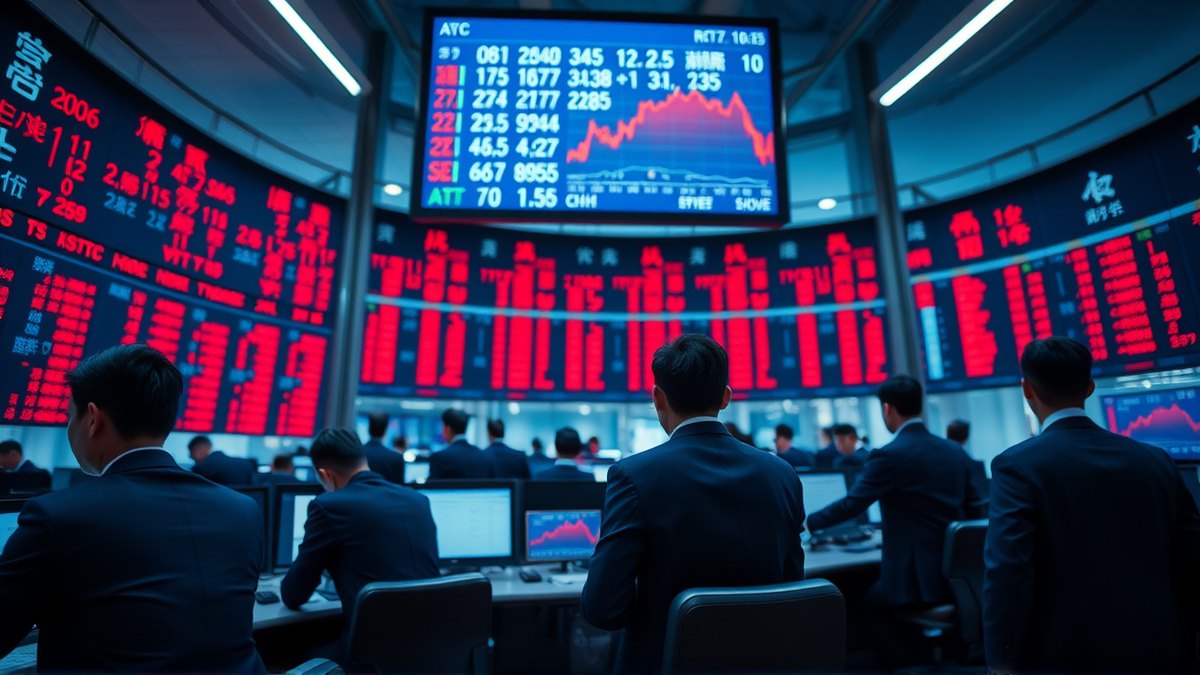
On September 10 shares in two Chinese model companies on the Hong Kong exchange collapsed after DeepSeek cut its prices. Zhipu (02513.HK) closed the day at 819 Hong Kong dollars, down 10.34 percent. MiniMax (00100.HK) fell 8.98 percent, to 292 dollars. Over the month the losses reached 31.46 percent for Zhipu and 16.3 percent for MiniMax.
The immediate cause is mundane. A cheaper model from a competitor takes away customers. DeepSeek cut prices on its Flash series on exactly that day, and analysts at Morgan Stanley pointed out that rival models also drove the pressure, among them Qwen3.8-Flash from Alibaba. The analysts' conclusion is blunt. When the quality and availability of services are similar, customers pick the model with the lower total cost. That hits customer retention, prices and margins at the other suppliers.
The scale of the problem shows in the financial statements. In the first half of the year Zhipu generated 954 million yuan in revenue, 399.7 percent more than a year earlier and more than in the whole previous year. The share of cloud deployments rose to 86.5 percent of revenue, and the margin on the open platform and API improved from minus 0.4 percent to 24.6 percent. The trouble is that the cloud business model carries far lower margins than on-premise deployments. The company's overall margin fell from 50 percent to 26.4 percent. Research and development spending reached 2.13 billion yuan, and the adjusted net loss 1.96 billion yuan.
MiniMax, too, relies increasingly on serving model calls. In the first half its revenue came to about 117 million dollars. The open platform and enterprise services accounted for 73.9 million dollars of that, with the share rising from 30.3 percent to 63.4 percent. This is precisely the segment where a competitor's price cut hurts most.
Both companies are trying to make up ground through efficiency. Zhipu said that since the start of the year the unit cost of inference per token fell 80 percent, the number of tokens handled rose more than 40-fold, and the average API price rose by about 101 percent. MiniMax attributes its margin improvement to better infrastructure. Jefferies, however, lowered the valuation of Zhipu's cloud business, cutting the revenue multiple from 50 to 30 times.
In the background hangs a question that concerns the whole Chinese market. Can independent model labs hold their margins when they compete not only with DeepSeek but with conglomerates that subsidise the effort with their own cloud, ecosystem and sales channels?
The half-year results show where value is created in this model. At Zhipu the bulk of revenue comes from cloud deployments, and the open platform has only just moved into positive gross margin after running below the line. MiniMax, in turn, has shifted its focus from consumer apps to enterprise services. Both companies therefore face the same problem. Revenue is growing, but so are research and infrastructure costs, and a competitor with a conglomerate behind it does not have to make money on the model itself. In this puzzle, margin is the last thing that will stabilise.
Sources
3All figures and quotations in this text come from the sources listed below.
Content prepared by the editorial team with AI assistance.
Dr. Amara Patel
Comments
0- No comments yet — be the first.