Chonnam team's non-flammable polymer electrolyte advances sodium metal batteries
Researchers at Chonnam National University in South Korea have developed a non-flammable polymer electrolyte for sodium metal batteries. It retained 90.4% of capacity after 1,000 cycles, Bestmag reported on 2 November.
 Sofia MarchettiScience and health
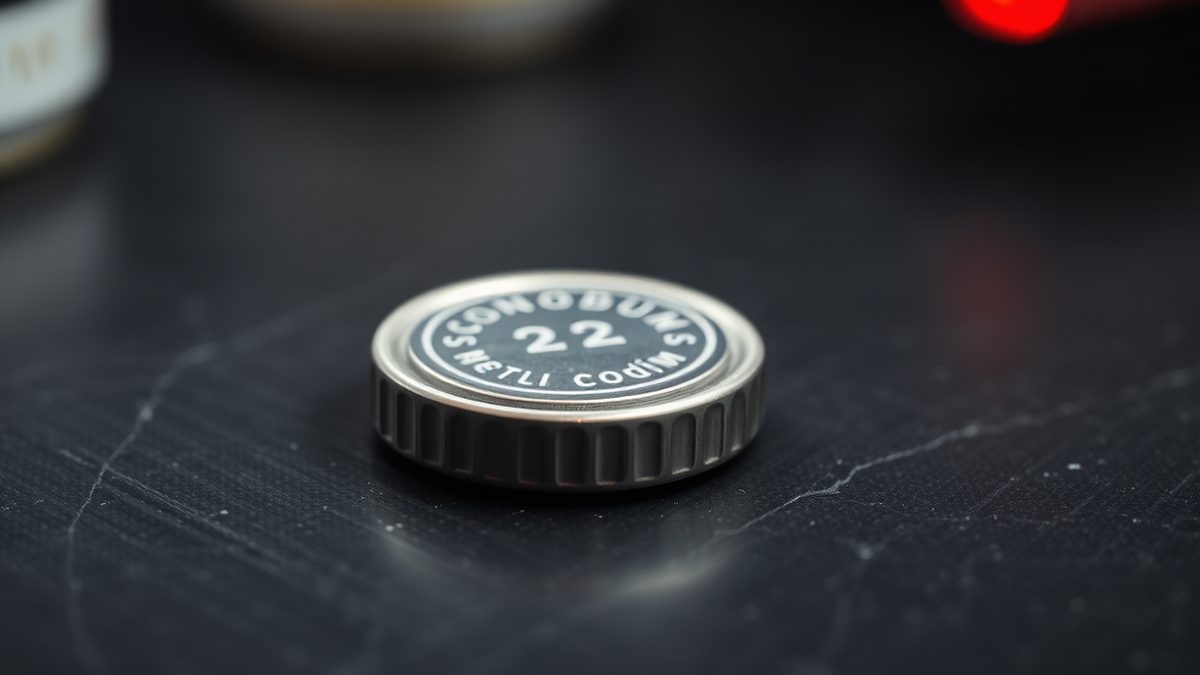
A cheaper, safer sodium battery would matter most where cost and fire risk weigh heaviest: grid storage and backup power. It could also loosen Chinese suppliers' grip on the lithium pack market.
The work is a full-cell and pouch-cell demonstration, not a product.
A non-flammable electrolyte for sodium metal
Chan-Jin Park leads the team in the Department of Materials Science and Engineering at Chonnam National University, South Korea. Its electrolyte is a polymerisable deep eutectic solvent made from sodium perchlorate, N-isopropylacrylamide and succinonitrile. In-situ polymerisation turns that mixture into a solid matrix that resists leakage. The study appeared in Energy Storage Materials, Bestmag reported on 2 November.
Sodium metal batteries have looked attractive on paper for years. Sodium is abundant and inexpensive. The metal itself has been the obstacle. Sodium metal is highly reactive and grows dendrites. Unwanted side reactions cut cell life.
Traditional organic liquid electrolytes add problems: they can be volatile, highly flammable and toxic. The Chonnam design attacks both ends at once. It pairs a non-flammable solvent system with a solid matrix meant to stop leaks.
What the cell tests show
The headline numbers come from full-cell tests. The optimised mix delivered an initial discharge capacity of 110.2 mAh g-1 at 0.1 C. It had nearly 99% coulombic efficiency and a wide electrochemical stability window. Retention is the figure that decides whether a chemistry suits a grid cabinet or a backup rack. The cell kept 90.4% of its capacity after 1,000 cycles at 2 C, the researchers report. They also built a pouch cell and ran it while folded and cut. It kept powering an LED. That shows mechanical toughness and safety behaviour, not field lifetime.
No cost per kilowatt-hour has been published.
“Our electrolyte combines efficient Na ion transport with improved safety, leakage resistance and interfacial stability, making it a promising candidate for practical sodium-metal batteries,” Park said.
Why sodium is on the agenda
Lithium prices and lithium supply chains are the backdrop. Global EV battery usage reached 994.5 GWh in January to September 2026, up 19.7% year on year, according to SNE Research data reported by CnEVPost. Concentration is the point. CATL took 39.1% of that market and BYD 15.2%, a combined 54.3%. Seven Chinese companies in the top 10 held 73.0%, up 3.5 percentage points from a year earlier. Sodium is abundant and cheap. That makes it a route around that supply base for uses that do not need the highest energy density.
Cheaper cathode chemistry already shows what price pressure does. LFP uses iron and phosphate instead of the nickel, manganese and cobalt in NMC, which makes it cheaper.
Slate dropped a planned NMC pack for a single LFP pack from Gotion, built in Manteno, Illinois. It held a starting price of $24,950 plus a $1,450 destination fee. The cost showed up elsewhere. The previously planned 240-mile version was dropped because the 65kWh pack fills the space under the truck.
From lab result to grid storage
Park points at grid-level renewable storage, backup power and low-cost rechargeable systems as the eventual market.
“Our electrolyte design for SMBs can lead to safer, lower-cost and more sustainable rechargeable batteries,” he said.
Other researchers are making the safety case from a different direction. CBC reported on 3 November that Linda Nazar won the Gerhard Herzberg Canada Gold Medal for Science and Engineering. She is a professor in the Department of Chemistry at the University of Waterloo, and the award carries $1 million over five years. Nazar said lithium-ion cells are reaching the pinnacle of their success and that her team is working on a next generation that includes solid-state batteries. Solid-state cells are safer, she said, because liquid electrolytes are flammable.
Neither route has a price tag yet. Cost per kilowatt-hour and manufacturing yield will decide which chemistry reaches a substation first.
Sources
27- 01Novel electrolyte advances sodium battery chemistryEN
- 02Global EV battery market share in January-September 2026: CATL 39.1%, BYD 15.2%EN
- 03What type of battery does the Slate Truck use?EN
- 04Waterloo researcher receives Canada's highest recognition for scientific excellence for work with batteriesEN
- 05Rapid LLM development is outrunning the research meant to explain it, study findsEN
- 06Hanwha Q-Cells shifts focus to research and development in EuropeEN
- 07Nio adds 10 million battery swaps in 88 days, taking total past 130 millionEN
- 08Swarm Of Electric Trucks Coming To US (Battery Swapping Included?)EN
- 09Quantum Interconnects Link Two 120-Qubit Processors (IBM Research)EN
- 10Accelsius Supports NSF Data Center Efficiency Research at VillanovaEN
- 11Hyperion Research: Nearly 20% Growth in HPC and AI-for-Science Server Market, Dell Takes Lead from HPEEN
- 12How Europe’s battery passport could have a big impact on US e-bikesEN
- 13Batteries Beat Norway’s Hydrogen Bulk Carriers on Cost in Two Modeled RoutesEN
- 14The Share of Solar Generation with Co-located Battery Storage Is IncreasingEN
- 15 On this day in space! Oct. 30, 1964: NASA's weird Lunar Landing Research Vehicle takes 1st test flight to help Apollo astronauts land on the moon EN
- 16GAC's battery unit Inpow starts production at Thailand plant, its first overseas pack facilityEN
- 17Microsoft Research Focus – Edition #97EN
- 18PJM desperately needs grid batteries. Here’s a way it could get some.EN
- 19Li Auto launches 2026 i6 with unchanged starting price, upgraded in-house chip and batteryEN
- 20Solid-state batteries for Xpeng's Iron humanoid robot enter small-batch productionEN
- 21Researcher-in-the-Loop Evolutionary Discovery of Entanglement-Assisted Quantum Code FamiliesEN
- 22Can battery swapping and energy storage power CATL’s next phase of growth?EN
- 23Breakthrough in Silicone Recycling - chemeurope.comEN
- 24What Women in Indonesia and Malaysia Want From Research on Climate and HealthEN
- 25Massachusetts sets big battery goals — and the policies to back them upEN
- 26As US grid batteries surge, risk of fires plummetsEN
- 27Apple Watch Ultra 4 review: longer battery life but still awaiting new featuresEN
All figures and quotations in this text come from the sources listed below.
Content prepared by the editorial team with AI assistance.
Sofia Marchetti
Comments
0- No comments yet — be the first.