Data Centres Hide Water and Power Use as Grid Electrification Push Accelerates
Less than a quarter of the largest data centres in the Netherlands publish figures for their electricity and drinking water consumption, a year-long investigation reported on 30 September, even as grid operators forecast the sector will consume 10 to 15 percent of national power by 2030.
 Dr. Amara PatelEconomy, business and world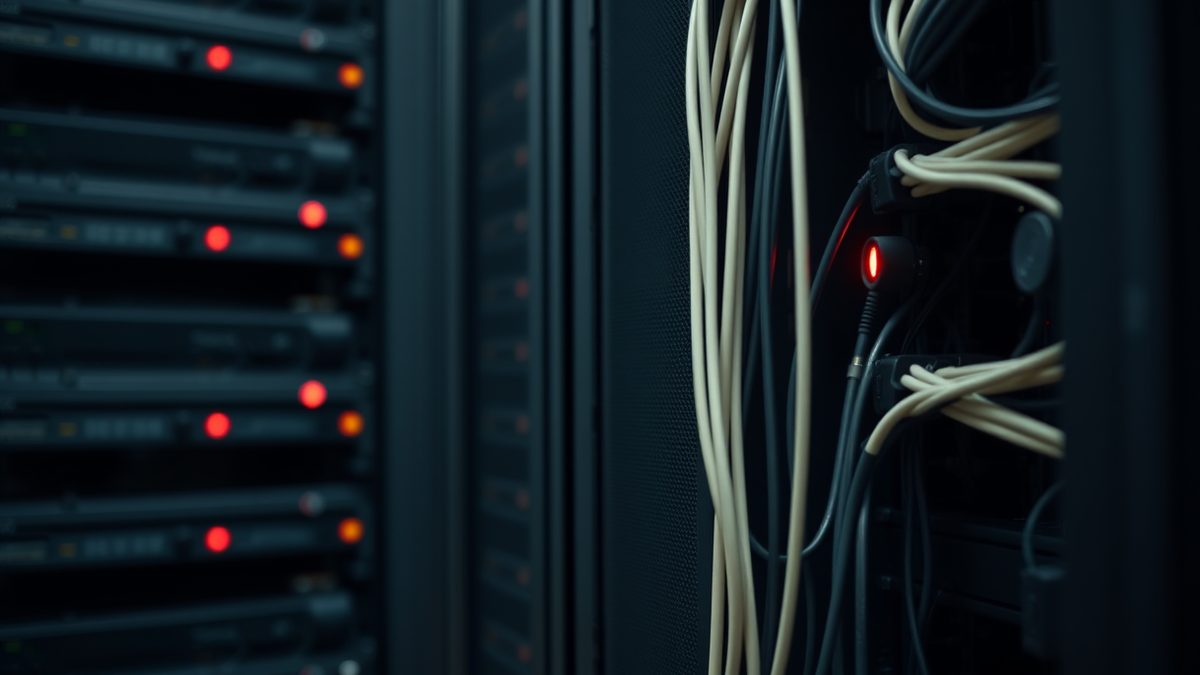
Lighthouse Report ran the study with Trouw and other European media. The team filed freedom of information requests across several countries and came back largely empty. In the Netherlands, the Dutch Datacenter Association counted 186 commercial data centres with at least 500 kW of capacity at the end of last year. The Netherlands Enterprise Agency, known as RVO, holds data on only 104 of them, according to NL Times.
Public figures exist for the electricity use of 44 centres and the water use of 47. That is less than a quarter. The European Energy Efficiency Directive has required reporting from sites at 500 kW and above for three years. RVO told Trouw it has more data on some sites but did not hand over figures.
Demand is not waiting for disclosure
Statistics Netherlands puts data centre electricity use at 5.1 billion kWh in 2024, or 4.6 percent of national consumption, nearly double the level five years earlier. Grid operator TenneT expects 10 to 15 percent by 2030. That demand lands on a network where businesses, institutions and housing projects already sit on connection waiting lists. RVO data released this summer showed Microsoft's largest Dutch data centre alone accounts for 1 percent of national electricity consumption. Google runs two large sites in the country and does not disclose the figure.
Water is smaller but politically sensitive. The Dutch estimate is roughly 0.1 percent of total consumption, a figure that carries more weight as droughts lengthen. The same tension is playing out elsewhere. In Singapore, Asian Power reported on 30 September that power availability could dictate data centre growth, a sign that the constraint is shifting from land and capital to electrons.
A separate line of work is trying to make the risk measurable. Microsoft Research published a machine learning pipeline on 30 September that forecasts space weather risk across 66,935 substations in the continental United States. It combines solar wind observations, forecasts of the Auroral Electrojet and Disturbance Storm Time indices, local geology and grid data. The system detected nearly 80 percent of major space weather events during its evaluation period and can warn operators 30 to 60 minutes before a specific risk appears, according to the Microsoft Research blog. The May 2024 geomagnetic storm, which degraded GPS accuracy and satellite operations, is the reference case.
Investment follows, unevenly
Money is moving. Bloomberg reported on Tuesday that President Donald Trump was expected to unveil roughly $200 billion in South Korean investments in the United States, including about $54 billion tied to the delayed Alaska LNG project, with shipbuilding, LNG, power plants and nuclear energy among the targets, according to Seeking Alpha.
On the demand side, the vehicle market keeps widening the gap. CleanTechnica noted on 30 September that US battery electric share was 5.9 percent in the first half of 2026, against 45 percent in China in August and 26 percent in Europe in July, and asked whether the US could finish last in light vehicle electrification. The same week brought a reminder that product plans are not waiting. Toyota dropped a 1,675 lb caravan onto its electric Hilux at Bentwaters airfield in Suffolk and the truck drove off, Electrek reported on 30 September. The Hilux BEV carries a 59.2 kWh battery and a WLTP range of up to 160 miles.
JLR's new Range Rover Sport Electric, covered by WIRED and InsideEVs on 29 September, uses an 118.5 kWh pack and charges at up to 350 kW. WIRED quotes a 374-mile WLTP range; InsideEVs says 378 miles. The two outlets disagree on the figure, and neither has published an EPA number.
Tesla, meanwhile, was granted a patent on 29 September for an electric fan car using four ducted fans in the rear diffuser, its second such patent in just over a year, Electrek reported. The drawings show a Model S, a car Tesla stopped building in April. The Roadster is the only performance car left in the pipeline.
At the system level, the pressure is documented. IRENA has said electricity must reach 35 percent of global energy use by 2035, with grid investment doubling to $1 trillion a year, as OilPrice noted on 30 September. Whether that capital arrives depends on grids that can be planned, permitted and measured. On the last point, Europe's reporting regime is currently failing its own test.
Sources
9- 01Most data centers refusing to say how much water, electricity they useEN
- 02Forecasting space weather risks on power gridsEN
- 03Trump set to unveil $200B South Korean U.S. investment planEN
- 04Is The US Going To End DEAD LAST In Vehicle Electrification?EN
- 05Toyota dropped a 1,675 lb caravan on its electric truck, and it drove off unfazedEN
- 06Range Rover Sport Electric: Price, Specs, AvailabilityEN
- 07The Range Rover Sport Electric Is Here To Take On The Lucid GravityEN
- 08Tesla patents 'Electric Fan Car' with 4 ducted fans ahead of Roadster revealEN
- 09Can the World Hit 35% Electrification by 2035?EN
All figures and quotations in this text come from the sources listed below.
Content prepared by the editorial team with AI assistance.
Dr. Amara Patel
Comments
0- No comments yet — be the first.