AI Act: Europe enforces the rules while the UN seeks a global standard
Europe's AI regulation is the world's first complete legal framework, built on four risk levels and nine banned practices. In New York, the talk turned to an international coalition for standards.
 Grace OkonkwoAI, models and technology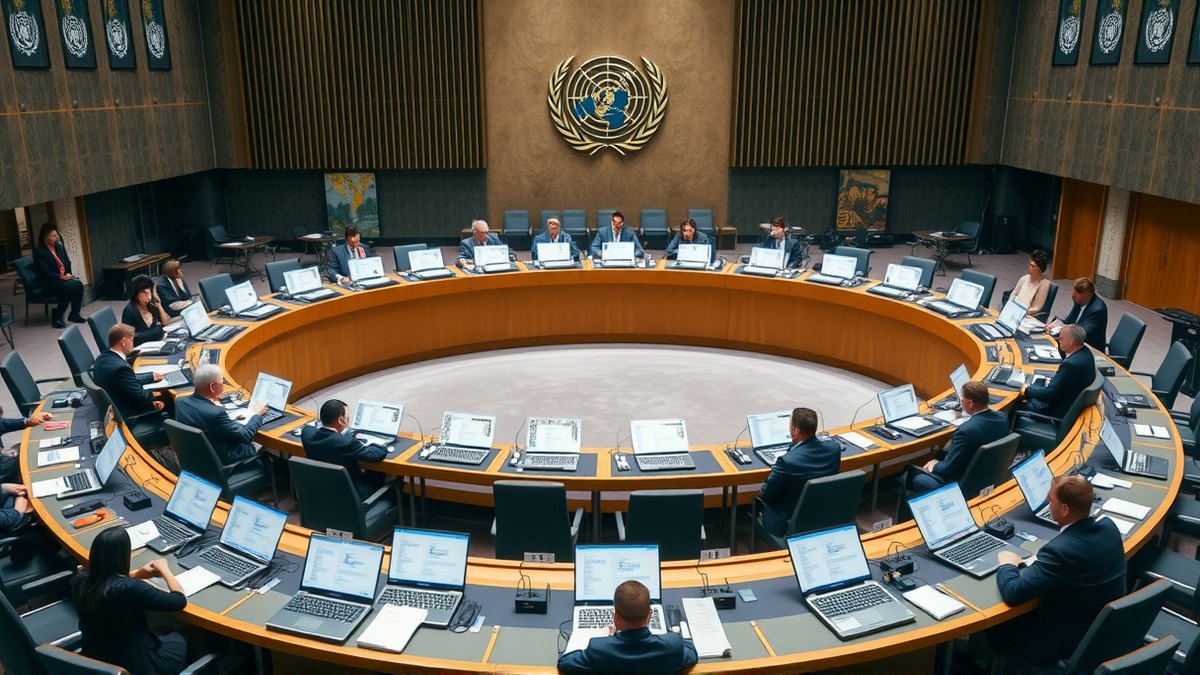
Regulation (EU) 2024/1689 is the world's first comprehensive legal framework devoted to artificial intelligence. The Commission presents it as the tool that makes AI systems trustworthy. Without rules, those systems would be hard to assess. When you cannot explain why a system reached a decision, it becomes difficult to establish whether someone was penalised unfairly, for example in a hiring process or in access to a public benefit.
Four levels, nine bans
The structure is based on risk and distinguishes four levels. At the highest level, the unacceptable one, the regulation bans nine practices. Among them are harmful AI-based manipulation and deception, harmful exploitation of vulnerabilities, social scoring and individual assessment of the risk of committing a crime. The regulation comes with a package of support measures: the AI Continent Action Plan, the AI Innovation Package and the AI Factories. It also brings voluntary tools such as the AI Pact and the AI Act Service Desk help service. These are meant to make the transition less abrupt for companies and developers.
The role of the AI Office
Enforcement rests with the European AI Office, set up within the Commission as the core of a single governance system at European level. The office plays a central role in implementing the regulation, with specific competence over general-purpose AI models, the ones on which most applications are built. This is where regulation meets engineering. Defining obligations for general-purpose models means dealing with documentation, evaluations and transparency obligations for systems that change quickly.
The international front
Globally, the road is still uphill. On 23 September, at the Glass Palace in New York, the risks linked to the technology were discussed. OpenAI proposed leading a global coalition for artificial intelligence standards, and Chinese players such as DeepSeek reportedly took part in the discussion. The presence of competing parties at the same table shows where the game is shifting. It is no longer about the need for rules, which is now accepted, but about who writes them and with what capacity to verify them.
"A regulatory framework without enforcement capacity remains a statement of intent" is the risk flagged from several quarters.
Sources
3- 01Commissione europea — AI Act, quadro regolatorio (Reg. UE 2024/1689)EN
- 02Commissione europea — European AI OfficeEN
- 03ANSA — OpenAI: «Usa guidino coalizione globale per gli standard dell'IA»IT
All figures and quotations in this text come from the sources listed below.
Content prepared by the editorial team with AI assistance.
Grace Okonkwo
Comments
0- No comments yet — be the first.