Europe's energy squeeze: fuel costs, e-bike power and a solar price shock
Australia's national average petrol price jumped by more than 10 cents a litre last week to 237.5c/L, with diesel up more than 13c to 286.7c/L, according to the Australian Institute of Petroleum, as global oil supply disruptions push up costs for industry and households.
 Dr. Amara PatelEconomy, business and world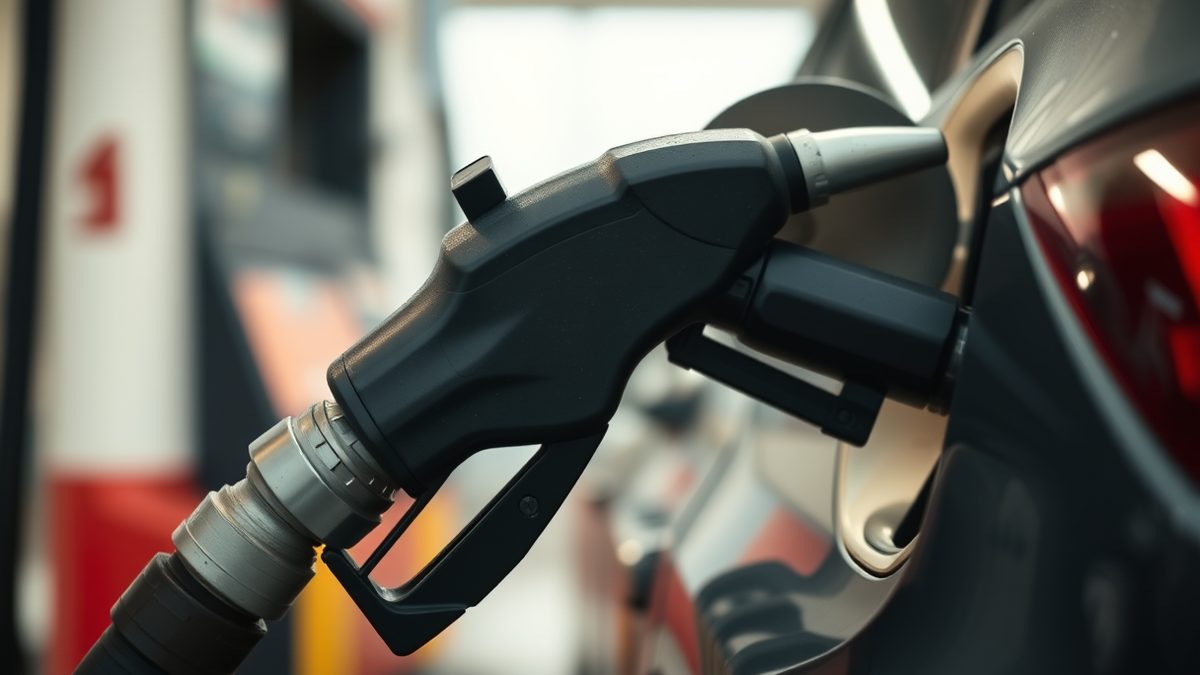
The surge, reported by The Guardian on Monday, comes as economists link recent crude oil price rises to the ongoing conflict between the US and Israel against Iran and Ukrainian attacks on Russian refineries. The Reserve Bank of Australia is expected to lift its cash rate from 4.25% to 4.6% at its meeting on Tuesday, which would be the fourth increase this year. AMP chief economist Shane Oliver has warned petrol prices could surpass $2.70 a litre. European manufacturers know the pressure well. Higher fuel costs go straight into transport, logistics and production budgets. Central banks weighing rate rises to contain inflation have little room to absorb the shock.
pv magazine reported on 25 September that Chinese inverter maker Growatt will raise prices for string inverters, hybrid and storage inverters, commercial and industrial storage cabinets, and residential storage systems by around 5% to 10% from 8 October. The company blamed higher raw-material costs, tighter supplies of some core components and rising manufacturing expenses. The move follows Sungrow, which had already implemented increases of around 5% to 15% for several categories of solar inverters from 20 September. Together, the two price rises suggest that even the clean-energy supply chain is not immune to the broader cost push.
Solar modules and the Section 232 tariff
In the US, the picture is sharper still. Anza, a solar and energy storage data and analytics company, expects at least a 40% spike in US solar module prices after a 15% Section 232 tariff on imports of polysilicon products takes effect on 4 December, pv magazine reported on 26 September. The tariff, enforced by the US Department of Commerce, follows a finding by the Secretary of Commerce that the quantities and circumstances of polysilicon imports threaten harm to US national security. Anza reports that the median price for imported modules was $0.27/W before the 7 August proclamation and is now $0.38/W for delivery after 4 December, among suppliers that have repriced, an increase of more than 40%. As of 9 September, 55% of active suppliers on its platform had Section 232-inclusive pricing, covering 65% of modules on the platform. On quotes where Anza can compare the same SKU and contract terms, pricing has increased by about 15%.
"Developers need to understand what is available now, at what price and on what terms, and move quickly on the strategy that makes the most sense for their project," said Aaron Hall, president of Anza, in a statement. The Solar Energy Industries Association reports that the US currently has 75.3 GW of module manufacturing capacity, which it says is enough to supply current market demand.
Back in Europe, the picture is more mixed. Tom's Hardware reported on 25 September that ASML, Europe's largest company by market capitalisation at around $660 billion, sold no lithography equipment in Europe in 2026. "We are selling absolutely nothing in Europe," said Frank Heemskerk, executive vice president of public affairs at ASML, speaking at a panel discussion at De Balie in the Netherlands. "Because Europe is not investing and because no chip factories are being built in Europe. That is genuinely worrying." Europe accounted for 1% of ASML's revenue share in 2025, 5% in 2024, 4% in 2023 and 2% in 2022, based on the company's investor presentations. In the first two quarters of 2026, Europe accounted for 0% of ASML's revenue, according to its earnings reports. Heemskerk called on European authorities to help aggregate and guarantee demand for European-made chips, arguing that capital subsidies alone have not worked.
Electrification funding and rural resistance
Some European money is still moving. Tech.eu reported on 25 September that Nordic energy company Fortum has joined Norrsken Evolve as a limited partner, investing through its innovation and venturing arm. The commitment follows the final close of Norrsken Evolve's oversubscribed €62 million fund this summer. Norrsken Evolve is a pre-seed fund that has backed over 80 companies to date, 75% of which have gone on to raise follow-on investment.
"The future energy system will be built through faster innovation and closer collaboration between entrepreneurs, investors and industry," said Gustav Eilertsen, VP of innovation and venturing at Fortum. "Through this partnership, we strengthen our connection to the next generation of companies developing solutions for electrification, flexibility, industrial decarbonisation, and other critical energy challenges."
Fortum's investment sits alongside Norrsken's wider push to make Europe the world's first electro-continent through the Electro Union campaign, an open call for the EU to commit to 50% electrification of final energy consumption by 2040. That target remains a long way off, and the political weather around clean energy in the US shows how quickly momentum can reverse.
Canary Media reported on 24 September that Tim Pawlenty, a former two-term Republican governor of Minnesota, took over as president and CEO of the Solar Energy Industries Association in June. "The current state is relatively bleak," Pawlenty said of solar's political clout in Washington, during an onstage interview at Canary Media's Climate Week NYC summit. "But nothing stays the same in politics, and there's hope in what's to come in the future." Pawlenty argued that the industry should push for policies with durable bipartisan support rather than rolling back and forth with political cycles. He also pointed to national security as a selling point: "Iran can't block the sun, and so if you're into national security, as I am, I like things that Iran can't block, or North Korea, or China, or Russia, or any of the other folks who want to do us harm."
As Canary Media reported on 25 September, 87% of US clean energy generation happened in rural areas as of last year, per a Rural Climate Partnership analysis. More than 60% of the counties with restrictions on renewable energy projects are rural, according to a Daily Yonder and Canary Media analysis of data from USA Today and the Sabin Center for Climate Change Law at Columbia University. The Trump administration has gutted the Rural Energy for America Program, while utility-scale solar takes up just 0.07% of US farmland.
On the generation side, The Register reported on 25 September that Fervo Energy, an enhanced geothermal systems provider backed by Google, achieved first power at its Cape Station plant in Beaver County, Utah. The first of three 33 MW GeoBlocks has begun supplying electricity to the grid and is expected to reach commercial operation next week, with another 66 MW expected online by New Year. Fervo says the station could eventually scale to more than four gigawatts. The buildout matters because datacentres are hitting grid constraints. Google has also agreed to buy power from Ormat Technologies' competing geothermal operations, and Meta partnered with Sage Geosystems in 2024 for up to 150 MW. Think tank Rhodium estimates geothermal could meet up to 64% of datacentre demand by the end of the decade, though those bit barns could end up paying a 20% premium for it.
For European industry, the common thread is cost. Fuel prices are rising, solar modules are getting more expensive in the US, and the continent's biggest tech manufacturer is selling nothing at home. The electrification money is still flowing, but the demand side remains the harder problem.
Sources
7- 01Australia news live: fuel prices rise ahead of interest rate decisionEN
- 02Chinese PV Industry Brief: Growatt raises inverter, battery prices by up to 10%EN
- 03Anza expects at least a 40% spike in U.S. solar module prices after Section 232EN
- 04ASML says it sold 'absolutely nothing' in Europe in 2026EN
- 05Fortum backs Norrsken Evolve's €62M fund to accelerate Europe's electrificationEN
- 06Meet the solar industry's new Republican evangelistEN
- 07The challenges and opportunities of clean energy in rural AmericaEN
All figures and quotations in this text come from the sources listed below.
Content prepared by the editorial team with AI assistance.
Dr. Amara Patel
Comments
0- No comments yet — be the first.