Europe's night train map keeps redrawing itself, and the paperwork is the hard part
Europe's December timetable change is again stitching together cities that had no direct link, with the Munich to Warsaw sleeper running for the first time since 2010, according to the Guardian.
 Daniel FisherSport, cars and travel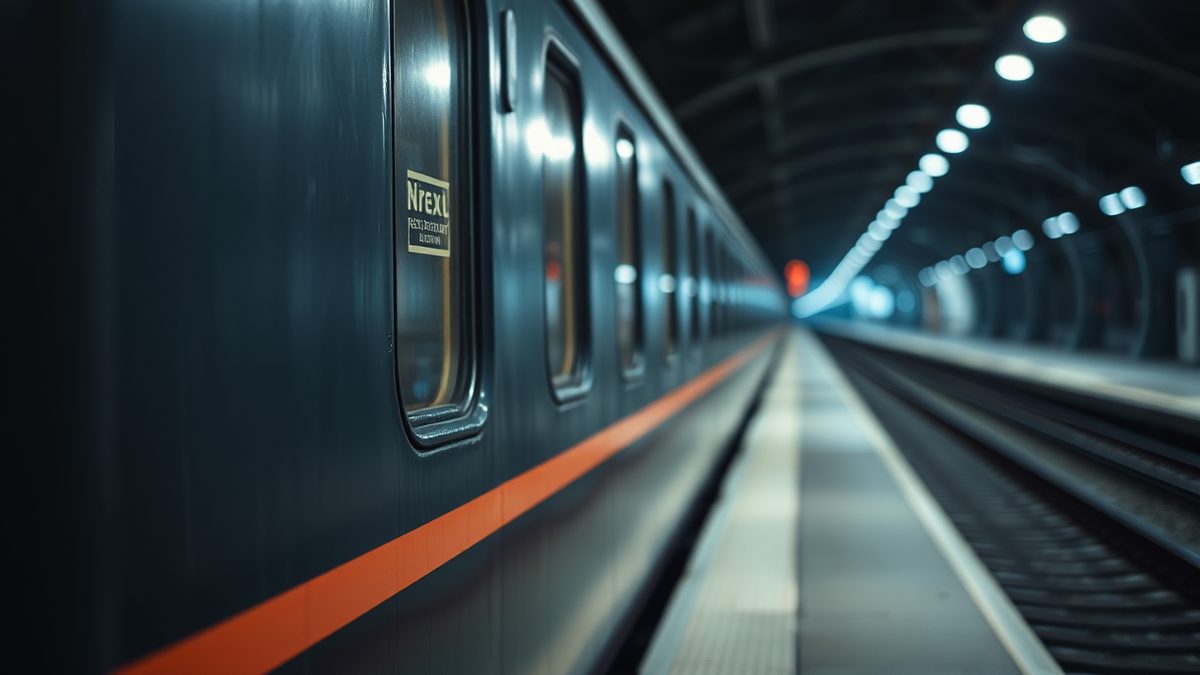
Europe's rail operators have quietly redrawn the map again. The 2024 timetables, introduced across much of the continent on 10 December 2023, brought new direct night trains linking city pairs that had been unconnected for years. The Guardian's slow travel correspondent went through the new schedules. Warsaw moved closer to Munich, Berlin nudged towards Paris, Aachen slipped nearer to Salzburg.
The most concrete example is the Munich to Warsaw sleeper. The Guardian reported that the Warsaw-bound train which left Munich on the evening of 10 December was the first direct departure from Bavaria to Poland since 2010. That is thirteen years without a direct link, restored by a single timetable change. None of the three new city pairs the Guardian singled out currently has direct daytime trains.
That detail matters more than it looks. A night train is not competing with an existing daytime service. It is creating a trip that did not exist in any form. The overnight option is the only direct option.
What else changed in December 2023
The new timetables were not only about sleepers. The Guardian listed a series of daytime improvements: increased frequency between Munich and Zürich, direct trains from Stuttgart to Zürich reinstated in November, and a 30 minute cut on the Berlin to Amsterdam route, bringing it to under six hours. Direct daytime trains from Kraków to both Vienna and Berlin doubled from one to two. Wrocław gained a new early morning direct train to Vienna with a late afternoon return.
There were losses too, and the Guardian did not pretend otherwise. Aarhus lost its twice-daily direct trains to Hamburg, replaced by a connecting service every two hours via a same-platform change in Kolding. Nuremberg, long a jumping-off point for Czech-bound journeys, went from five direct trains a day to the Czech Republic to none. Denmark gained what its second city lost. Copenhagen secured more direct services to Hamburg, according to the Guardian. The compensation for Aarhus was a connection that, with an easy same-platform change, gets travellers to Hamburg faster than the old direct trains did.
The pattern is familiar to anyone who follows European rail. Operators focus on domestic markets and lose ambition as they approach a border. The Guardian put it plainly: the ambition of some rail companies flags as they approach international frontiers. But the December 2023 changes still produced a web of new cross-border links, including a Nightjet from Aachen to Halle, a sleeper from Dresden to Budapest, Vienna and Graz, and a new Euronight direct sleeper linking Salzburg with Kraków.
All these new trains across Europe are creating a real buzz at Byway. We're now able to pair places in holidays where direct trains didn't exist before. The new Euronight direct sleeper linking Salzburg with Kraków, for example, creates a real opportunity for culture vultures to combine two very different cities.
That is Cat Jones, chief executive of the flight-free operator Byway Travel, quoted in the Guardian's piece. Her reading is commercial: new trains create new itineraries that travel agents can sell. The Salzburg to Kraków link takes almost 10 hours.
France, reluctantly
The French case is the most awkward. In 2016 Le Monde proclaimed that the night train was finished, the Guardian noted, and yet there has been an upswing in demand. Béziers and Montpellier now have a direct link with Paris on some nights, despite competition from TGVs that cover Montpellier to Paris in little more than three hours. The Aurillac to Paris overnight has no competing daytime direct train at all. Comfort is the trade-off. As with all French night trains, there are no sleeping cars, so passengers choose between a reclining seat and a couchette. Fares start at €19 for seats and €29 for couchettes, according to the Guardian.
The green argument for overnight rail got harder numbers in February 2024. The Rail Delivery Group, which represents Britain's rail industry, published analysis claiming that travelling by train on Britain's busiest business routes generates less than half the carbon emissions of a battery electric car. On average across the top 100 business travel routes, the RDG said, a diesel or petrol car produced nine times more carbon than going by train. The same analysis put a plug-in hybrid electric car at four times more polluting than a train, and a battery electric car at almost two and a half times. On Edinburgh to London Kings Cross, the RDG figures were 116kg of CO2 in a diesel car, 31.8kg in a battery car and 12.7kg per person by train.
The RDG acknowledged that battery EV emissions largely depend on the source of electricity and should decrease as renewable energy is taken up. The Guardian also noted the awkward part: single fares on LNER, the main operator on that route, were £183 without pre-booking, though cheaper advance fares existed. Average fuel costs for a small petrol car over the 400 miles were roughly £50.
We all have a responsibility to reduce our carbon footprint, and the data that we have published reveals that rail is the green choice for travel between our towns and cities.
That is Jacqueline Starr, chief executive of the Rail Delivery Group. Campaigners did not dispute the emissions maths but pointed at the price. Michael Solomon Williams of the charity Campaign for Better Transport told the Guardian that travelling by train is always greener than driving and getting greener as more routes are electrified, but that the next task is making it cheaper. Rail fares across England were due to rise by 4.9% from the following Sunday.
The tunnels underneath all of this
Behind the timetable changes sits a much larger and much slower story. CNN reported in May 2026 that the next decade will see the world's longest rail tunnels completed in Austria, France and Italy, aimed at moving travellers off short-haul flights and onto high-speed trains between major cities. The obstacle is geography: mountains and seas that trains cannot skim over.
The existing benchmark is the Gotthard Base Tunnel in Switzerland, which opened in June 2016 at a cost of $11.3 billion. It runs 35 miles and at its deepest point sits more than 7,500 feet below the Alpine peaks. Trip times between Zürich and Milan fell to two and a half hours, against four hours via the old Gotthard route, which is 25 miles longer and crosses the mountains at 3,773 feet.
Delivery elsewhere has been patchy. In January 2026 the European Court of Auditors reported that the costs of delivering eight major Trans-European Transport Network projects had risen by an average of 82% over initial estimates, with an average delay across five projects of 17 years, according to CNN. The EU will not meet its 2030 deadline for completing the core TEN-T network, which covers 10,850 miles of rail corridors.
Denmark's answer to the sea is the Fehmarnbelt Tunnel, described by CNN as the world's longest immersed tunnel. It will run 18 kilometers (11.1 miles) under the Baltic between Denmark and Germany, with a construction budget of over 7 billion euros ($7.1 billion), and is due to open in 2029. The first tunnel element was inaugurated on 17 June by King Frederik X of Denmark, four years after construction began in 2020. The comparison CNN drew is instructive. The 50-kilometer Channel Tunnel linking England and France, completed in 1993, cost the equivalent of £12 billion ($13.6 billion) in today's money. It is longer than Fehmarnbelt but was bored rather than assembled from immersed sections. Fehmarnbelt's 89 concrete sections will each be 217 meters long, 42 meters wide and 9 meters tall, weighing 73,000 metric tons.
The payoff is measured in minutes. The ferry crossing from Rødby to Puttgarden takes 45 minutes; by train the tunnel crossing will take seven, by car ten, CNN reported. Jens Ole Kaslund, technical director at the state-owned Danish company Femern A/S, said in 2022 that the Copenhagen to Hamburg train trip would fall from around four and a half hours to two and a half, and that a lot of people currently fly between the two cities.
Free travel, one country at a time
Not every expansion of European rail travel depends on new concrete. Croatia's government has confirmed the continuation of its free public rail transport programme, and from 1 January 2026 extended it to people with disabilities holding a National or European Disability Card marked as eligible for train travel, according to Croatia Week. Children, pupils, full-time students, pensioners and citizens over 65 remain covered. The same decision added a geographic wrinkle. From January 2026, eligible passengers living in Istria County can travel free on the direct Pula to Zagreb service, even though the route passes through Slovenia. Those trains were reintroduced on 20 June 2025, running Fridays from Zagreb to Pula and Sundays back, restoring a direct link between the capital and Istria.
Meanwhile the informality at the other end of the spectrum persists. NPR reported in February 2025 on train hopping in America, a practice it traced back more than 150 years to hobos riding freight in search of work. Will, a 25-year-old software engineer who posts as transient.xplorer and asked to use only his first name, described the appeal: there is usually nothing around except scenery and no people, and it is a great way to be alone. He also described the risk and the legality without dressing it up. Pretty much every video shows some kind of illegal stuff, he told NPR. James Payne of the Federal Railroad Administration said trespassing incidents, injuries and deaths have been steadily climbing since 2014, and that social media mimicry is a growing concern for the agency.
None of that maps neatly onto the European sleeper revival, where the tickets are legal, the seats recline and the main complaint is price. But both stories share one thing: people choosing the rails for reasons that have little to do with speed. The Munich to Warsaw train takes the best part of a night. The point is that it exists again.
Sources
6- 01Night trains and border crossings: Europe's best new rail routesEN
- 02Electric cars produce twice as much CO2 as trains, says rail group dataEN
- 03Train hoppers ride the rails across AmericaEN
- 04Croatia extends free train travel to more groupsEN
- 05The audacious underground mega tunnels redrawing the railway map of EuropeEN
- 06World's longest road and rail tunnel is being built under the Baltic SeaEN
All figures and quotations in this text come from the sources listed below.
Content prepared by the editorial team with AI assistance.
Daniel Fisher
Comments
0- No comments yet — be the first.