Geely's Megawatt Battery Meets a Degradation Problem, and the Numbers Behind It
Geely Auto Group says its new Ultra Short Blade battery can take close to 1,100 kilowatts of charging power without wrecking its lifespan, a claim it demonstrated on 30 September with a Lynk & Co 10 charged from 10 to 97 percent in 8 minutes and 40 seconds.
 Daniel FisherSport, cars and travel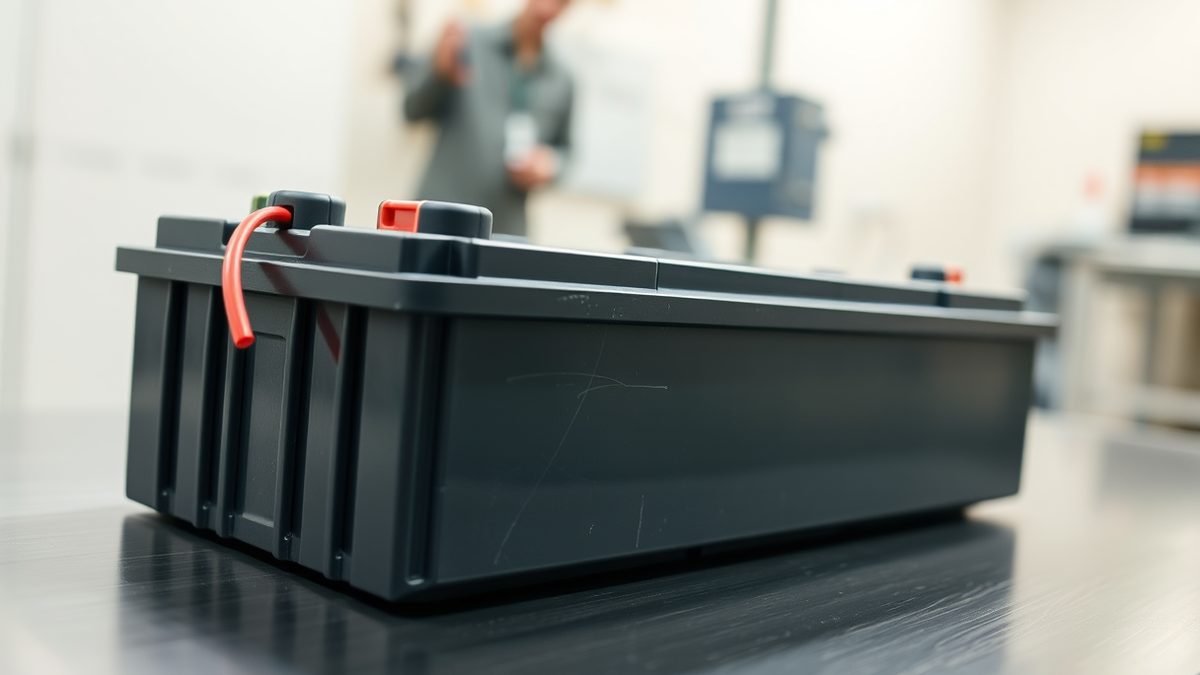
The demo figure comes from InsideEVs, which reported the Chinese automaker's claims on 30 September. Geely also extended the battery's warranty from eight years and 150,000 kilometres to eight years and 200,000 kilometres, the same report says.
That warranty extension is the part worth reading twice. Charging at megawatt speeds forces current through the cells' internal paths, and Geely's own engineers put that down to roughly 60 percent of the heat generated inside the pack. Another 35 percent comes from electrochemical reactions, with the remainder described as entropic heat. Heat is what accelerates the two failure modes the company names: lithium plating at the anode and extreme temperatures.
Geely's CEO did not pretend the trade-off does not exist. "We do not advocate fast-charging technologies at the expense of lifespan," Jerry Gan said at the launch event in Ningbo, according to InsideEVs. "If a battery frequently fast-charged is not maintained or repaired, its lifespan suffers irreversible decline."
For context on how far ahead the Chinese charging race has run: Western automakers have peaked around 600 kilowatts, with 750 kW chargers planned. The Lucid Gravity and Porsche Cayenne Electric top out at 400 kilowatts in the US market, and the upcoming Mercedes-AMG GT will reach 600 kW. Most mass-market EVs in the US still average around 30 minutes for a 10 to 80 percent session. Geely's charger, unveiled the previous week, can dispense 2.2 megawatts from a single gun, and the company says it is the first where two EVs can pull megawatt speeds from the same station.
The rest of the battery market is moving in a different direction
Not every automaker is chasing peak charge rate. On 29 September, General Motors said it will upgrade its Ultium Cells plant in Spring Hill, Tennessee to build lithium manganese-rich cells, which the company frames as cheaper rather than faster. CleanTechnica reported the announcement, noting GM's LFP and LMR investments will total $2 billion by 2030.
GM's vice president of battery and sustainability, Kurt Kelty, positions the chemistries as serving different buyers: high-nickel packs for long range, LMR where affordability matters most. The company already pulled back on its EV lineup after the $7,500 federal tax credit was eliminated, so the LMR commitment reads as a bet on eventual recovery rather than an expansion.
BMW went the other way on price within its own range. Its new i3 40 xDrive carries an 82.8 kilowatt-hour pack, nearly 26 kWh less than the i3 50 xDrive, and charges at up to 300 kilowatts instead of 400. BMW quotes a WLTP range of 441 miles, with 209 miles added in a 10-minute top-up and a 10 to 80 percent session in 21 minutes. At €59,900 in Germany it undercuts its more powerful sibling by €6,000, and InsideEVs reports it is expected in the US next year.
Two motors, 369 horsepower, 4,607 pounds. That is what a mid-range electric sedan looks like in 2026.
Range Rover's electric Sport, revealed on 29 September, sits at the opposite end. It shares the 118.5 kilowatt-hour, 800-volt pack from the Range Rover Electric, charges at 350 kilowatts, and adds 136 miles in as little as 10 minutes under ideal conditions, according to WIRED. InsideEVs puts the WLTP range at 378 miles and notes the model is not coming to the US as a 2027 model, a detail a company representative gave the outlet directly. JLR is cutting 4,000 jobs over two years, which is the backdrop for a launch that WIRED describes as arriving with considerably less fanfare than the full-size Range Rover Electric.
Trucks, data centres and the demand underneath
BloombergNEF reported on 30 September that global sales of medium and heavy-duty electric trucks hit a record 158,000 units in the first half of 2026, up 75 percent year on year and practically all battery-electric. More than nine in ten of those sales were in China. Electric trucks now represent about 20 percent of total truck sales globally, 5.5 percent in Europe, and the US market has slowed to a near standstill on policy and cost headwinds.
The same BNEF note adds a number that matters for battery economics: Tesla's Semi is priced between $250,000 and $300,000 per vehicle, which BNEF calculations say could already undercut the total cost of ownership of equivalent diesel trucks in some duty cycles. Fast charging for those trucks is the constraint. BNEF estimates operators need to charge roughly $0.10 to $0.22 per kilowatt-hour on top of electricity costs to recover investment in megawatt-scale stations.
Electricity supply is where the battery story collides with everything else. NL Times reported on 30 September that fewer than a quarter of large Dutch data centres publish figures on electricity and water use, three years after the European Energy Efficiency Directive required reporting for sites above 500 kilowatts. The Netherlands Enterprise Agency has data on 104 of the country's 186 commercial data centres above that threshold, and public figures exist for only 44 on electricity and 47 on water. Statistics Netherlands puts data centre electricity use at 5.1 billion kilowatt-hours in 2024, 4.6 percent of national consumption, nearly double the level five years earlier. Grid operator TenneT projects 10 to 15 percent by 2030.
In Texas, the same tension played out in a regulatory filing. Administrative law judges at the Public Utilities Commission of Texas released a proposed decision on 30 September finding that El Paso Electric failed to adequately consider alternatives to a 366-megawatt gas plant it wants to build for Meta's $10 billion, 1-gigawatt data centre in northeast El Paso, according to Inside Climate News. The judges recommended approval only on condition that the utility not pass capital and operating costs to ratepayers, and denial otherwise. The McCloud facility would use 813 modular natural gas generators at a total estimated cost of $499 million. El Paso Electric originally claimed solar would supply the site.
Chemistry bets that have not shipped yet
Sodium ion is the other chemistry drawing attention, and the BBC reported on 29 September on the US startups trying to build a domestic supply chain. San Diego-based Unigrid sells a nine kilowatt-hour home battery using sodium ion cells made in China, and chief executive Darren Tan told the BBC the company has shipped its first 100 units with 1,000 expected before the end of the year. The company's cathode contains chromium-3, which Cambridge professor Dame Clare Grey warned could form toxic chromium-6 under certain conditions. Ivana Hasa of the University of Warwick, who has no connection to Unigrid, agreed the transformation is possible at very high states of charge but said voltage control can mitigate it, and called the reported safety tests on the cell chemistry very promising. Tan said concerns are "overblown" and that third-party tests have not produced chromium-6.
India's government, meanwhile, has published fuel efficiency rules that give battery EVs three times the credit of conventional cars, according to The Economic Times, and Australia reached one in four new car sales being electric, per CommBank. Both numbers arrived on 30 September and both point the same way: the demand side is not waiting for the charging side to settle.
What the week's announcements do not resolve is whether megawatt charging is a product or a demonstration. Geely showed a car going from 10 to 97 percent in under nine minutes and extended a warranty to back the claim. It has not said what happens to that pack after 200,000 kilometres of the same treatment, and the company's own CEO framed maintenance as a condition of the lifespan holding up. That is the number to watch.
Sources
12- 01How Geely's New Battery Handles A Megawatt Of Charging Power Without Crazy DegradationEN
- 02The Electric Trucking Market's Record Rise: Three Things to KnowEN
- 03Most data centers refusing to say how much water, electricity they useEN
- 04Texas Electric Utility Only Considered Gas to Power $10 Billion Meta Data CenterEN
- 05GM Really Wasn't Kidding About Those New LMR EV BatteriesEN
- 06BMW's Cheaper i3 Has A Smaller Battery, But Its Range Is Still ImpressiveEN
- 07Range Rover Sport Electric: Price, Specs, AvailabilityEN
- 08The Range Rover Sport Electric Is Here To Take On The Lucid GravityEN
- 09The start-ups hoping to return battery making to the USEN
- 10Tesla patents 'Electric Fan Car' with 4 ducted fans ahead of Roadster revealEN
- 11Toyota dropped a 1,675 lb caravan on its electric truck, and it drove off unfazed [Video]EN
- 12Is The US Going To End DEAD LAST In Vehicle Electrification?EN
All figures and quotations in this text come from the sources listed below.
Content prepared by the editorial team with AI assistance.
Daniel Fisher
Comments
0- No comments yet — be the first.