Geely's New Battery Absorbs Megawatt Charging, With a Longer Warranty
Geely Auto Group says its new electric vehicle battery can charge at close to 1,100 kilowatts without wrecking its lifespan. The company is backing that claim with a longer warranty: eight years and 200,000 kilometers, up from 150,000 km.
 Peter LindqvistSport, cars and travel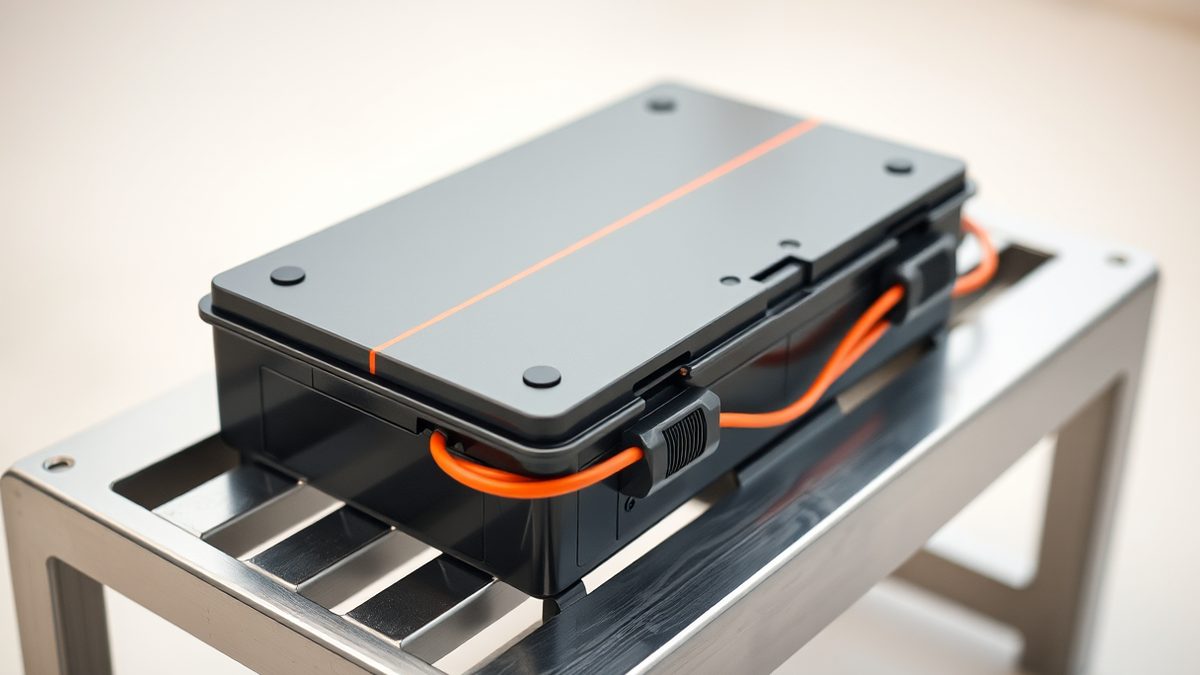
Geely detailed the pack in a briefing on Wednesday, September 30, covered by InsideEVs. The company calls it the Ultra Short Blade Battery. It pairs with a charger that can dispense 2.2 megawatts from a single gun. Geely says it is the first in the world where two EVs can pull megawatt speeds from the same station.
In one demo, a Lynk & Co 10 charged from 10 percent to 97 percent in 8 minutes and 40 seconds, according to InsideEVs. For comparison, the fastest-charging EVs sold in the US, the Lucid Gravity and the Porsche Cayenne Electric, peak at 400 kilowatts. The upcoming Mercedes-AMG GT will peak at 600 kW. Most mass-market US models average around 30 minutes for a 10 to 80 percent charge.
That gap is not a small one. It is a different category of charging. Chinese automakers like BYD and Geely have already pushed past 1,000 kW for passenger cars. In the West, 600 kW is the peak, with 750 kW chargers planned.
Why the battery survives the speed
Fast charging usually ages a pack faster. Geely's chief executive, Jerry Gan, did not pretend otherwise. "We do not advocate fast-charging technologies at the expense of lifespan," Gan said, per InsideEVs. "If a battery frequently fast-charged is not maintained or repaired, its lifespan suffers irreversible decline."
The company pointed to two root causes of degradation: lithium plating and extreme temperatures. Geely said megawatt speeds accounted for 60 percent of the heat generated in the battery, mainly from current pushed through the cells' internal paths. About 35 percent came from electrochemical reactions, and the rest from what the company called entropic heat.
Its fixes are mostly physical. The Ultra Short Blade cells come in two sizes, 395 mm and 370 mm long. Both are shorter than Geely's 580 mm cell and far shorter than the roughly 960 mm it calls common in the industry. Shorter cells mean ions travel less distance during charge and discharge, which lowers internal resistance and cuts heat. Ren Xiangfei, Geely's chief engineering scientist, said structural changes to the cathode widened the pathways ions use. He described it as "like turning a single lane into a multi-lane highway," and compared the anode work to "building a flyover." Geely also added an AI-powered charger management system to keep the pack inside its thermal limits.
The warranty extension is the clearest signal of confidence: from eight years and 150,000 km (93,205 miles) to eight years and 200,000 km (124,000 miles). That is a verifiable commitment, not a lab number.
The wider market is moving too
Battery news is arriving from several directions. BloombergNEF reported on September 30 that global sales of medium- and heavy-duty electric trucks hit a record 158,000 units in the first half of 2026, up 75 percent year on year. More than nine in ten were sold in China. Electric trucks are now about 20 percent of total truck sales. The US battery-electric truck market has slowed to a near standstill, BNEF said. Tesla's Semi, priced between $250,000 and $300,000, may already undercut diesel on total cost of ownership in some duty cycles.
On the manufacturing side, the BBC reported on September 29 that San Diego-based Unigrid is shipping a 9 kilowatt-hour sodium ion home battery, using cells made in China, at roughly $100 per kWh against $81 per kWh for LFP lithium ion last December. Unigrid CEO Darren Tan said concerns about chromium-3 in the cathode forming toxic chromium-6 are "overblown," and that third-party tests could not produce chromium-6. Professor Dame Clare Grey of Cambridge, co-founder of Nyobolt, told the BBC: "If you're going to go for sodium [...] and you're going to sell safety, then don't start putting elements in that are going to raise red flags." Ivana Hasa of Warwick Manufacturing Group said chromium-6 formation is possible at very high states of charge but can be mitigated by voltage control.
The policy backdrop in the US is less settled. CleanTechnica argued on September 30 that the US could end up last in vehicle electrification. It cited a 5.9 percent BEV share in the first half of 2026 against 45 percent in China in August and 26 percent in Europe in July. Those shares come from CleanTechnica's own reporting, not from an official statistical agency, so treat them as directional.
Geely has not announced US pricing or availability for the Ultra Short Blade Battery or the 2.2 MW charger. For now, the megawatt numbers belong to China.
Sources
5- 01How Geely's New Battery Handles A Megawatt Of Charging Power Without Crazy DegradationEN
- 02The Electric Trucking Market's Record Rise: Three Things to KnowEN
- 03The start-ups hoping to return battery making to the USEN
- 04Is The US Going To End DEAD LAST In Vehicle Electrification?EN
- 05Most data centers refusing to say how much water, electricity they useEN
All figures and quotations in this text come from the sources listed below.
Content prepared by the editorial team with AI assistance.
Peter Lindqvist
Comments
0- No comments yet — be the first.