How China used cars, code and batteries to squeeze the West
China's push from electric vehicles to open-source AI and batteries has moved from industrial catch-up to leverage over Western supply chains, according to a series of reports published between July and September 2026.
 Dr. Amara PatelEconomy, business and world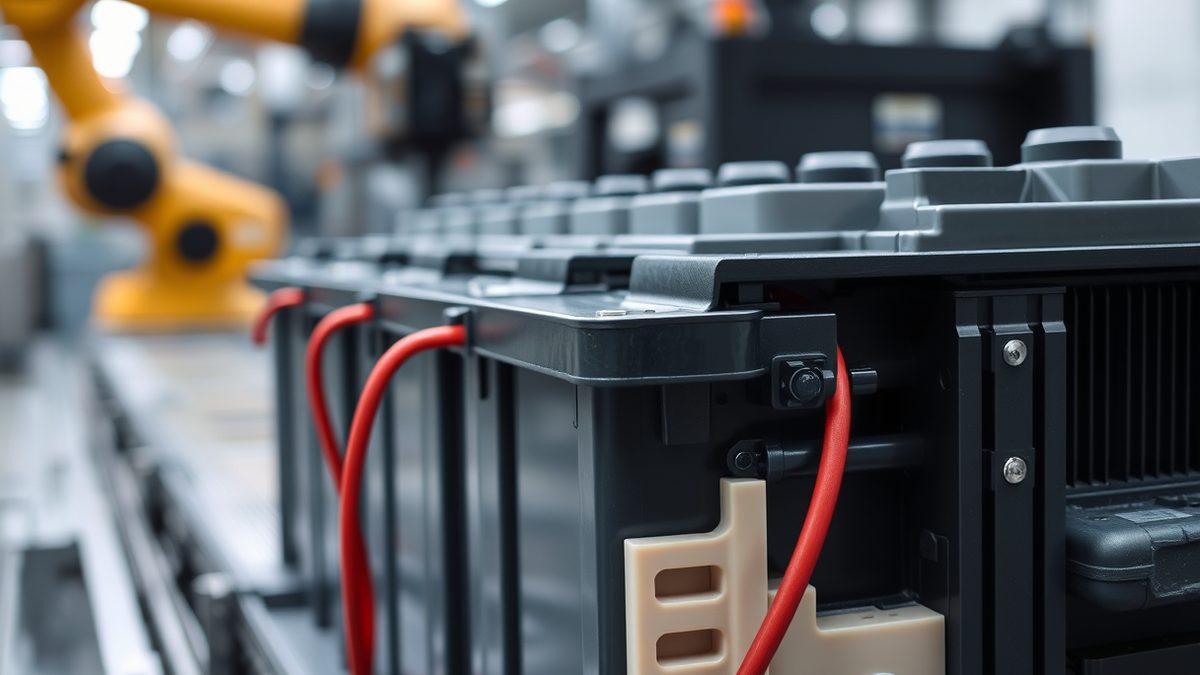
The news peg is not one announcement but a pattern. In June a purpose-built LNG-powered bulk carrier, the BYD Zhengzhou, docked at the Port of Melbourne on its first voyage to Australia carrying 5,000 newly built electric vehicles. RNZ reported the shipment on 24 July, in an analysis by ABC chief business correspondent Ian Verrender. It was the largest single EV shipment to Australia on record.
That shipment opens a wider story.
Cars first
Australia has had no domestic car industry since its demise a decade ago, and it keeps few trade barriers. That makes it a litmus test. In the first half of this year, sales fell for every major Japanese automaker bar Honda: Mazda shed 17 percent, Toyota 21 percent, Subaru and Mitsubishi 25 percent each and Nissan 32 percent. Chinese brands went the other way, off a much smaller base: BYD jumped 124 percent, Chery 77 percent and Geely 495 percent. Last month almost a quarter of all cars sold in Australia were fully electric, against 7 percent a year earlier.
Riz Akhtar, founder of the research group carloop, told the ABC that his own Chinese-made EV cost around A$40,000. An equivalent Japanese or European vehicle, he said, would be more than 25 percent pricier. "Consumers aren't stupid. They're not going to spend money they don't need to," he said. Toyota vice-chairman Koji Sato was blunter at a supplier meeting in March: "Unless things change, we will not survive."
Underneath the badge politics sits a deliberate industrial policy. China began encouraging battery firms such as BYD into automobiles as far back as 2000, poured money into the project in 2009, and built dominance in refining lithium, cobalt, manganese and graphite. It now accounts for 90 percent of the world's battery production, according to the RNZ analysis.
Code second
The same logic runs through software. Writing in The Conversation on 15 August, a China expert and open-source researcher describes how Beijing folded open-source development into national technology strategy. The push runs from the state-guided OpenAtom Foundation to Gitee, a domestic alternative to GitHub, and to the openKylin and openEuler operating systems. Huawei was cut off from licensed Google services after being blacklisted. It used Android's open-source code to keep its phones alive before building HarmonyOS NEXT and releasing OpenHarmony.
The prize now is artificial intelligence. Major Chinese models including Qwen, DeepSeek, Kimi and GLM are generally open-weight rather than fully open-source, meaning weights are published but training data and methods are not. Licensing adds another layer: Moonshot's Kimi K3 license requires large licensees to display the model name prominently. Bilingual licenses developed under Chinese government guidance, such as the Mulan Permissive Software License 2.0, give the Chinese-language version precedence in disputes.
"We have to be careful in both ways. We don't want to restrict them when all of a sudden we come in second to China," Donald Trump said, according to The Guardian.
That quote, reported by The Guardian on 1 August, captures the split in Washington. MIT Technology Review reported on 20 July that David Sacks, Trump's AI and crypto czar until March, called Anthropic's models "lobotomized" and "woke," while Pentagon official Emil Michael called an OpenAI executive a "supreme village idiot." The trigger was Kimi, a free model from Moonshot that appeared to rival paid US systems. The Guardian added that Microsoft, Nvidia, Palantir and Meta signed a letter urging lawmakers not to restrict open models, and that Nvidia's Jensen Huang went to Capitol Hill to lobby on the issue.
Batteries and the cost of cutting ties
Then there is hardware. MIT Technology Review reported on 10 September that a late-August executive order declared a national emergency effectively banning Chinese batteries from grid-scale storage. Tariffs had already risen to 25 percent in January from 7.5 percent, and new rules require that from 2026, 55 percent of material costs for new storage projects come from outside China and other restricted countries. BloombergNEF expects near-term delays; analyst Isshu Kikuma said worst case, projects could be cancelled. US-made cells remain significantly more expensive, and domestic supply may not meet demand until later in the 2030s.
The legal front is live too. Huawei's US trial opened in Brooklyn federal court on Wednesday, The Guardian reported on 11 September. Justice Department attorney Taylor Stout alleged the company conspired to steal trade secrets from five US firms including Cisco and T-Mobile. Defense lawyer Brian Heberlig called it "competition, not conspiracy."
Sources
6- 01How China won the car wars with cheap EVs loaded with technologyEN
- 02China is shaping the future of open-source technology - including AIEN
- 03China's AI models have Trump's AI world at war with itselfEN
- 04China's tech advances are causing chaos from Silicon Valley to the White HouseEN
- 05China's Huawei branded a criminal enterprise as tech firm's US trial opensEN
- 06Can the US battery market untangle from China?EN
All figures and quotations in this text come from the sources listed below.
Content prepared by the editorial team with AI assistance.
Dr. Amara Patel
Comments
0- No comments yet — be the first.