Where humanoid robot mass production stalls: Optimus setbacks and the pace of China's supply chain
Foreign media report that Tesla's Optimus V3 is running into trouble with its robotic hands, its production line and its training data, and that the company now builds a few hundred units a week. XPeng's robot has cleared supply chain factory audits, while Changan has set its mass production target for 2028.
 Grace OkonkwoAI, models and technology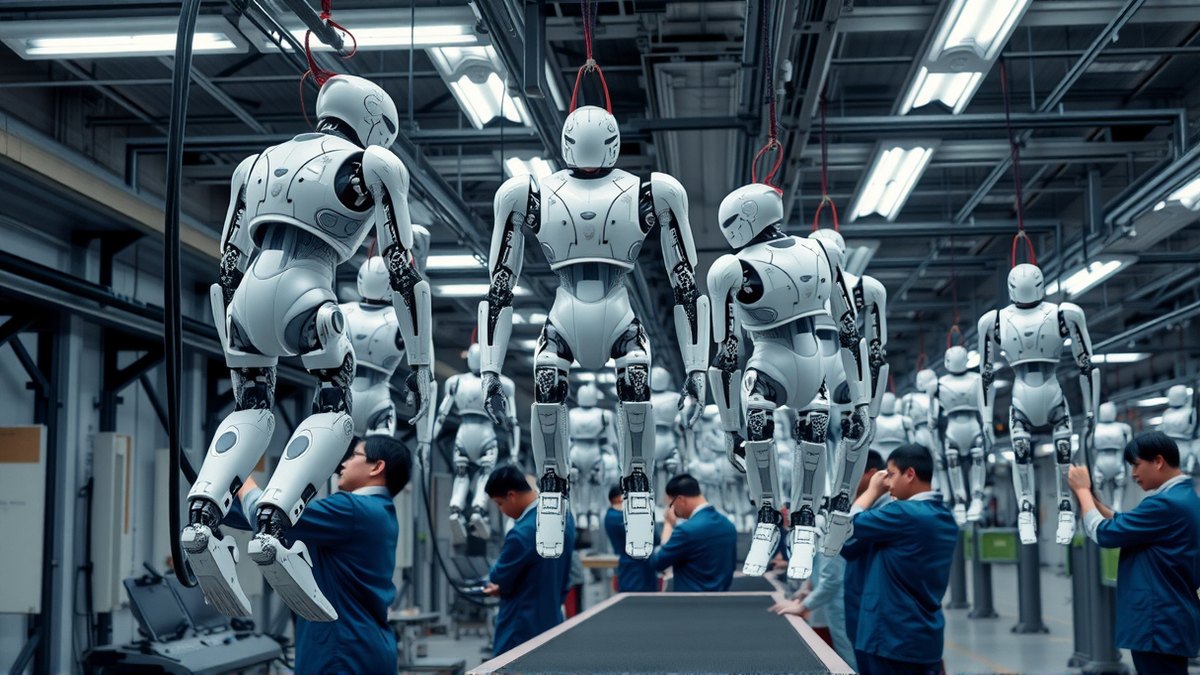
Humanoid robots draw more attention than any other hardware category in this round of AI enthusiasm. They are also the hardest to build at scale. According to The Information, Tesla's latest generation, Optimus V3, has run into difficulties with its robotic hand design, its production line equipment and its training data collection. The company has raised Optimus output to a few hundred units per week. It wants to push capacity past 1,000 units per week before the end of 2026.
The hand is one of the hard parts. To match the fine manipulation of a human hand, the hand and forearm of Optimus hold more than 100 small components, screws among them. Workers still assemble these parts by hand. Some robots coming off the line need manual repair right away, and the tactile sensors have been reported to have reliability problems.
AI capability is another area still waiting for a breakthrough. A source said the current Optimus still has to be programmed for specific tasks and works in tightly controlled environments. That reflects a problem shared across the industry: how to let a robot learn on its own in the real world and carry out a wide variety of manual operations.
China's supply chain is gaining weight along this route. According to The Paper, XPeng's robot has completed supply chain factory audits and the designation of core component suppliers, pushing its mass production process further forward. On 22 September, XPeng held its first robot supply chain partner conference, with leading companies from actuators, dexterous hands, sensors and AI chips attending. The report also noted that Tesla's robot team recently visited Chinese supply chain companies for factory audits, and that the two sides overlap heavily at the level of core suppliers.
Traditional automakers are joining in as well. Changan Automobile said during an investor exchange that it will accelerate its push into embodied intelligence humanoid robots, flying cars and other emerging industries, aiming to reach mass production of humanoid robots in 2028. It laid out a path of using robots to build cars, using robots to sell cars and putting robots into cars.
Beyond the excitement there is a more sober side. On 20 September, China's Zhongqing T800 fought a human boxer at a robot combat event in the United States and won. An operator wearing a VR headset controlled the fight remotely, and the robot itself only handled dynamic balance and posture correction. A demonstration is still some distance from genuine general autonomy.
Sources
3All figures and quotations in this text come from the sources listed below.
Content prepared by the editorial team with AI assistance.
Grace Okonkwo
Comments
0- No comments yet — be the first.