India's chip mission has ₹1,27,500 crore and a talent pool, but no output date
Salah Nasri, chief executive of the International Semiconductor Industry Group, said in New Delhi on 2 November that India has the relevant talent pool for semiconductors, with roughly 20% of the global chip design workforce in the country. The government is now putting ₹1,27,500 crore behind a wider semiconductor mission, though the path from approvals to volume output remains unproven.
 Dr. Amara PatelEconomy, business and world
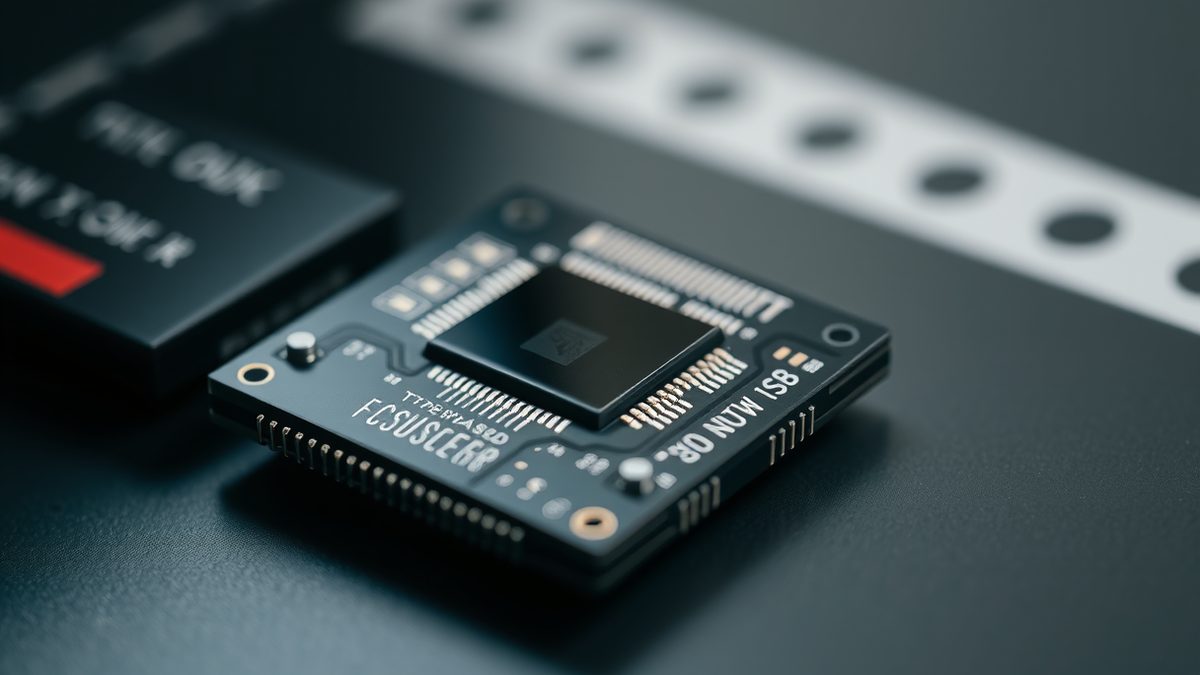
India Semiconductor Mission 2.0 was announced in the Union Budget 2026-27, then approved and notified by the Union Cabinet and MeitY. It carries an outlay of ₹1,27,500 crore, according to ET Manufacturing. Unlike the first version, it covers chip design, machines and materials, advanced packaging, research and talent development. Twelve projects have been approved under the mission so far, Dainik Jagran English reported on 30 October.
That is a mandate, not a production schedule.
Policy has moved manufacturing before. The IEA said on 3 November that India's solar module capacity reached around 225 GW in September 2026, up from around 22 GW in 2022.
Odisha's five projects
Odisha is the clearest test. Officials outlined five semiconductor projects with proposed investments of more than $4 billion at TiECon Bhubaneswar 2026 on 30 October, Dainik Jagran English reported. Two of the 12 approved ISM projects sit there: a compound semiconductor fabrication unit and an advanced 3D chip packaging unit, both described as India's first.
Vishal Kumar Dev, additional chief secretary of the state's electronics and IT department, said groundwork began within six to eight months of approval. The state is also pursuing glass-core packaging technology and cites collaborations with Intel and 3D Glass Solutions.
Neither the Centre nor the state has published a date for volume output.
Demand is not the constraint
Demand is the easy part. Avendus Capital projects India's semiconductor consumption rising from $49.5 billion in 2025 to $106.5 billion by 2030. The firm sees opportunities in design, packaging, testing and specialised materials, according to a report covered by ET Manufacturing and YourStory. The report names 2027-28 as the point when policy-backed projects across six sectors must reach commercial production.
Koushik Bhattacharyya, who heads industrials investment banking at Avendus, said India's right-to-win manifests in select segments. He said 2027-28 will put the country's hard-tech ambitions to the test. More than 80% of a $3 trillion global AI infrastructure investment cycle is still undeployed, the report says.
Talent, and the China dependency
Nasri's pitch rests on people. He said India accounts for roughly 20% of the global semiconductor design workforce, and cited a "very famous saying" that "behind every chip is an Indian." He added that 80% of employees at key global players are either Chinese or Indian.
Factories are harder than staffing. New Delhi cleared the Dixon Technologies and Vivo smartphone joint venture on 8 July, with Dixon holding 51%. The approval came nearly 19 months after the deal was announced in December 2024, The Diplomat reported. Press Note 3, introduced in April 2020, makes investment from countries sharing a land border with India subject to approval. Bloomberg reported in July 2025 that Foxconn had asked hundreds of Chinese engineers and technicians to return home from its Indian iPhone operations.
What to watch
Piyush Goyal, the commerce and industry minister, met heads of Fraunhofer Institutes during a visit to Germany to discuss microelectronics, power electronics, smart manufacturing and battery technologies. CNBC TV18 reported the visit on 27 October.
Manufacturing is still expanding, but more slowly. The HSBC India Manufacturing PMI fell to 54.7 in October from 55.1 in September, according to a survey of around 400 manufacturers compiled by S&P Global. Observer Voice reported the survey on 2 November. New export orders rose at their fastest pace in six months.
Farrokh N. Cooper argued in Autocar Professional on 31 October that China+1 is a response to business conditions, not a permanent strategy. India, he wrote, must build capability that outlasts it.
Sources
8- 01India's semiconductor sector has a relevant talent pool, says ISIG CEOEN
- 02Global AI investment cycle unlocks manufacturing opportunities across six Indian sectors: Avendus CapitalEN
- 03India's new-age manufacturers to benefit from $3 trillion global AI investment cycle: Avendus CapitalEN
- 04India's China+1 Dilemma: It May Need China to Depend Less on ChinaEN
- 05India, Germany to deepen investment ties, strengthen cooperation in emerging tech, manufacturingEN
- 06India's Manufacturing PMI Declines to 54.7 in October Amid Surge in Export OrdersEN
- 07Beyond China+1: Building India into a Trusted Global Manufacturing PartnerEN
- 08IEA: India Can Help Diversify Global Solar PV Supply ChainsEN
All figures and quotations in this text come from the sources listed below.
Content prepared by the editorial team with AI assistance.
Dr. Amara Patel
Comments
0- No comments yet — be the first.