Empyrean buys Easy-Logic as China's chip self-sufficiency push hits memory wall
Empyrean Technology filed with the Shenzhen Stock Exchange on Sunday 1 November to buy 50.38 per cent of Easy-Logic Technology for 218.8 million yuan (US$33 million). The Beijing-based chip-design software supplier says the Shenzhen start-up's logic optimisation tools are used by nearly 100 digital chip design firms worldwide.
 Dr. Amara PatelEconomy, business and world
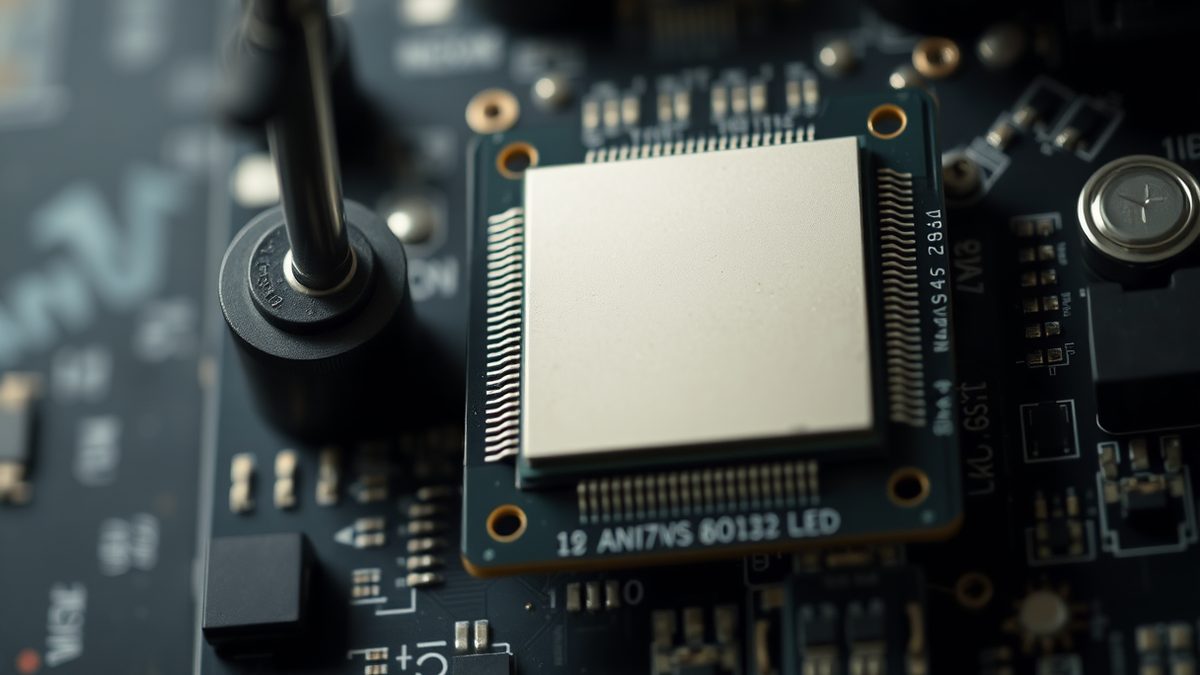
The South China Morning Post describes Empyrean as China's leading electronic design automation tools provider. Empyrean will consolidate Easy-Logic into its financial statements once the deal closes. Easy-Logic was founded in 2021 and builds logic optimisation tools that help chip designers cut iteration time and resource requirements, according to the filing.
Empyrean says the start-up's algorithms have won international EDA competitions.
The software gap Empyrean is buying into
For Chinese chip designers, the appeal is a domestic option at one of the last layers of the design stack still largely bought from Western vendors. The South China Morning Post reported on 2 November that the purchase is aimed at reducing reliance on foreign chip-design software. It tied the deal to Beijing's self-sufficiency push and to Huawei's semiconductor ambitions. What the filing does not say is how much revenue Easy-Logic generates, what conditions attach to closing, or how much of its business sits outside China.
The sum is modest.
Memory is the harder gap
Design software is the easier half of the problem. Memory is where the constraint bites, and where the workaround has turned criminal. Tom's Hardware reported on 3 November that a smuggler moves export-controlled HBM out of South Korea by pairing it with cheap, low-performance processors that fall under US and South Korean controls. The rules look at the server processor's performance, not at the components attached to it, so the memory travels with the board.
The failure rate is high. The price of HBM makes the procedure worth running anyway.
According to The Information, which interviewed the smuggler, the boards land in Hong Kong and cross into Shenzhen in commuters' luggage. Technicians then heat the solder, lift the memory chips off and discard the rest. A Shenzhen chip broker told the publication that a single HBM3E unit changed hands in China for several hundred dollars a year ago, and about US$4,000 today. With six to eight high-end memory chips in an AI accelerator, Tom's Hardware reports the broker makes US$24,000 to US$32,000 for every AI GPU.
The mark-up shows up in the finished hardware. Huawei's Ascend 950DT sells for about US$37,000, close to Nvidia's B200 pricing, while delivering half the performance of the previous-generation H100, according to Tom's Hardware. Huawei has told customers they have to find the HBM their servers need themselves.
Enforcement is tightening. Washington has made arrests including some Super Micro executives and the chief executive of a California-based tech company, and Taiwan and Malaysia have stepped up anti-smuggling work. The smuggler fears Seoul will follow.
CXMT turns down Apple
The domestic alternative cannot yet absorb that demand. Wccftech reported on 25 October that CXMT rejected a memory quote from Apple and a DDR5 quote from a Taiwanese server manufacturer, choosing to serve Chinese customers first. The company has shipped LPDDR6 DRAM to Xiaomi for its XRING 03 chip.
Capacity explains the refusals. CXMT is estimated to add 100,000 DRAM wafers per month within a year, and analysts quoted by Wccftech say meeting domestic demand could take a decade. Its HBM sits two generations behind Samsung, SK hynix and Micron, and US export controls block access to EUV lithography tools, which weighs on yields.
The yield problem is concrete. Wccftech reported that CXMT cut its HBM stock by 25 per cent because of poor yields. Tom's Hardware reported the company has begun risk production of HBM3E, with mass output expected by the end of this year, but that yields remain low.
That sets the pace for buyers of Chinese AI hardware. Not design tools, not packaging: memory supply decides how many accelerators get built and what they cost.
What to watch
Three things decide how this looks a year from now. Whether Easy-Logic's tools turn up inside Huawei designs, a link the South China Morning Post drew to Huawei's Tau Scaling Law. Whether CXMT reaches HBM3E mass production by the end of this year. And whether South Korean authorities start policing HBM movements the way Washington, Taiwan and Malaysia have.
None of those is settled. The Empyrean deal buys a piece of the stack that China could not previously source at home.
Sources
28- 01China's EDA champion buys start-up to address weak link, support Huawei's Tau Scaling LawEN
- 02Empyrean Buys 50.38% Stake in Easy-Logic to Boost China's Chip-Design Self-SufficiencyEN
- 03AI chip smugglers exploit trade control loophole to bring banned HBM from South Korea into ChinaEN
- 04CXMT's Rigid DRAM Pricing Means Rejecting Lucrative Global Giants Like Apple, But That's Because The Company Has A Far Greater GoalEN
- 05China Finally Debuts Fourth Exascale System, Sugon 8000EN
- 06Nvidia pushes cloud customers to cut back on China businessEN
- 07Tesla China October wholesale sales total 67,829, lowest since FebruaryEN
- 08Lexus is taking a page from China for its next electric SUV launching in 2027EN
- 09Electric trucks hit 50% of China’s heavy truck sales, diesel demand fallsEN
- 10AI Is Changing How Semiconductor Fabs Work — and Engineers Are Moving Faster Because of ItEN
- 11Does Reliance on China Undermine Iran’s Grand Strategy?EN
- 12Westward Ho! First Trip Cross Country with Our New 2026 Tesla Model Y & Full Self Driving V14EN
- 13AI Balloon in China Deflates by Half a Trillion DollarsEN
- 14I imported a $2,000 electric truck from China. Five years later, here’s the truthEN
- 15China’s ‘Lipstick King’ hawks tokens as AI gets mass-market Singles’ Day pushEN
- 16Launch Preview: Falcon 9 to launch USSF missions, China to launch internet satellitesEN
- 17Self-improving AI the key step towards AGI but safety is key: Z.ai founderEN
- 18Technologie: Chinas Chiphersteller suchen Abnehmer in der deutschen Autoindustrie EN
- 19 Look up! China's mysterious space plane is visible over the US this week EN
- 20Toyota’s EV sales more than doubled in a year, but gas cars are getting crushed in ChinaEN
- 21What Europe Can Learn From China If It Wants To Save Its IndustryEN
- 22As BYD and Geely hit sales highs, pressure mounts on China’s smaller carmakersEN
- 23China touts AI milestone: models generate more tokens than used in trainingEN
- 24China and US need to join hands against another powerful adversary: AIEN
- 25US or China? Why Kazakhstan refuses to pick sides as it eyes AI revolutionEN
- 26Apple Intelligence to roll out on iPhones in China in December with Alibaba backingEN
- 27China joins global race to reawaken brain-injury patients through ultrasound therapyEN
- 28India’s China+1 Dilemma: It May Need China to Depend Less on ChinaEN
All figures and quotations in this text come from the sources listed below.
Content prepared by the editorial team with AI assistance.
Dr. Amara Patel
Comments
0- No comments yet — be the first.