Optogenetic gene therapy raises light sensitivity in 7 of 10 retinitis pigmentosa patients
An optogenetic gene therapy with camera goggles raised light sensitivity in 7 of 10 retinitis pigmentosa patients in a New England Journal of Medicine study published in October, the first group success for the approach. Six saw clinically meaningful gain.
 Sofia MarchettiScience and health
This is the first time the approach has worked across a group rather than in one patient. It does not restore normal sight. No country has approved the therapy.
What the trial measured
Light sensitivity rose in 7 of 10 participants, by a factor of 2.0 to 62.3. Six reached the clinically meaningful threshold, roughly a fourfold gain.
Four of the eight patients who completed behavioral tests got better at detecting or locating objects. Brain activity recordings showed signals consistent with visual information reaching the visual cortex. Patients still could not read or recognize faces.
How the treatment works
Retinitis pigmentosa is an inherited disease. Mutations in more than 100 different genes can cause it, which makes gene-by-gene fixes hard to scale. Instead of repairing photoreceptors, each participant received one injection of an adeno-associated virus vector into the worse-seeing eye. The vector carries the gene for ChrimsonR, a light-sensitive protein, into retinal ganglion cells, which often survive even in advanced disease.
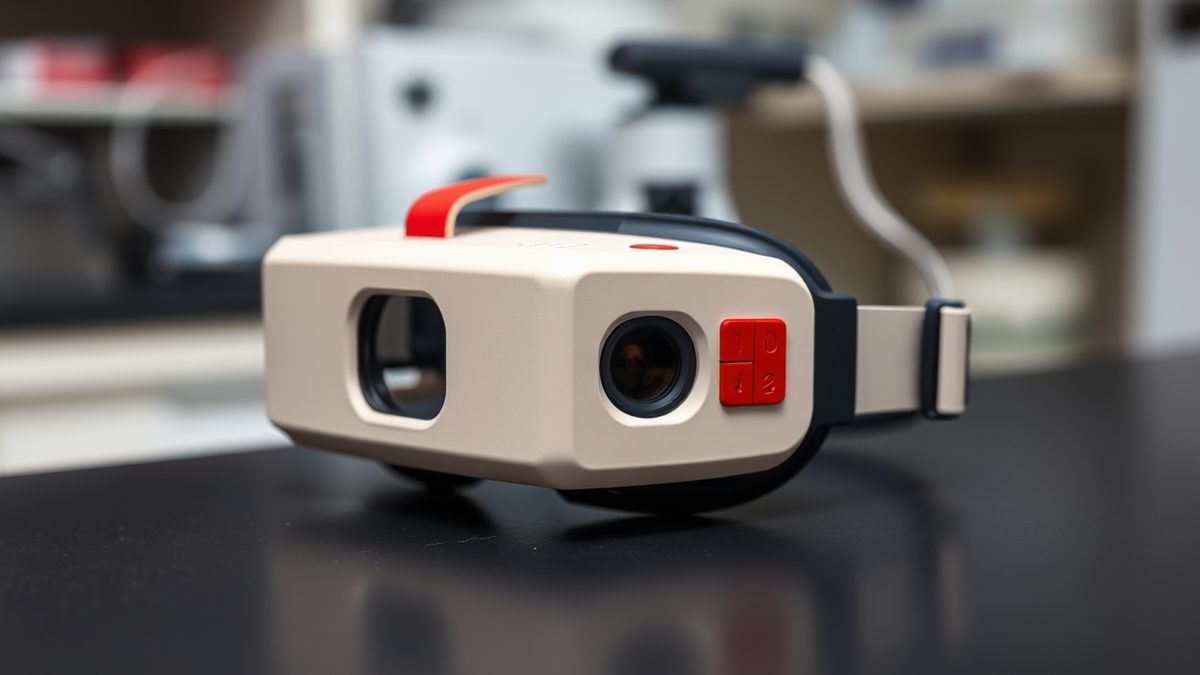
ChrimsonR responds to amber light. Camera goggles capture the scene, a processor turns changes in it into pulses of amber light, and those pulses activate the treated cells. Optogenetics avoids brain surgery and works regardless of which gene caused the disease.
The approach needs a working optic nerve, so it cannot help when damage affects the retina-brain connection. José-Alain Sahel of the University of Pittsburgh and Botond Roska of the Institute of Molecular and Clinical Ophthalmology Basel (IOB) led the study, with funding from French biotech GenSight Biologics.
Safety results
The open-label PIONEER study (NCT03326336) was mainly designed to test safety. Nine of the 10 participants had a total of 34 eye-related adverse events: 23 mild, 10 moderate and one severe. The severe event was a temporary blockage of the central retinal artery right after injection. It cleared within minutes after eye drops.
Earlier case
The result builds on a 2021 case. One man who received the same method could see and count objects.
What happens next
The IOB press release notes that people who spent more time training with the goggles tended to do better, which suggests rehabilitation will be part of any future treatment.
The optogenetic therapy remains experimental. The authors say larger trials must confirm the treatment is safe and effective. For now, the published evidence rests on 10 people.
Sources
16- 01Retinitis Pigmentosa Gene Therapy Helps 7 of 10 Blind Patients - ShiftDelete.NetEN
- 02The Download: blended meat, restored sight, and the agentic webEN
- 03Gene editing could replace a lifetime of medication, but there's a catchEN
- 04World Sight Day: Hopeful advancements in eye care - Ophthalmology TimesEN
- 05First UK patient completes treatment of gene-editing therapy for sickle cellEN
- 06My therapist thinks I should chuck the Amazon Bee Frontier out a windowEN
- 07Ultragenyx to lay off 20% of employees, scrap a Wilson disease gene therapyEN
- 08STAT+: Amid Mass General Brigham layoffs, CEO pens vague letter, stirring staff anxietyEN
- 09Aluminum–Air Generators for Data Centres Face a Metal Logistics TestEN
- 10Argonne Adds AI Inference Capacity for Genesis Mission and Scientific ResearchEN
- 11China joins global race to reawaken brain-injury patients through ultrasound therapyEN
- 12Gentherm designs ThermAffyx to secure, heat patients during robotic surgeriesEN
- 13Amazon ECS Gateway Arrives with Generated Hostnames and No Custom Domain SupportEN
- 14The Share of Solar Generation with Co-located Battery Storage Is IncreasingEN
- 15AC Milan, Inter strike ‘€650m’ Generali naming rights deal for new stadiumEN
- 16China touts AI milestone: models generate more tokens than used in trainingEN
All figures and quotations in this text come from the sources listed below.
Content prepared by the editorial team with AI assistance.
Sofia Marchetti
Comments
0- No comments yet — be the first.