Samsung's FDA-cleared sleep apnea update lands as reimbursement lags
Samsung said on 3 November 2026 that the FDA has cleared an advanced sleep apnea detection feature for its Galaxy Ring. It adds hourly counts of breathing disruptions to a function first authorized in February 2024.
 Sofia MarchettiScience and health
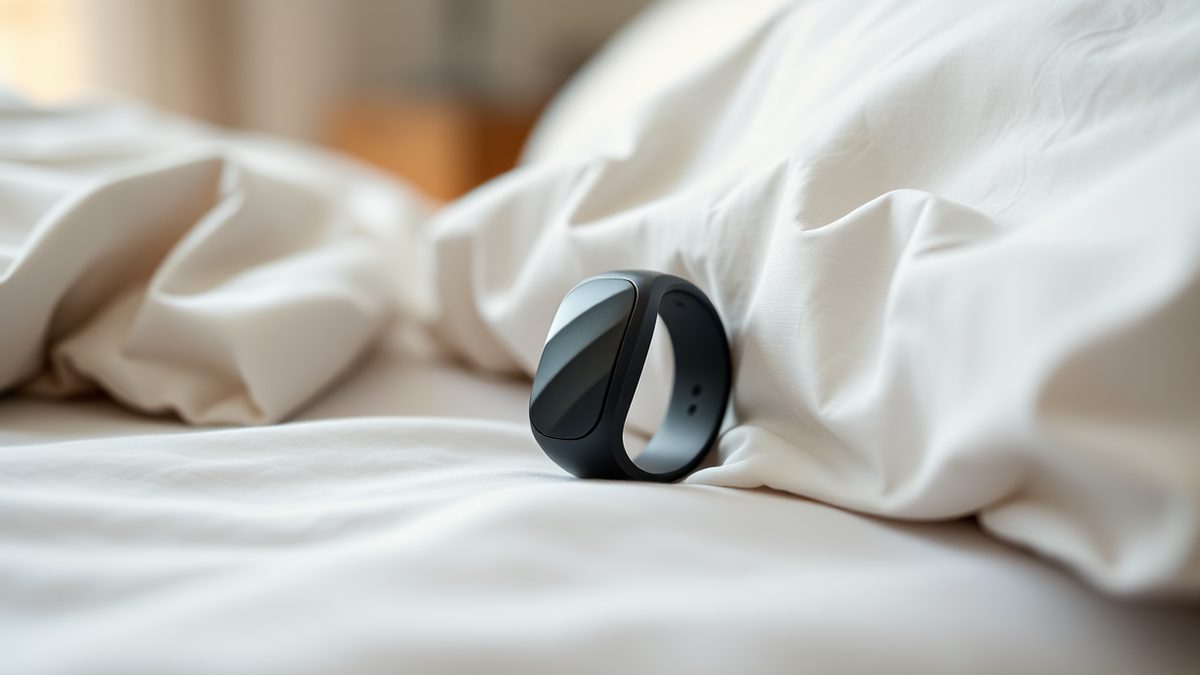
For buyers, the change is a finer alert, not a diagnosis. Samsung says a physician must still confirm the condition. For rivals, Samsung now holds an FDA-cleared feature that Oura and Superhuman do not offer. Payment is the harder question. Korea shows why: national health insurance covers only 49 of 549 approved AI devices there, according to The Korea Times.
Samsung's FDA-cleared sleep apnea update
The FDA cleared it in July. Samsung announced the clearance on 3 November, alongside availability on the Galaxy Watch 9 running Wear OS 7.0 or later.
The February 2024 De Novo authorization covered detection of moderate to severe sleep apnea. The new version counts breathing disruptions per hour. It sorts the result into mild, occasional or frequent sleep apnea. Users need at least five hours of sleep on two nights within a 10-day window. The Health Monitor app then classifies them. Samsung says only a physician can diagnose the condition. Oura and Superhuman do not offer FDA-approved sleep apnea detection. Both still track nighttime disturbances that may point to the condition, Engadget reported. Samsung and Oura are in a patent dispute. A preliminary decision is expected soon.
Korea: approved, not reimbursed
Korea shows the gap. Its Ministry of Food and Drug Safety had approved 549 AI medical devices by the first half of this year. National health insurance covers only 49 of them, The Korea Times reported. Regulatory approval does not necessarily mean clinical practice needs a technology, said Seo Joon-beom, a professor at Asan Medical Center. He spoke at a symposium hosted by Eulji University Medical Center. Park Jung-hwan, of the health ministry's Medical AI and Data Policy Division, said new AI tools are concentrated in the Seoul metropolitan area. That leaves regional public hospitals behind. The Presidential Council on National Artificial Intelligence Strategy set a national strategy in August.
China's two gates
China's first gate is product approval. AI software that diagnoses, triages or guides treatment counts as a medical device. It must be registered with the NMPA before sale or hospital use.
The revised medical device GMP took effect on 1 November 2026. The NMPA issued draft AI device guidelines in mid-September 2026, according to Asian Hospital & Healthcare Management. Most diagnostic AI lands in Class III, the highest risk tier. An analysis cited by Asian Hospital & Healthcare Management found 154 AI device approvals since 2020. Approvals rose from 9 in 2020 to 45 in 2024, with 79.9% in Class III. Foreign manufacturers must appoint a China agent.
Patient data is the other gate
Access is opt-in. Athenahealth says it serves more than 20% of the US population. It launched a server that lets Anthropic's Claude read patient records and answer questions about them.
The tool is limited to Claude Pro and Claude Max subscribers, at $20 and $100 a month. Patients sign in with their Athenahealth credentials. They can revoke access at any time, ZDNET reported. Sam Lambson, Athenahealth's vice president of product management for data and ecosystem, said the partnership does not provide medical advice. Anthropic is barred from training its models on the data. Pew Research Center found 34% of US adults have talked with a chatbot for medical advice.
What the label covers
Approval is also scoped and revocable. On 29 October the MHRA extended UK authorization of Casgevy to children aged five and over.
The gene-editing treatment covers severe sickle cell disease and transfusion-dependent beta thalassemia. The FDA wants to withdraw Tavneos, an Amgen drug it approved in 2021. It cites serious liver injury. The New England Journal of Medicine retracted the trial paper this summer, Ars Technica reported.
Samsung's feature is live on the Galaxy Watch 9. It is due on the Galaxy Watch 7 and Galaxy Watch 8 through software updates. Whether the next wave of cleared products reaches patients faster will depend on reimbursement decisions as much as on regulators.
Sources
6- 01Samsung's Galaxy Ring gets FDA approval for advanced sleep apnea detectionEN
- 02Korea's medical AI advances, but clinical adoption remains slowEN
- 03AI Healthcare Regulations in China: Medical AI ComplianceEN
- 04Athenahealth patients can ask Claude about their medical records nowEN
- 05MHRA approves gene-editing treatment for children aged five and over with serious inherited blood disordersEN
- 06The FDA wants to pull its approval of a drug. It's not so easy.EN
All figures and quotations in this text come from the sources listed below.
Content prepared by the editorial team with AI assistance.
Sofia Marchetti
Comments
0- No comments yet — be the first.